

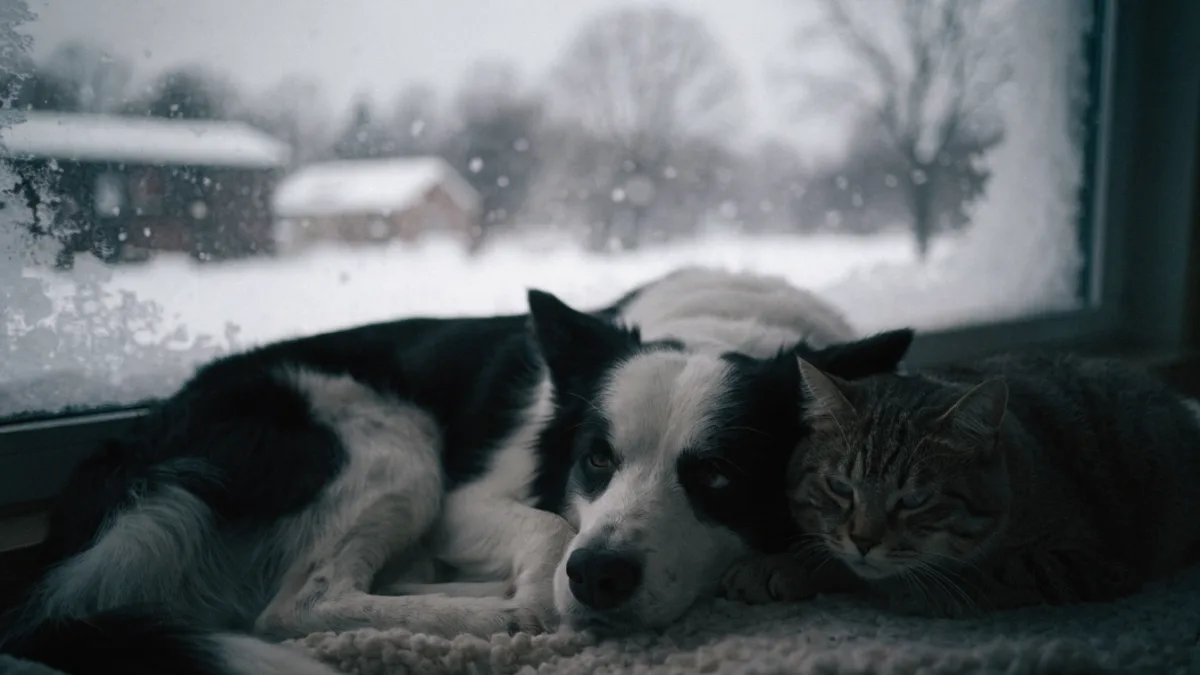
Last February, a worried client named Sarah brought her six-year-old Golden Retriever, Barnaby, into the clinic. Normally, Barnaby was a fireworks display of energy—fetching tennis balls until your arm gave out and greeting every stranger like a long-lost friend. But that morning, he shuffled into the exam room, leaned heavily against Sarah’s leg, and let out a heavy sigh. “He’s just stopped,” Sarah told me. “He won’t play, he sleeps constantly, and he barely touches his breakfast. Does he have the winter blues?”
It’s a question I hear almost daily from December through March. When the days get short and the temperature drops, our pets’ behavior often shifts right alongside ours. But is [1] a real medical phenomenon, or are we just projecting our own winter gloom onto our animals? The answer, like most things in medicine, is a fascinating mix of biology, behavior, and environmental management.
The Science of Sunlight, Melatonin, and Serotonin
To understand what happens to our pets during the winter, we have to look at the brain. Currently, there is no formal clinical diagnosis for Seasonal Affective Disorder (SAD) in veterinary medicine. However, the biological mechanisms that cause it in humans are absolutely present in our dogs and cats.
It all comes down to the daylight cycle. When your pet’s eyes and brain register darkness, the pineal gland—a tiny, pea-shaped structure deep in the brain—starts pumping out melatonin. Melatonin is the sleep hormone; it tells the body it’s time to rest. Conversely, sunlight exposure helps regulate serotonin, the mood-stabilizing chemical that keeps us feeling happy and engaged.
During the winter months, the sun sets at 4:30 PM and rises late. This prolonged darkness triggers a massive spike in melatonin production and a corresponding drop in serotonin. So, when your pet seems utterly uninterested in playing fetch at 5:00 PM, it isn’t necessarily that they’re being lazy. Their brain is literally sending out biological signals telling them to hibernate. This hormonal shift is the root cause of the dog winter blues and the deep cat lethargy we see in clinical practice.
How the Winter Slump Affects Dogs Versus Cats
While the hormonal shifts are similar, the way the winter slump manifests behaviorally is entirely different depending on the species. Dogs and cats process boredom and lack of stimulation in very distinct ways.
The Dog Winter Blues
Dogs are creatures of routine, and they are highly reliant on outdoor activities for their physical and mental well-being. When freezing temperatures and early sunsets force us to cut daily walks short, dogs suffer the consequences. I saw this clearly with a patient named Leo, a three-year-old Border Collie mix. By mid-January, Leo had gained four pounds and started aggressively chewing his owner’s baseboards. He wasn’t bad; he was stir-crazy.
While dogs naturally sleep 12 to 14 hours a day, winter weather often pushes that up by an extra hour or two. Without their regular outdoor exercise, they develop pent-up physical energy. This often translates to weight gain, destructive chewing, excessive vocalization (like whining or barking), and a general sense of restlessness or irritability. They want to go out and do their job, but the weather simply won’t allow it.
Indoor Cats and the Long Winter Nap
Cats deal with the winter differently. Felines naturally sleep anywhere from 15 to 20 hours a day, so a sleeping cat isn’t exactly a red flag. However, indoor cats are incredibly susceptible to a lack of environmental stimulation during the winter. When the windows are closed and the backyard birds are gone, their natural hunting instincts are completely suppressed.
This suppression leads to profound cat lethargy. I treated a lovely indoor Tortoiseshell cat named Luna last winter whose owner was concerned because Luna had stopped grooming herself properly and was hiding under the bed for days at a time. Cats who lack mental stimulation often retreat into themselves. They may sleep excessively, lose interest in their favorite wand toys, or even engage in “boredom grooming”—licking their belly or paws until the fur thins out. [2] relies heavily on the ability to express predatory behaviors, even if it’s just catching a laser pointer or stalking a feather.
Ruling Out the Sneaky Physical Stuff
There is an ongoing debate in the veterinary community about how much we anthropomorphize our pets—the tendency to project human emotions and medical conditions onto animals. Skeptics rightly point out that an animal sleeping more in the freezing cold is a perfectly natural, instinctual survival mechanism for conserving energy.
But the real danger in assuming your pet just has seasonal affective disorder is that you might miss a genuine, physical medical issue. Because our patients can’t speak to us, diagnosing behavioral changes is notoriously difficult. Last winter, a client was convinced her older Labrador, Maddie, was just sad because of the snow. It turned out that Maddie’s increased lethargy and reluctance to go outside were actually caused by severe arthritis pain that flared up in the cold, damp weather.
Sudden changes in appetite, excessive sleeping, and hiding can also mask conditions like hypothyroidism (an underactive thyroid gland that slows the metabolism), organ disease, or chronic pain. If you notice a sudden shift in your pet’s behavior this winter, please don’t just chalk it up to the weather. Bring them in for a checkup. We need to rule out physical pain before we treat a behavioral issue. Always consult your veterinarian before starting any new routines or supplements to ensure they are safe for your specific pet.
Shaking Off the Blues: Practical Winter Solutions
Once we’ve established that your pet is physically healthy, there is a lot we can do to manage the winter slump. In recent years, veterinary behavioral medicine has shifted heavily toward environmental modification—changing the pet’s surroundings to fix the behavior, rather than immediately turning to medication. Here is how I advise my clients to build a winter wellness plan.
Let the Light In
If melatonin is the problem, light is the solution. Open all your blinds and curtains during peak daylight hours to let as much natural sun into your home as possible. Position your pet’s favorite bed or blanket near a bright window. You can also look into full-spectrum or UV lighting. These lights mimic natural sunlight and can be highly beneficial for mammals. You can often find bulbs marketed for reptiles or birds that work perfectly well when placed in a lamp near your dog or cat’s resting area.
Tire Out the Brain
If you can’t tire out your dog’s body because of the ice and snow, you have to tire out their brain. Mental stimulation is incredibly taxing—and incredibly effective. I recommend introducing food puzzles and snuffle mats. A snuffle mat is a fabric mat with strips of fleece where you hide dry kibble. It forces the dog to use their nose to find their food, which taps into their natural foraging instincts. You can also use this time to teach a new trick. Ten minutes of learning how to “spin” or “touch” a target stick is often as exhausting for a dog as a thirty-minute walk. For cats, try rotating their toys every week so the “prey” is always new and exciting.
Maintain Strict Routines
Animals thrive on predictability. Try to keep consistent feeding and waking times, even on the weekends. Keeping their daily structure intact helps regulate their circadian rhythm—their internal body clock—which in turn helps stabilize their hormones and mood.
Understanding the Winter Needs of Domestic Animals
While domestic dogs and cats don’t face the same winter survival challenges as their wild ancestors, their evolutionary biology still drives their response to the changing seasons. By understanding the biological and environmental needs of our companion animals, we can better provide for their physical and mental well-being. Whether you’re managing the restless energy of a working breed or the quiet lethargy of an indoor cat, the key is to remain observant, proactive, and compassionate. They rely entirely on us to shape their environment, so it’s up to us to make sure their winter is just as enriching as their summer. [3] isn’t about forcing them to be summer dogs in December; it’s about meeting them exactly where they are, and bringing a little extra light into the dark winter days.
Sources
- seasonal affective disorder in pets — petmd.com
- Feline behavioral health — chewy.com
- Managing seasonal depression in pets — sbahvet.com