

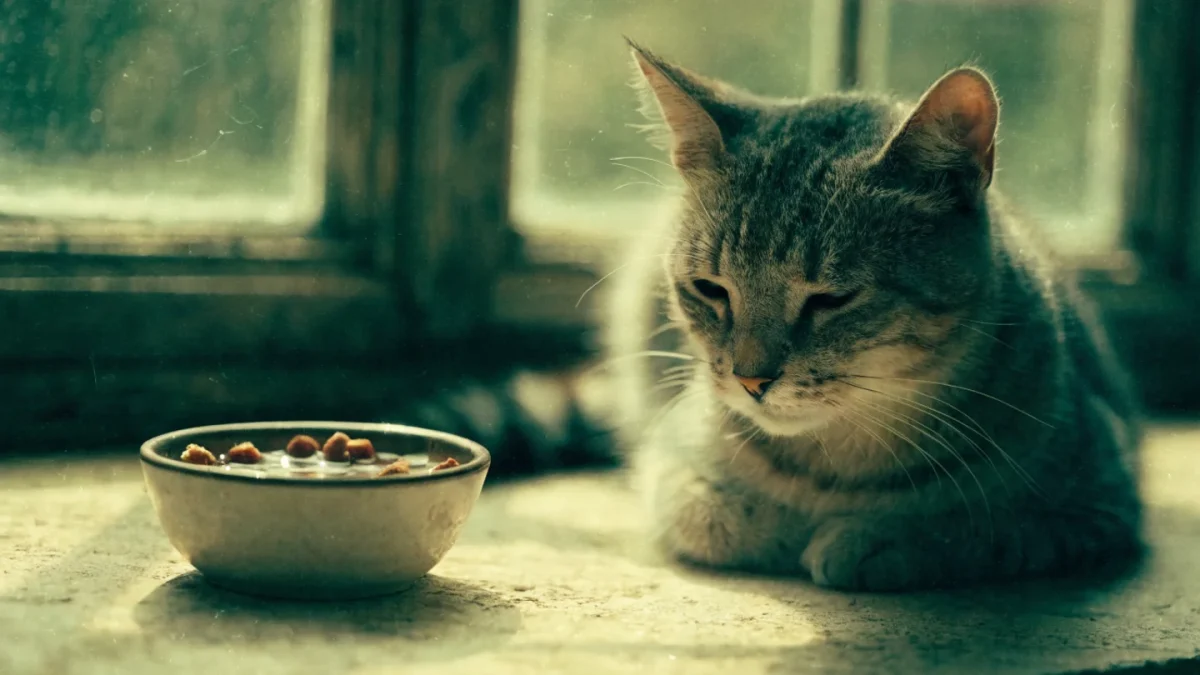
I've had this conversation enough times that I can predict exactly where it goes. An owner comes in with a ten or eleven-year-old cat. She's losing weight. Eating, but getting thin. The owner is worried about the kidneys — they've read online that high protein is bad for cats with kidney disease — so they switched her to a lower-protein food. And now I'm looking at a cat who is losing muscle faster because her diet doesn't have enough protein to maintain it.
The intention was right. The execution was backwards.
Senior cat nutrition protein kidney decisions are genuinely complex, and I want to be honest about that complexity rather than give you a simple rule that might not fit your specific cat. The answer changes depending on what's actually going on in the kidneys — and you can't know that without bloodwork.
The Protein Paradox in Senior Cats
Here's the foundational fact: aging cats have decreased protein absorption efficiency and an increased tendency toward muscle wasting. The research on this is fairly clear — cats over eleven often require protein levels substantially higher than younger adult cats just to maintain nitrogen balance, with some analyses suggesting requirements approaching 50% more than middle-aged adults; the AAHA/AAFP Feline Life Stage Guidelines explicitly state that healthy mature adult and senior cats should not be protein-restricted and recommend a minimum of 30–45% dry matter protein. This is the opposite of what most owners expect.
In a healthy senior cat with normal kidney function, a high-quality, high-protein diet is the right choice. Not moderate protein. High protein, from good animal sources.
But.
Chronic kidney disease (CKD) is the most common serious illness in cats over ten, and it changes the picture. At certain stages, the kidneys struggle to clear the waste products of protein metabolism — specifically phosphorus and uremic toxins. In those cases, dietary protein moderation and phosphorus restriction become part of disease management.
The cruel irony is that the two recommendations are directly in conflict. More protein for muscle preservation, less protein-burden for diseased kidneys. The resolution isn't to pick one and apply it to all senior cats. It's to know which situation you're actually in — which is why bloodwork is not optional once your cat is past ten.
What Kidney Disease Stages Mean for Diet
CKD in cats is staged from 1 to 4 based on creatinine levels and other markers. The staging matters for dietary decisions:
Stage 1–2 (early): Kidney function is impaired but compensated. Phosphorus restriction becomes relevant here — a diet high in phosphorus accelerates CKD progression in cats, while restriction has been shown to prolong mean survival time in cats with naturally occurring CKD, per studies reviewed in dvm360 and PMC (Brown et al., 2013; Finch et al., 2021). Protein restriction is typically not yet required. Hydration becomes critical.
Stage 3 (moderate): Protein restriction may be added to phosphorus restriction. This is where prescription renal diets become genuinely important rather than optional. The formulations are calibrated carefully — reducing phosphorus, moderating protein, adjusting potassium and B vitamins — in ways that standard food cannot replicate.
Stage 4 (severe): Aggressive management. Appetite suppression is common and a real challenge — cats in late-stage CKD often don't want to eat, which creates a cruel double-bind where they need nutrition but refuse it. Palatability of the renal diet matters enormously here, and sometimes compromises are necessary.
For detail on what phosphorus restriction actually involves and why it matters, phosphorus restriction and kidney protection in senior cats explains the mechanism in plain terms.
Calories: The Senior Cat Weight Mystery
Weight loss in senior cats is one of the most common presentations I see, and it has multiple possible causes:
Hyperthyroidism causes dramatic caloric burn despite increased appetite. The thyroid is running the metabolism too fast, burning through protein and fat simultaneously. No dietary intervention fixes this without treating the thyroid disease itself. A senior cat eating voraciously but still losing weight needs a T4 measurement, not a food change.
Reduced intestinal absorption. Inflammatory bowel disease and small cell lymphoma — both more common in older cats — impair nutrient uptake significantly. Again, dietary changes alone don't resolve this.
CKD itself causes muscle wasting and appetite suppression. Even cats eating well on a renal diet may lose weight because the kidneys can no longer efficiently regulate protein metabolism.
Reduced olfactory sensitivity. Cats rely heavily on smell to evaluate food palatability, and older cats often develop reduced scent acuity. Food that smells fine to you may seem essentially odorless to a twelve-year-old cat. Warming food slightly intensifies aroma and can dramatically improve intake.
Dental pain. I cannot overstate how often this is missed. A cat who has shifted to eating only soft foods or who drops kibble after picking it up may have painful teeth. Weight loss in an older cat should always prompt a dental exam.
Building a Practical Feeding Plan for Your Senior Cat
If your cat is ten or older and you haven't done bloodwork in the past six months, that's where I'd start before making any dietary decisions. Specifically, you want kidney values (BUN, creatinine, SDMA), a thyroid panel (T4), and ideally a urinalysis.
If everything is normal:
Feed a high-quality, high-protein wet food — ideally more than 35% dry-matter protein from named animal sources. Wet food is strongly preferred over dry at this life stage, primarily for hydration. Phosphorus doesn't need to be restricted, but avoiding extremely high-phosphorus foods is sensible as a precaution. Schedule bloodwork every six months.
If early kidney disease is present:
Transition to a phosphorus-restricted diet, either a therapeutic renal food or a carefully chosen commercial food with low phosphorus content. Hydration becomes even more critical — wet food, water fountains, anything that increases daily moisture intake. Talk with your vet about whether protein needs to be moderated yet.
If hyperthyroidism is present:
Treat the thyroid disease first. Dietary changes are secondary. After treatment normalizes thyroid hormone levels, reassess body weight and condition and adjust diet accordingly.
If your cat is losing weight but tests are normal:
Don't stop there. Ask about a more thorough GI workup, including a B12 level (low in cats with intestinal disease) and consideration of imaging or other diagnostics. "Normal bloodwork" doesn't rule out intestinal disease.
The Wet Food Point Is Worth Repeating
Cats are designed to get most of their water from their food. The domestic cat's low thirst drive — evolved for a prey-based diet of 70%+ moisture — means that a cat eating only dry food is chronically mildly dehydrated by default. For any senior cat, regardless of kidney status, increasing wet food intake is one of the single most impactful dietary changes available.
I tell clients: if you can only change one thing about how you're feeding your older cat, make it this. Even one wet meal per day makes a measurable difference in daily fluid intake.
Managing the Appetite Problem in Senior Cats
Senior cats are at elevated risk for inadequate caloric intake from multiple directions: reduced olfactory sensitivity makes food less appealing, nausea from CKD or other conditions blunts hunger, dental pain makes eating uncomfortable, and cognitive changes can cause them to simply forget to eat or lose interest in food they previously enjoyed.
The practical strategies that help most:
Warm the food. Not hot — just slightly above room temperature. Warming intensifies aroma dramatically, and smell is the primary driver of food interest in cats. Many senior cats who seem indifferent to a meal at room temperature will eat readily when the same food is warmed slightly.
Use wide, shallow dishes. Deep narrow bowls force cats to touch the sides with their whiskers on every bite — a genuinely uncomfortable sensation called whisker fatigue. Wide, shallow dishes or even small plates eliminate this. It sounds like a small thing and it genuinely makes a meaningful difference for some cats.
Offer smaller, more frequent meals. A senior cat with reduced gastric capacity or nausea-related appetite suppression may tolerate three or four smaller meals better than two full ones. More feeding opportunities also means more chances to get adequate daily intake.
Consider a meal timing approach. Leave food down for 20–30 minutes, remove it, offer the next meal on schedule. This is harder to commit to than free-feeding, but it gives you much better information about actual daily intake — and intake changes in a senior cat are information you want.
Monitoring Tools You Can Use at Home
Between vet visits, two measures are worth tracking monthly for any cat over ten:
Body weight. Same scale, same time of day. Weight loss of more than half a pound in a month warrants a vet conversation. It doesn't sound like much but in a ten-pound cat that's 5% of body weight — significant.
Muscle condition. Feel firmly along the spine from the shoulder blades to the base of the tail. Press in gently. You should feel muscle before you reach vertebrae. Prominent, sharp-feeling vertebrae with minimal soft tissue covering them indicates muscle loss that should be evaluated. This can change faster than body weight in cats — a cat can lose significant muscle while maintaining or even gaining fat mass.
When to Escalate
I want to be clear about when home management has reached its limits. A senior cat with:
- More than 10% body weight lost over six months
- Muscle loss despite adequate food intake
- Persistent appetite suppression despite palatability strategies
- Bloodwork showing significantly elevated kidney values, calcium, or phosphorus
- New neurological signs (confusion, vocalization, seizure-like activity)
…needs professional assessment, not another food change. These presentations have medical causes that dietary adjustment cannot address on its own.
Frequently Asked Questions
My vet said my senior cat has "borderline" kidney values. Should I switch to a renal diet now?
This is a judgment call worth discussing in detail with your vet. Early intervention with phosphorus restriction (even before full CKD staging) may slow progression, but very strict renal diets are hard on palatability and some cats refuse them. A middle-ground approach — a low-phosphorus commercial diet rather than a therapeutic renal diet — may be reasonable for very early disease. Don't make this call alone based on a single set of lab values.
My senior cat refuses to eat the prescription kidney food. What can I do?
This is one of the most frustrating situations in feline medicine. A few strategies: warm the food to slightly above room temperature, try both wet and dry versions of the renal diet if available, introduce it very gradually mixed with the previous food over 2–3 weeks rather than 1 week, and try multiple brands of renal food since palatability varies. If the cat truly won't eat the renal diet after a genuine trial, eating something beats eating nothing — talk with your vet about an acceptable compromise.
Is it normal for senior cats to lose weight?
Weight loss in cats over ten is common but not normal in the sense of "expected and fine." Some weight loss accompanies sarcopenia (age-related muscle loss) and can be partially offset with dietary changes. But significant or progressive weight loss — more than 10% of body weight over six months — always warrants investigation. The underlying cause matters enormously because the treatment is often not dietary.
How often should a senior cat eat?
Two or three meals per day rather than free-choice feeding is generally better for senior cats. It makes monitoring intake much easier — a cat skipping a meal is information you want to have. It also supports more consistent protein delivery. If your cat has kidney disease and is struggling with appetite, smaller more frequent meals (three or four times daily) may help maintain intake when nausea is a factor.