

The text came at 9 PM on a Tuesday. A photo of a spay incision — slightly swollen, a bit pink, with one suture looking a little puckered. "Is this normal??" Two question marks. That's how I know someone's worried.
It was completely normal. But I get it. Bringing home a groggy pet with a fresh surgical wound is unnerving, especially if it's your first time. The surgery itself takes twenty to forty minutes. The recovery takes patience you didn't know you'd need.
Here's what actually happens after your pet comes home, and what to watch for.
The First Night
Your pet will likely come home groggy, wobbly, and possibly whiny. Some dogs pace and pant. Some cats hide. Both are processing residual how anesthesia works in pets — it can take 12-24 hours for the drugs to fully clear their system.
Offer a small amount of water when you get home. Skip the full dinner — a quarter of their normal meal is plenty. Some pets vomit after anesthesia, and a full stomach makes that worse. If they're not interested in food, don't push it. Appetite usually returns by morning.
Set up their recovery spot before you even leave for the surgery. A crate with soft bedding, a small room with the door closed, or a pen in a quiet corner. The goal: minimal movement, minimal excitement, no jumping on or off furniture.
One thing that surprises owners — some pets shiver after anesthesia. It's not necessarily cold. Certain anesthetic drugs cause trembling as they wear off. A light blanket helps, but it's usually self-limiting.
Days One Through Three
This is the "they feel terrible, then suddenly feel great" phase, and both extremes need management.
Day one: lethargy is normal. Your pet might sleep most of the day. Pain medication keeps them comfortable, but don't mistake sleepiness for suffering. Check the incision once — it should be closed, possibly slightly puffy, with clean edges. A small amount of redness is expected.
Day two: appetite returns. Energy starts creeping back. Some dogs act almost normal by the end of day two, which is where trouble begins. Because "feeling fine" and "being healed" are completely different things.
Day three: here's when most pets start testing boundaries. The Lab who tries to jump on the couch. The cat who insists on climbing the bookshelf. Your job for the next week and a half is to be the fun police. I know it's exhausting. Do it anyway.
Days Four Through Seven
The incision should be looking better each day. Swelling decreasing, edges knitting together. Some bruising — greenish or yellowish discoloration around the site — is common, especially with spays. It looks alarming but is usually just blood tracking under the skin as it reabsorbs.
Activity restriction remains critical. Short, leashed bathroom breaks only. No running, no playing with other pets, no stairs if you can avoid them.
I had a client whose Beagle tore three internal sutures on day five because he launched himself off the bed after a squirrel he saw through the window. The dehiscence required a second surgery under anesthesia. Two surgeries, two anesthesias, twice the cost, all because of one unguarded moment.
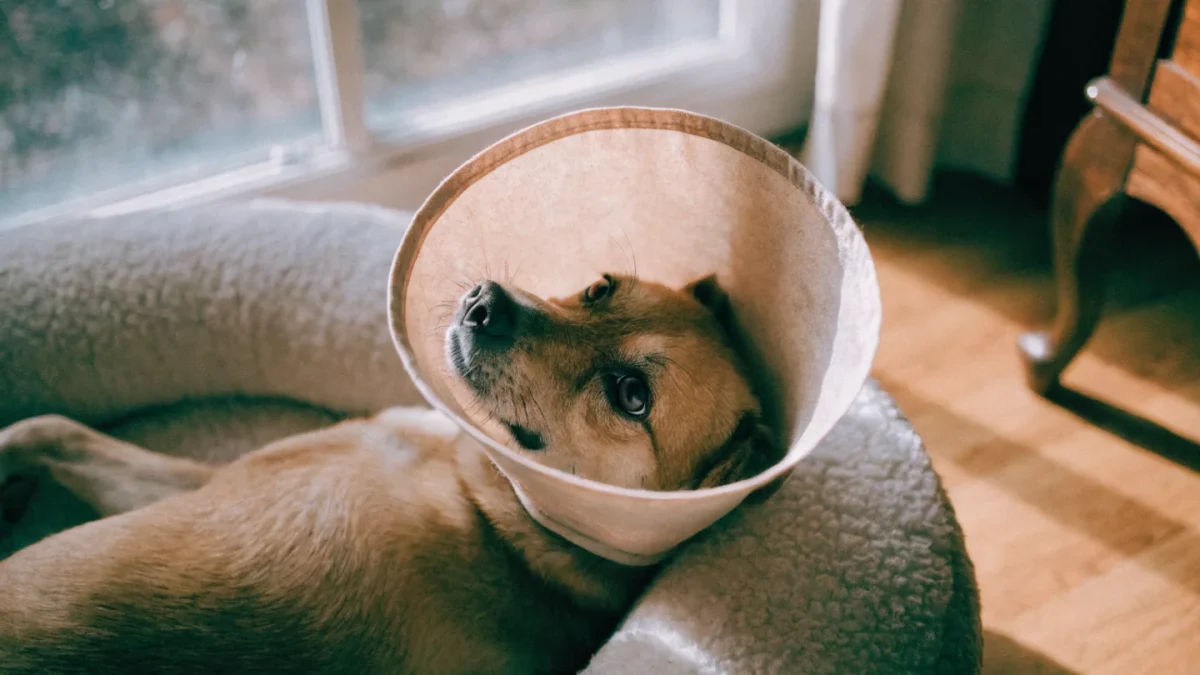
The e-collar stays on. I know they hate it. You hate watching them bump into doorframes. But one session of dedicated licking can open an incision or introduce bacteria that lead to infection. Ten days of inconvenience versus a potential surgical revision — the math is clear.
Days Seven Through Fourteen
By the end of the first week, the external incision is well on its way. Internal healing lags behind — the body wall and the deeper tissue layers are still knitting back together, which is why the activity restriction extends to fourteen days even though the outside looks fine.
If your vet used external sutures or staples, they usually come out around day ten to fourteen. Dissolvable sutures and skin glue don't require removal, but a recheck visit is still a good idea. For related context, see benefits and risks of spaying.
Around day ten, I start allowing slightly more movement — longer leash walks, some gentle play. But full activity, including off-leash running, dog parks, and roughhousing with other pets, waits until day fourteen minimum. Some larger dogs or those who had complicated surgeries may need longer.
When to Call Your Vet
Not every oddity is an emergency. But some are.
Call immediately if you see: the incision opening or gaping, discharge that's thick, cloudy, or foul-smelling, significant swelling that keeps increasing after the first 48 hours, bleeding from the incision site, your pet refusing food for more than 24 hours post-surgery, persistent vomiting or diarrhea, lethargy or depression that worsens rather than improves, pale gums, rapid breathing, or collapse.
Normal and not cause for alarm: mild swelling for the first 2-3 days, minor redness at the incision edges, slight bruising around the surgical area, decreased appetite on the first day, occasional shivering or trembling in the first 12 hours, a small firm lump under the incision (often a suture reaction).
That firm lump — called a suture granuloma — tends to panic people. It's the body reacting to the suture material, and it's almost always harmless. It resolves on its own over weeks to months.
Pain Management
Your vet will send home pain medication. Give it on schedule, not on an "as needed" basis. Pets are masters at hiding pain, and by the time you notice discomfort, they're already well past the point where the medication should have been on board.
Most protocols include a non-steroidal anti-inflammatory (NSAID) for 3-5 days. Some add gabapentin for the first 2-3 days, especially for pets who tend toward anxiety. I'm a fan of multimodal pain control — using different drugs that work through different mechanisms — because it provides better comfort with fewer side effects from any single drug.
Do not give human pain medications. Not Tylenol, not ibuprofen, not aspirin unless specifically directed by your vet. Acetaminophen is toxic to cats at any dose and problematic in dogs. Ibuprofen can cause kidney failure and gastric ulceration in both species.
The E-Collar Debate
I'll be direct: keep the e-collar on. Not sometimes. Not "when I'm not watching." All the time, including overnight.
If the hard plastic cone is too cumbersome, soft fabric cones, inflatable donut collars, and recovery suits are alternatives. Some work better for certain pets. The tall, narrow-faced dog who can reach around an inflatable collar needs the hard cone. The stocky Bulldog who can't reach his belly incision anyway might do fine with a recovery suit.
Test whatever you choose while you're watching before you trust it unsupervised. I've seen dogs outsmart every e-collar alternative on the market.
Spay vs. Neuter Recovery Differences
Neuter recovery is faster. The incision is smaller, there's no abdominal entry, and most male dogs are bouncing around by day three. Cats often act like nothing happened by day two.
Spay recovery takes longer because it's an abdominal surgery. The incision is larger, the body wall was opened and sutured closed, and internal organs were handled. Female dogs need the full fourteen-day rest period, and some do better with a slightly longer restriction if they're large or had a complicated procedure.
The spaying and neutering basics covers the procedural differences if you want more detail on the surgeries themselves.
Frequently Asked Questions
Can my pet climb stairs during recovery?
I'd prefer they don't, especially in the first week after a spay. Climbing stairs engages the abdominal muscles, and every contraction tugs on the internal sutures. If your bedroom is upstairs and you can't carry your pet, consider sleeping downstairs for a week. After a neuter, limited stair use (on leash, slowly) is generally okay after the first few days.
When can my pet take a bath?
Wait until the incision is completely healed and any sutures or staples have been removed — at minimum fourteen days, longer if the incision was slow to close. Water and soap can soften scabs, introduce bacteria, and irritate healing tissue. Spot-clean with a damp cloth if they get dirty.
My cat already pulled out a stitch. What do I do?
If it's one external suture and the incision edges are still holding together, call your vet for guidance but don't panic. If the incision is gaping open or you can see tissue underneath, that's a same-day vet visit. Put the e-collar back on (or get one if you didn't have one) to prevent further damage.
My dog seems depressed — is something wrong?
Some post-surgical lethargy is normal for the first 48 hours. If your dog is eating, drinking, and the incision looks good, mild depression is likely just the residual effects of anesthesia and pain medication. If it persists beyond three days or worsens, call your vet. A dog who was bright yesterday and is listless today deserves a check-in.