

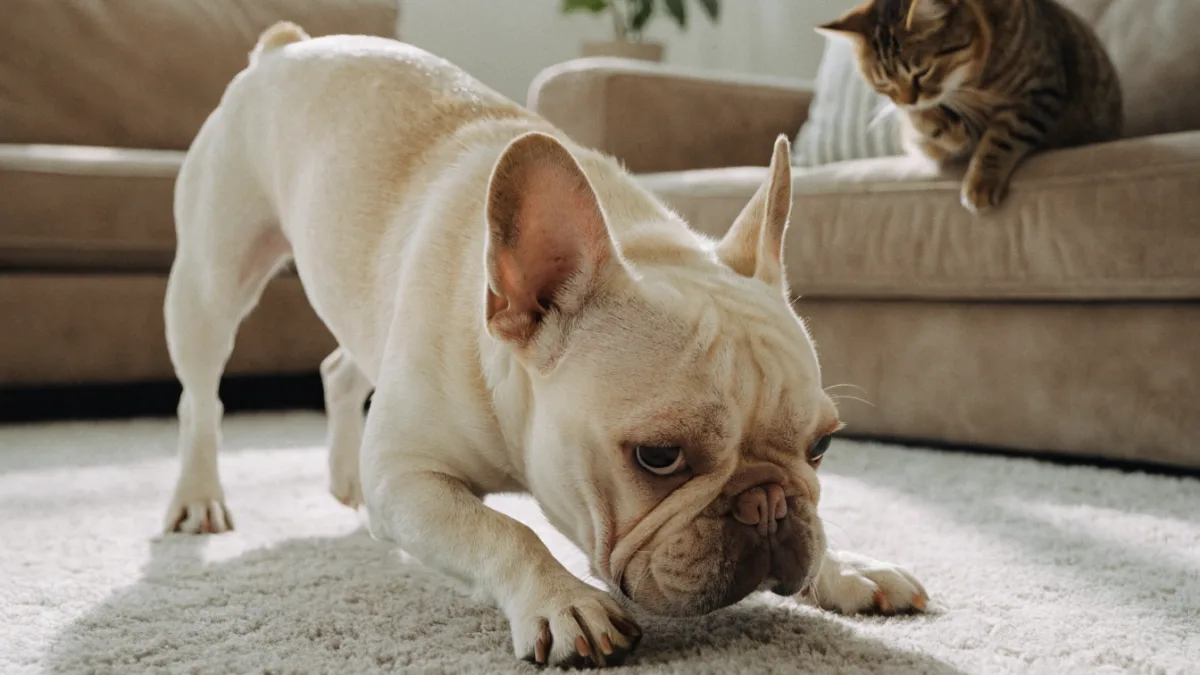
If you’re a dog owner, you’ve probably witnessed it: that moment when your beloved companion sits down, drags their rear end across your favorite rug, and looks up at you with an expression that says, “What? I needed to scratch.” Meanwhile, your cat-owning friends swear they’ve never seen their feline do anything of the sort. It’s one of those peculiar mysteries that leaves many pet owners scratching their heads — and reaching for the carpet cleaner.
The truth is, there’s a fascinating medical explanation behind why dog anal glands cause so much trouble while cats almost never seem bothered. And once you understand what’s happening anatomically, the whole scooting thing starts to make a surprising amount of sense.
What Are Anal Glands, and Why Does Every Pet Have Them?
Both dogs and cats have two small sacs — called anal glands or anal sacs — tucked just inside the anus at roughly the 4 o’clock and 8 o’clock positions. These tiny pouches continuously produce a thick, brownish, distinctly fishy-smelling liquid. In the wild, this scent serves as a biological name tag. Every time an animal defecates, the pressure of the stool passing through the rectum naturally compresses these glands, releasing a small amount of fluid onto the stool. This leaves a chemical signature that tells other animals who passed through, when they were there, and other details we humans are mercifully unable to detect.
I remember explaining this to a client last year — let’s call her Jenna — who brought in her three-year-old Beagle named Cooper. Cooper had started leaving suspicious smudge marks on the couch, and Jenna was convinced he had a parasite. When I told her the smell was actually Cooper’s personal signature scent, she stared at me and said, “So my dog is basically leaving Post-it notes on my furniture?”
Pretty much, yes.
There’s also the phenomenon I privately call the “fear puddle.” When a dog is suddenly startled or frightened — say, during a thunderstorm or an unexpected trip to the vet (I try not to take it personally) — those sphincter muscles can relax involuntarily, and the glands release all at once. If you’ve ever noticed a sudden, overwhelming fishy odor in a stressful moment, now you know why.
Why Dogs Scoot: The Canine Struggle
So if anal glands are designed to empty naturally during bowel movements, why do so many dogs end up impacted, uncomfortable, and dragging their backsides across the living room floor?
The answer comes down to a combination of diet and anatomy, and honestly, modern life hasn’t done dogs any favors.
The Diet Problem
Here’s where things get interesting. Many commercial dog foods, while nutritionally complete in terms of vitamins and minerals, produce stools that are too soft or too small to create adequate pressure against the rectal wall. Think of it like trying to squeeze toothpaste out of a nearly empty tube — if there isn’t enough substance pressing outward, the glands simply don’t get the message to release.
In the wild, canines consumed whole prey, including fur, bone, and fibrous organ tissue. This produced large, firm, bulky stools that effectively massaged the glands with every bowel movement. Modern kibble, even the high-quality varieties, often produces softer, more compact waste. Without that natural pressure, fluid accumulates, thickens, and eventually becomes impacted.
The Anatomy Problem
Anatomy plays a role too. The positioning and angle of the anal glands in dogs varies significantly between breeds, and in some dogs — particularly small breeds and those with narrow pelvises or certain body conformations — the glands simply don’t sit at an angle that favors natural drainage. Some dogs are essentially built with a design flaw in this department.
When the fluid builds up, dogs feel a pressure and itchiness they can’t reach any other way. Scooting is their attempt to manually compress the glands against the floor. It’s not a behavior problem or a sign your dog is being difficult. They’re genuinely uncomfortable and trying to solve the problem themselves.
The classic signs of problematic dog anal glands include:
- Scooting or dragging the rear end along the ground
- Excessive licking or biting at the base of the tail
- A sudden, strong fishy odor
- Visible swelling or redness near the anus
- Reluctance to sit or signs of pain when defecating
Why Cats Rarely Have This Problem
Now here’s where cats have the last laugh. Cats possess the exact same anal glands, structurally and functionally identical to those in dogs. But cat scooting is remarkably rare, and there are two key reasons why.
First, feline anatomy positions the glands at an angle that makes natural expression considerably more efficient. The ducts are shorter, wider, and better positioned for drainage during defecation.
Second — and perhaps more importantly — cats are obligate carnivores. Their natural diet is high in protein and moisture, and their digestive systems are designed to extract maximum nutrition with minimal waste. This produces small, firm, well-formed stools that create ideal pressure against the rectal wall. Cats essentially express their glands perfectly with every litter box visit, without ever having to think about it.
I’ve been in practice for over fifteen years, and I can count on one hand the number of times I’ve needed to express a cat’s anal glands. When I do see it, it usually involves an older cat with chronic diarrhea, a cat with significant allergies causing perianal inflammation, or occasionally an obese cat who can’t groom properly and has developed a secondary infection. It’s unusual enough that it always warrants a closer look.
If your cat is scooting, don’t wait. Unlike dogs, where occasional scooting can be almost expected, a cat dragging its rear end is a significant red flag that deserves prompt veterinary attention.
Expressing Anal Glands: What Actually Happens
When a dog’s glands become impacted, the solution is manual expression — a procedure where a trained professional gently squeezes the glands to release the built-up fluid. It’s quick, it’s routine, and it’s effective, though I won’t pretend it’s pleasant for anyone involved. The smell is genuinely memorable.
There are two techniques. Groomers typically perform external expression, applying pressure from the outside of the anus. Veterinarians usually perform internal expression, which involves inserting a lubricated, gloved finger into the rectum to fully compress each gland between the finger and thumb. The internal method is generally more thorough — it allows complete emptying and lets the veterinarian assess the fluid’s consistency, check for abnormal thickening, and detect early signs of infection or abscess that an external approach might miss.
I’ll be honest — I’ve changed my thinking on this topic over the years. Early in my career, I worked at a clinic where routine expression with every grooming appointment was standard practice. The logic seemed sound: prevent the problem before it starts. But research and clinical experience have shifted the consensus. Many veterinarians now believe that routine manual expression, when the glands aren’t actually problematic, can cause chronic inflammation, create scar tissue, and weaken the natural muscle tone the dog needs to express the glands on their own.
Most vets today recommend expressing only when symptomatic — when the dog is scooting, uncomfortable, or showing signs of impaction. If a dog needs expression every few weeks without dietary intervention, that’s a signal we need to look deeper at the root cause rather than just managing the symptom.
The Dietary Solution: Fixing the Problem from the Inside
This is where I get genuinely excited, because the most effective long-term solution for recurrent anal gland issues isn’t a procedure at all — it’s diet.
The goal is simple: produce firmer, bulkier stools that do the expressing naturally. There are several ways to achieve this:
- Add fiber: Pureed pumpkin (not pumpkin pie filling — check the label for 100% pumpkin), psyllium husk supplements, or specific veterinary fiber products can significantly improve stool quality. Always introduce fiber gradually and consult your veterinarian about appropriate amounts for your dog’s size.
- Consider fresh food: There’s growing evidence that fresh, biologically appropriate diets — whether commercially prepared raw, home-cooked under veterinary guidance, or high-quality fresh-food brands — produce less waste and significantly firmer stools. Many dogs with chronic anal gland issues show dramatic improvement after switching from kibble to a fresher diet.
- Address allergies: Food sensitivities can cause chronic soft stools and perianal inflammation. An elimination diet trial may identify triggers.
- Ensure adequate hydration: Dehydration contributes to soft stools and concentrated, thickened gland secretions.
I had a patient — a chubby Cocker Spaniel named Daisy — whose owner was bringing her in for expression every three weeks like clockwork. We added a tablespoon of psyllium husk to Daisy’s food twice daily and switched her to a higher-protein, lower-filler diet. Within six weeks, Daisy’s owner called me, almost speechless, to report that the scooting had stopped completely. That was two years ago, and Daisy hasn’t needed manual expression since.
That’s the outcome I always hope for. Not managing the symptom forever, but solving the underlying cause so the body can do what it was designed to do.
The Bottom Line
The anal gland story is really a tale of how domestication and modern diets have diverged from what our pets’ bodies evolved to handle. Dogs, with their varied diets and less-than-ideal gland anatomy in some individuals, are fighting an uphill battle. Cats, with their efficient carnivore digestion and favorable anatomy, glide through life rarely giving their glands a second thought.
If your dog is a habitual scooter, don’t despair. Talk to your veterinarian about both short-term relief through professional expression and long-term solutions through dietary changes. And if your cat ever scoots — even once — pick up the phone and schedule a visit. Their bodies are telling you something important.
Understanding what’s happening beneath the surface doesn’t just solve a messy behavior problem. It’s a reminder that our pets’ health is deeply connected to what we put in their bowls every day. The solution to one of the most common — and most awkward — canine complaints might be as simple as rethinking dinner.