

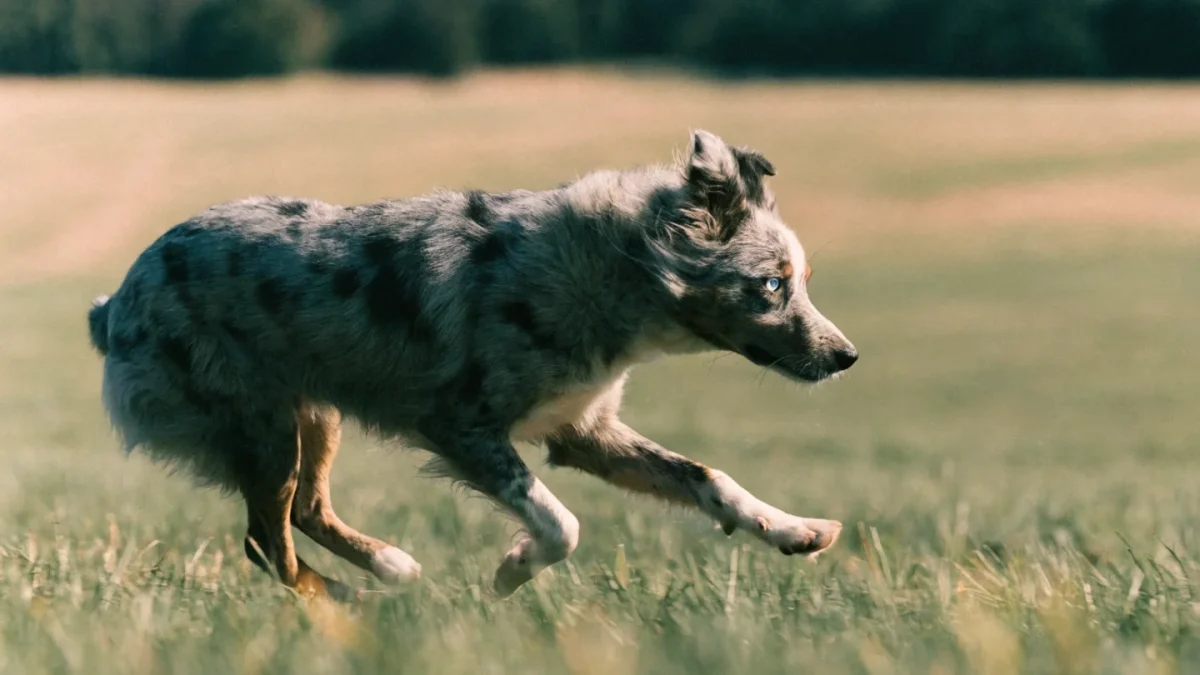
Australian Shepherds are popular enough that everyone has an opinion about them and common enough that most of those opinions contain at least one factual error. Some of these misconceptions are harmless trivia mistakes. Others lead directly to dogs being surrendered to breed rescue when reality doesn't match the marketing. For more, see Australian Shepherd.
Here are five australian shepherd misconceptions myths that persist despite being straightforwardly wrong.
1. Australian Shepherds Are From Australia
This is the breed's foundational myth, and the name itself is responsible. It's understandable. It's also incorrect.
Australian Shepherds were developed in the western United States during the 1800s. The breed's ancestors were herding dogs brought by Basque shepherds who emigrated from the Spain-France border region through Australia before settling in the American West. Ranchers associated the dogs with the Australian sheep they arrived with and applied the label. The dogs' actual origin story involves Basque mountain shepherding traditions, Australian colonial sheep stations, California ranch work, and Idaho rodeo performers — but the name that stuck references none of that.
The full history of the breed traces the Basque-to-Australia-to-America migration in detail. The short version: the only Australian thing about these dogs is the sheep they herded.
2. They're Just High-Energy Dogs That Need More Exercise
This framing is technically true and practically misleading. Yes, Australian Shepherds have high energy. Yes, they need significant exercise — 90-plus minutes daily for adults. But describing the breed's needs as "high energy" misses the critical distinction between physical energy and mental drive.
An Australian Shepherd that has been jogged for an hour but given nothing to think about is still an unsatisfied dog. The breed was developed to make independent decisions about livestock management while maintaining constant awareness of a handler's cues. That cognitive architecture doesn't idle when the body is tired. An Aussie with exhausted legs and an empty brain will still pace, herd the cat, bark at shadows, and rearrange your belongings.
The misconception isn't that Aussies need exercise — it's that exercise alone is the solution. They need work. Activities that engage their herding brain — agility, structured training, actual herding, puzzle-based enrichment — satisfy needs that physical exertion can't reach.
This distinction is why marathon runners sometimes end up with problem Aussies. They provide impressive physical exercise but minimal cognitive engagement, and the dog's behavioral issues persist despite being among the fittest pets in the neighborhood.
3. Their Intelligence Makes Them Easy Dogs
Australian Shepherds are genuinely intelligent dogs. They learn rapidly, retain well, and problem-solve with a creativity that impresses even experienced handlers. None of that translates to "easy."
Intelligence in a dog means the animal learns fast. It doesn't specify what it learns. An Aussie that receives consistent, structured training learns commands, routines, and household rules with remarkable speed. An Aussie that doesn't receive that training learns how to open cabinet doors, how to manipulate its owner with escalating attention-seeking behaviors, and how to escape any enclosure it's had time to study.
The breed's temperament profile includes sensitivity, handler focus, and independent decision-making. In the hands of an experienced owner who provides structure, those traits produce a superbly cooperative partner. In the hands of an owner who expects intelligence to be self-directing, those traits produce a dog that runs the household — and not in a way anyone enjoys.
Compare this to a breed like the Cavalier King Charles Spaniel, which is genuinely easy — moderate energy, low drive, happy to follow the household's pace. That's easy. An Australian Shepherd is capable. Capable and easy are different categories.
4. Merle Aussies Are Unhealthy
This misconception contains a kernel of legitimate concern surrounded by significant misunderstanding.
The merle coat pattern — the distinctive marbled appearance seen in blue merle and red merle Australian Shepherds — is produced by the PMEL17 gene. A single copy of the merle gene (heterozygous) produces a normal, healthy merle-patterned dog. This is the standard merle you see in the breed. There is nothing inherently unhealthy about it.
The health problem arises exclusively when two merle dogs are bred together, producing puppies that receive two copies of the gene (homozygous "double merle"). Double merles have a high incidence of deafness, blindness, and other sensory deficits. This outcome is entirely preventable by never crossing two merle dogs — a practice that responsible breeders universally avoid.
Conflating "merle" with "unhealthy" does a disservice to the breed. The vast majority of merle Australian Shepherds are perfectly sound. The issue isn't the pattern — it's irresponsible breeding practices that produce double merles. Blaming the gene rather than the human decision is like blaming the road for a car accident caused by a drunk driver.
The genetics behind the merle mechanism and the double-merle risk are well documented and available through DNA testing.
5. They'll Calm Down After Puppyhood
People say this about many breeds, and with some — certain companion breeds, some giant breeds — there's truth to it. With Australian Shepherds, it's wishful thinking that leads to years of frustration.
Australian Shepherd puppies are intense. Adolescent Aussies (six months to two years) are even more intense — this is the peak period for herding behavior expression, boundary-testing, and the kind of creative destruction that makes owners question their life choices. The common hope is that things settle down once the dog matures.
They do settle — somewhat. A well-exercised, well-trained adult Aussie at three or four years old is typically calmer than the same dog at eighteen months. The edge comes off. The capacity for stillness increases. The off-switch becomes more reliable.
But "calmer than an adolescent Aussie" is a low bar. A mature Australian Shepherd is still a high-drive, high-energy herding dog that needs substantial daily activity. Many maintain demanding exercise needs well into their seventh or eighth year. Owners who are waiting for the calm phase to arrive are waiting for something that, in the sense they're imagining it, doesn't come.
The honest timeline: Australian Shepherds are intense from puppyhood through middle age. They mellow in their senior years. If you need a calm dog between the ages of one and eight, this is not the breed to choose.