

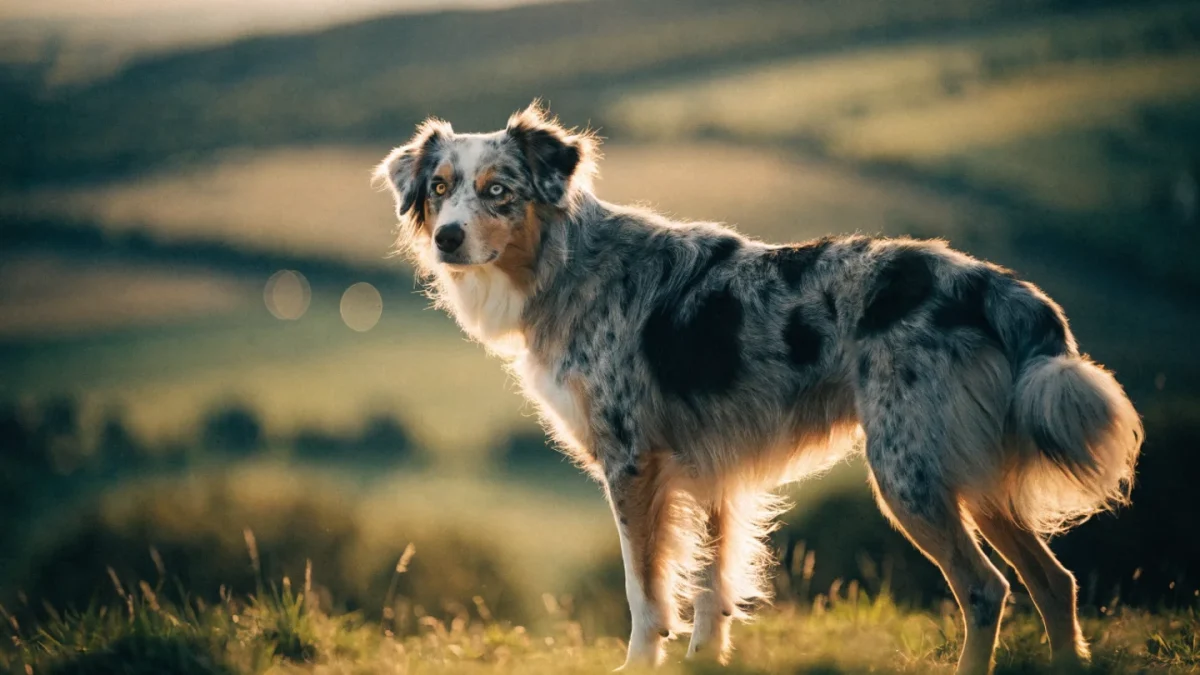
The Australian Shepherd has never been to Australia. Not originally, anyway. The breed was developed in the ranching country of the western United States during the mid-to-late 1800s, shaped by Basque shepherds who brought their herding dogs through Australia on the way to California and the American West. The "Australian" label stuck because ranchers associated the dogs with the sheep — many of them Australian imports — rather than the handlers. It's one of the most enduring misnomers in the dog world, and it trips up nearly everyone who encounters the breed for the first time.
This australian shepherd breed guide covers the real story: where these dogs came from, what drives them, what they need, and what happens when those needs go unmet. Australian Shepherds are extraordinary animals — athletic, intelligent, devoted — but they are not the right dog for most households. That's not a criticism of the breed. It's a reflection of how much these dogs demand from the people who live with them.
Origins: Basque Shepherds, California Ranches, and a Name That Stuck
The most reliable historical accounts trace the Australian Shepherd's ancestry to herding dogs brought to the American West by Basque immigrants during the 1800s. The Basque people — historically from the border region between modern Spain and France — had centuries of shepherding tradition and brought their working dogs with them as they emigrated. Many Basque shepherds spent time in Australia, where the country's booming wool industry needed experienced stockmen, before continuing on to the western United States during the California Gold Rush era and the decades that followed.
The dogs they brought weren't a standardized breed. They were functional herding dogs, likely crossed with other working stock encountered in Australia and later in America. Western American ranchers, seeing these dogs arrive with Australian sheep and Basque handlers who had come from Australian stations, began calling them "Australian Shepherds." The dogs proved exceptional at working the diverse terrain and livestock of the American West — cattle, sheep, and goats across open rangeland, mountain passes, and desert.
By the early 1900s, the Australian Shepherd had established a strong following among ranchers and rodeo performers in the western states. Jay Sisler, an Idaho rancher and rodeo performer, popularized the breed in the 1950s and 1960s through trick-dog acts that toured with rodeos across the country. His dogs — Shorty, Stub, and others — demonstrated the breed's remarkable trainability and showmanship to audiences far beyond the ranching world.
The breed's formal recognition came relatively late. The Australian Shepherd Club of America (ASCA) was founded in 1957 and established a breed registry. The American Kennel Club didn't recognize the breed until 1993 — a delay that reflected both the breed's working-dog identity and active resistance from some ASCA members who feared show-ring priorities would dilute working ability. ASCA continues to maintain its own independent registry and competition programs separate from AKC to this day.
Physical Characteristics
Size and Build
Australian Shepherds are medium-sized dogs built for endurance and agility rather than raw power. Males typically stand 51 to 58 cm at the shoulder and weigh between 23 and 29 kg. Females are slightly smaller, ranging from 46 to 53 cm and 14 to 20 kg. The body is slightly longer than tall, balanced and muscular without heaviness. The overall impression is of a dog designed to work all day — which it was.
There's notable variation between working and show lines. Dogs bred for ranch and competition herding tend to be leaner, rangier, and less heavily coated. Dogs from conformation lines often carry more bone, heavier coats, and a more refined head structure. Both types are Australian Shepherds; they just reflect different breeding priorities.
Coat and Color
The coat is medium-length, weather-resistant, and either straight or slightly wavy, with moderate feathering on the backs of the legs, the chest, and the rear end. Males typically carry heavier mane and frill than females. The undercoat density varies with climate — dogs in colder regions develop thicker undercoats.
Australian Shepherds come in four recognized base colors: black, blue merle, red (liver), and red merle. Each can appear with or without white markings and copper (tan) points. The merle patterns — irregular patches of diluted and full-strength pigment creating a marbled appearance — are the breed's visual signature. No two merle dogs look identical. The pattern is created by the PMEL17 gene (commonly called the merle gene), and its expression varies enormously.
The breed is also known for heterochromia — eyes of two different colors, or eyes with segments of different colors within the same iris. Blue eyes, amber eyes, brown eyes, and combinations thereof are all common, particularly in merle individuals. This is striking to look at, but it's genetic variation, not a defect.
The Tail Situation
Roughly one in five Australian Shepherds is born with a naturally bobbed tail (NBT), caused by a dominant mutation in the T-box gene. Historically, many Aussies that weren't natural bobtails had their tails docked within days of birth. Tail docking practices vary widely by country — some nations have banned the practice entirely while others still permit it. A full-tailed Australian Shepherd is a perfectly standard Australian Shepherd.
Temperament and Behavior
If the golden retriever is the dog that wants to be everyone's friend, the Australian Shepherd is the dog that wants to be one person's entire world. The intensity of the Aussie's bond with its primary handler is something that catches unprepared owners off guard. This breed doesn't just like being near you. It organizes its entire existence around your movements, your mood, and your activities.
What Most People Get Wrong About This Breed
The biggest misconception is that Australian Shepherds are "just high-energy dogs that need a lot of exercise." That framing misses the point entirely.
Exercise is necessary, yes — we'll cover that. But Australian Shepherds aren't just physically energetic. They're mentally relentless. This is a breed that was developed to make independent decisions in the field while also maintaining constant awareness of the handler's position and intent. That combination of independent problem-solving and handler focus doesn't switch off when the dog comes inside. An Aussie that has been jogged for an hour but given nothing to think about is still an unsatisfied Aussie.
The second major misconception is that their intelligence makes them easy. It doesn't. It makes them fast learners, which means they learn bad habits just as quickly as good ones. An understimulated Australian Shepherd will find its own projects — rearranging your garden, disassembling your furniture, herding your children, managing the movements of every living thing in the household. These are not behavioral problems. They're herding behaviors applied to the only available targets.
The Velcro Factor
Australian Shepherds earned the nickname "Velcro dogs" because they physically attach themselves to their person. They follow you from room to room. They lie at your feet while you work. They position themselves between you and other people or animals. Some of this is affection. Some of it is the herding instinct expressing itself as resource management — you are the most important thing in the environment, and the Aussie's job is to keep track of you.
This bonding intensity is wonderful if you want a dog that's deeply engaged with your daily life. It becomes a problem if you need the dog to function independently. Australian Shepherds are among the breeds most prone to separation anxiety, and the signs — destructive behavior, excessive vocalization, house-soiling, escape attempts — can be severe.
Herding Instinct in Daily Life
The herding drive in Australian Shepherds is strong, and it doesn't require sheep to express itself. Aussies will herd children, other pets, bicycles, joggers, and cars. The herding behavior includes nipping at heels — a technique used to move reluctant livestock — which is alarming to guests and potentially dangerous with small children. This isn't aggression. It's hardwired working behavior directed at moving targets, and it requires consistent management.
Aussies that work livestock regularly have an appropriate outlet for this drive. Aussies in suburban homes do not, and the behavioral consequences of unexpressed herding instinct are significant. This is the single most common reason Australian Shepherds end up in breed-specific rescue.
Health Profile
Australian Shepherds are generally robust working dogs, but the breed carries several serious genetic predispositions that prospective owners need to understand.
MDR1 Drug Sensitivity
Roughly 50% of Australian Shepherds carry at least one copy of the MDR1 gene mutation (now also called ABCB1), which affects the blood-brain barrier's ability to pump certain drugs out of the central nervous system, based on population screening data from Washington State University's Veterinary Clinical Pharmacology Laboratory. Dogs with two copies of the mutation (homozygous) can have severe, potentially fatal reactions to common veterinary medications including ivermectin, loperamide, and several chemotherapy drugs. Dogs with one copy (heterozygous) have intermediate sensitivity.
This is not optional knowledge. Every Australian Shepherd should be MDR1 tested, and every veterinarian treating an Aussie should have the results on file. A DNA test is widely available and affordable.
Merle-to-Merle Breeding Risks
Breeding two merle-patterned dogs together produces, on average, 25% "double merle" puppies — dogs homozygous for the merle gene. Double merles frequently have severe deficits including deafness, blindness, microphthalmia (abnormally small eyes), and other ocular and auditory defects. This is well-documented genetics, not speculation, and responsible breeders never cross two merle dogs. The Australian Shepherd genetics article covers this in detail.
Hip and Elbow Dysplasia
Hip dysplasia occurs in Australian Shepherds at moderate rates. Screening through standardized evaluation programs is standard practice in responsible breeding programs. Elbow dysplasia is less common but still present. Both conditions are polygenic with environmental influence — nutrition, growth rate, and exercise during development all affect outcomes.
Eye Conditions
Australian Shepherds are predisposed to several hereditary eye conditions including Collie Eye Anomaly (CEA), progressive retinal atrophy (PRA), cataracts, and iris coloboma. Annual eye examinations by a veterinary ophthalmologist are recommended, and breeding stock should have current eye clearances. DNA tests exist for CEA and some forms of PRA.
Epilepsy
Idiopathic epilepsy — seizures with no identifiable structural cause — occurs in Australian Shepherds at rates higher than the general dog population. The heritability pattern appears complex and is not yet fully characterized. There is no commercially available pre-breeding DNA test for idiopathic epilepsy in the breed as of current research, though genetic studies are ongoing.
Other Health Concerns
- Autoimmune conditions: Australian Shepherds have elevated rates of autoimmune thyroiditis, hemolytic anemia, and other immune-mediated diseases compared to the general population.
- Cancer: Lymphoma and hemangiosarcoma occur in the breed, though at lower rates than in breeds like golden retrievers.
- Allergies: Skin allergies and environmental sensitivities are relatively common.
Lifespan
The average Australian Shepherd lifespan is approximately 12 to 15 years, placing it in the upper range for medium-sized breeds. Well-bred individuals from health-tested lines that maintain healthy body condition throughout life can and do reach the higher end of that range.
Grooming Requirements
Coat Maintenance
The medium-length double coat needs brushing two to three times per week to manage loose hair and prevent matting, particularly behind the ears, under the collar, in the armpit areas, and on the pants (the longer fur on the rear thighs). During the twice-annual coat blow — spring and fall — daily brushing with an undercoat rake becomes necessary. An Aussie in full coat blow will produce remarkable quantities of loose undercoat.
Bathing every six to eight weeks is typical for a pet Aussie, though working dogs may need more or less frequent bathing depending on conditions. Over-bathing strips the coat's natural oils and reduces its weather-resistant properties.
Never Shave the Coat
The double coat insulates against both cold and heat and provides UV protection. Shaving an Australian Shepherd disrupts the coat's thermoregulatory function and the coat often grows back with altered texture — the undercoat may overgrow relative to the guard hairs, reducing the coat's ability to repel water and debris. Shaving does not reduce shedding. It just makes the shed hairs shorter.
Nails, Ears, and Teeth
Nail trimming every two to three weeks, weekly ear checks (Australian Shepherds are less prone to ear infections than drop-eared breeds, but the semi-prick ears still need monitoring), and dental care through brushing or appropriate chews several times per week.
Exercise and Activity
An adult Australian Shepherd needs a minimum of 90 minutes of exercise daily, and "exercise" in this context means more than walking. Aussies need activities that combine physical exertion with mental engagement. A long walk where the dog trots beside you at a steady pace satisfies only part of the equation.
Effective Activities
- Herding work: Nothing satisfies an Australian Shepherd like actual herding. If you have access to herding lessons or livestock work, the difference in your dog's behavior and satisfaction will be dramatic.
- Agility, flyball, and disc sports: These channel the Aussie's speed, agility, and desire to work with a handler. Competitive or recreational — the dog doesn't care about ribbons, only the work.
- Hiking and trail running: Aussies are excellent trail partners with the endurance to match serious hikers. Varied terrain keeps the brain engaged in ways flat-ground walking does not.
- Structured training sessions: Advanced obedience, trick training, and scent work. Fifteen minutes of focused training can tire an Aussie's brain more than 30 minutes of fetch.
- Puzzle toys and problem-solving: Interactive feeders, hide-and-seek games, and novel challenges prevent the mental stagnation that drives destructive behavior.
Puppy Exercise Limits
Australian Shepherd puppies grow rapidly, and over-exercising growing joints risks long-term orthopedic damage. The general guideline of five minutes of structured exercise per month of age, twice daily, is a reasonable framework. Puppies should avoid repetitive impact activities — jumping from heights, extended jogging on hard surfaces — until growth plates close, typically around 12 to 18 months depending on the individual.
Free play on soft surfaces is different from forced exercise and can be more liberal. Let the puppy set its own pace and take breaks when it wants to.
Nutrition Fundamentals
Australian Shepherds are generally less food-obsessed than retrievers, but they're still athletic dogs with meaningful caloric requirements that shift based on activity level.
Feeding Approach
Feed measured meals twice daily for adults. Active working or sporting Aussies may need caloric intake in the range of 1,200 to 1,800 calories per day depending on body weight and work intensity, while less active pet Aussies need considerably less. Adjust portions based on body condition rather than fixed guidelines — you should be able to feel the ribs easily without pressing, see a defined waist from above, and observe a slight abdominal tuck from the side.
Puppies need three to four meals daily until around six months, then transition to twice-daily feeding. Growing Aussies benefit from controlled growth — rapid weight gain during development increases orthopedic stress in a breed already predisposed to joint issues.
Weight Management
A lean Australian Shepherd is a healthy Australian Shepherd. Excess weight accelerates joint degeneration, reduces athletic performance, and compounds every genetic health predisposition on the list above. These dogs should look athletic. If your Aussie looks chunky, it's carrying too much weight.
Living Situation
The Ideal Environment
Australian Shepherds do best with access to secure outdoor space and an owner who actively involves the dog in daily life. A house with a fenced yard and an active owner is ideal. But a large property with a passive owner who expects the dog to entertain itself is worse than a small apartment with someone who trains, exercises, and engages the dog multiple times daily.
The critical variable isn't space. It's human engagement.
Apartment Living
Possible, but demanding. An Aussie in an apartment requires a highly committed owner who provides extensive daily exercise and mental stimulation outside the home. The dog will also need to tolerate being in close quarters without adequate outdoor access during inclement weather. Most Australian Shepherds can adapt if their needs are met consistently — but the margin for error is much smaller than with a calmer breed.
Multi-Pet Households
Aussies generally coexist well with other dogs, particularly if socialized early. Their herding instinct will express itself with housemate pets — expect your Aussie to manage the movements of other animals in the home. Cats and small animals need proper introductions and ongoing supervision, especially with young Aussies whose herding nip reflex is still strong.
The Right Owner for This Breed
I'll give you the honest version. An Australian Shepherd is the right dog for you if:
- You have 90-plus minutes daily for structured physical and mental exercise — every day, regardless of weather or schedule
- You want a dog that's deeply involved in your life and will shadow you constantly
- You're experienced enough with dogs to manage herding behaviors, redirect nipping, and provide consistent structure
- You can commit to early, extensive socialization and ongoing training
- You understand the genetic risks — MDR1, merle genetics, eye conditions, epilepsy — and will test and screen accordingly
- You have a plan for the dog's mental needs, not just physical exercise
An Australian Shepherd is the wrong dog for you if:
- You work long hours away from home without a care plan for the dog
- You want an easy-going companion that's happy with a daily walk and some couch time
- You have young children and aren't prepared to manage herding behavior directed at them
- You're getting the breed because you think they're beautiful — and they are — without fully understanding the behavioral commitment
- You've never owned a high-drive working breed before and don't have mentorship or a training plan
Australian Shepherds are among the most capable, versatile, and deeply bonding dogs you can share your life with. They are also among the most frequently surrendered to rescue when the reality doesn't match the expectation. The breed deserves an owner who understands the difference between wanting a beautiful dog and being ready for an intense partnership.
Frequently Asked Questions
Are Australian Shepherds actually from Australia?
No. The breed was developed in the western United States during the 1800s by Basque shepherds who brought herding dogs through Australia before emigrating to America. The name reflects the dogs' association with Australian sheep imports, not the breed's geographic origin.
How much exercise does an Australian Shepherd really need?
Plan for a minimum of 90 minutes daily, combining physical activity with mental challenges. Walking alone is insufficient — these dogs need activities like herding work, agility, advanced training, trail running, or structured games that engage their problem-solving abilities. Puppies need shorter, age-appropriate sessions, but adult Aussies maintain high energy well into their senior years.
Do Australian Shepherds get along with children?
Australian Shepherds can be excellent family dogs with proper management, but their herding instinct creates a specific challenge: they may nip at children's heels to "herd" them, particularly when children are running. This behavior requires consistent redirection, not punishment. Families with very young children should be prepared for active management of dog-child interactions, especially during the first two to three years.
What is the merle gene and why does it matter?
The merle gene (PMEL17) creates the distinctive marbled coat pattern seen in blue merle and red merle Australian Shepherds. It matters because breeding two merle-patterned dogs together produces a 25% chance of "double merle" puppies, which frequently suffer from deafness, blindness, or both. Responsible breeding always pairs a merle dog with a solid-colored dog to avoid this outcome.
Are Australian Shepherds good for first-time dog owners?
Generally, no. Australian Shepherds are intelligent, sensitive, and high-drive dogs that require experienced handling, consistent training, and extensive daily engagement. First-time owners who are dedicated, have done thorough research, and have access to a good trainer or mentor can succeed — but the learning curve is steep compared to breeds with lower drive and less complex behavioral profiles.