

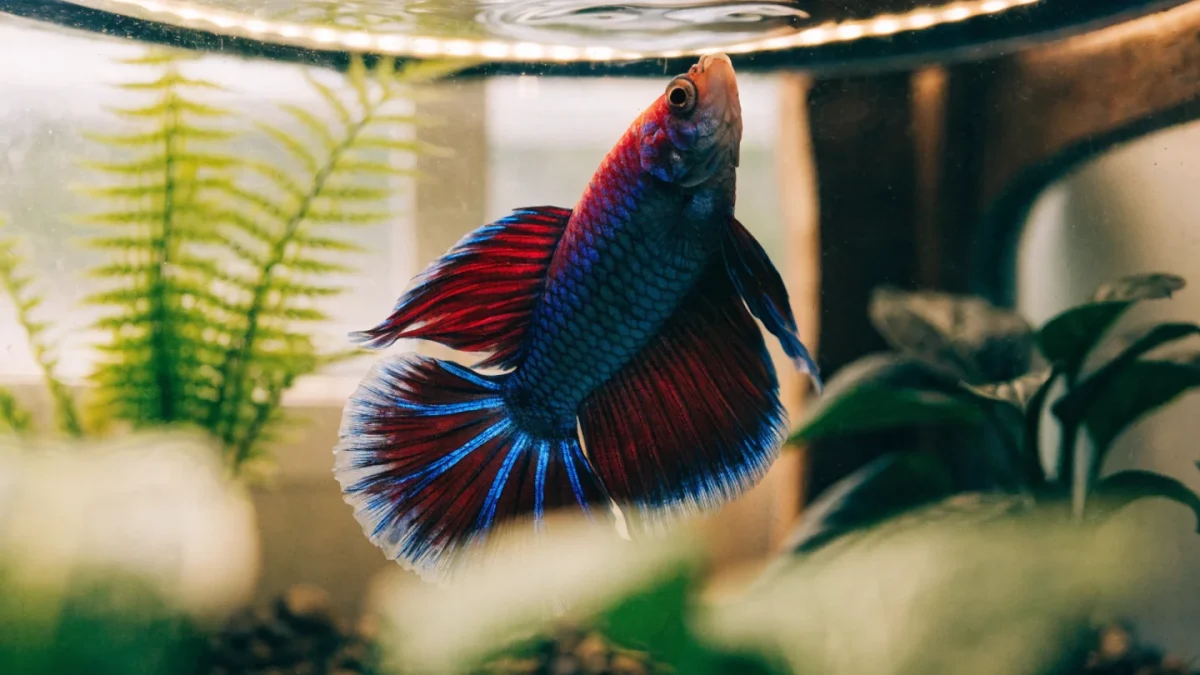
The first betta I kept alive for more than six months was the one I almost didn't buy. He was sitting in a cup at a reptile expo — yes, a reptile expo — wedged between a rack of ball pythons and a table of scorpions, his fins clamped, his color washed out to a grayish blue. I brought him home, put him in a cycled 10-gallon with a heater set to 78°F, and within a week he was a completely different animal. Fins spread wide, deep cobalt body, flaring at his own reflection. That fish lived four and a half years.
Proper betta fish care starts with understanding what these fish actually are: tropical labyrinth fish native to the warm, shallow waters of Southeast Asia. They need heated, filtered tanks of at least 5 gallons, water between 76-82°F, a protein-rich diet of pellets and frozen foods, and regular water changes. The tiny unheated bowls they're marketed in are a slow death sentence.
I've kept bettas alongside my reptile collection for over a decade now. The overlap in husbandry thinking is striking — temperature gradients matter, habitat design matters, and the animal you see in a pet store cup bears almost no resemblance to a healthy specimen. This guide covers everything I've learned about keeping them right.
Tank Size and Setup
Five gallons is the minimum. I keep most of mine in 10-gallon tanks, and the difference in behavior is night and day compared to smaller setups. In a 10-gallon, a betta will patrol territories, investigate decorations, and display natural foraging behavior. In a 2-gallon, they hover.
The tank needs a lid. Bettas jump. I lost my second-ever betta to a gap between the filter and the tank rim that I didn't think was wide enough. It was.
For substrate, fine gravel or sand both work. I prefer dark sand — it shows off the fish's color and bettas seem calmer against dark substrates versus bright white. Live plants are a major bonus. Java fern, anubias, and floating plants like water lettuce give the betta cover, reduce stress, and help with water quality. Plastic plants with sharp edges will shred those elaborate fins, so if you go artificial, stick with silk.
A gentle filter is non-negotiable. Bettas are not strong swimmers — those flowing fins create drag. Sponge filters are ideal for betta tanks because they provide biological filtration without creating a current that pushes the fish around. Hang-on-back filters work too if you baffle the output.
And the heater. I'll say this plainly: if your room temperature sits below 76°F, you need a heater. Bettas are tropical. An adjustable heater with a thermostat is worth the investment over a preset one, because preset heaters can't be calibrated and some run hot or cold.
Water Parameters
Bettas are more tolerant of water chemistry variations than many tropical fish, but that tolerance gets mistaken for invincibility. They're not invincible.
The numbers that matter:
- Temperature: 76-82°F (24-28°C). I keep mine at 78°F. Anything below 74°F and you'll see lethargy, appetite loss, and increased disease susceptibility.
- pH: 6.5-7.5. Most tap water falls in this range. Stability matters more than hitting a perfect number — chasing pH with chemicals causes more harm than a slightly high or low reading.
- Ammonia and nitrite: 0 ppm. Always. These are toxic. If you're reading anything above zero, your tank isn't cycled or something has crashed.
- Nitrate: Below 20 ppm. Weekly water changes of 20-25% keep this in check.
I test water weekly with a liquid test kit. Strip tests exist, but they're less accurate and I've seen too many false readings lead to bad decisions. The liquid kits pay for themselves the first time they catch an ammonia spike early.
The Nitrogen Cycle
This is the single most important concept in fishkeeping, and it's the thing most new betta owners skip. I get messages about this constantly — someone bought a betta, put it in a new tank, and two weeks later the fish is gasping or covered in white spots.
Fish produce ammonia through waste and respiration. Beneficial bacteria in your filter convert ammonia to nitrite, then to nitrate. Nitrate is far less toxic and gets removed through water changes. This bacterial colony takes 4-6 weeks to establish in a new tank. That's the cycle.
You can cycle a tank before adding the fish — fishless cycling with pure ammonia is the responsible approach. Or you can use bottled bacteria products to speed things up, though results vary. What you should not do is put a fish in an uncycled tank and hope for the best. That's an ammonia burn waiting to happen.
Diet and Feeding
Bettas are carnivores. In the wild, Betta splendens (their scientific name — I'll stick with "betta" from here) eat insect larvae, small crustaceans, and zooplankton. Their upturned mouths are built for surface feeding.
A solid betta diet looks like this:
Daily staple: High-protein betta pellets. Look for ones where whole fish or insect meal is the first ingredient, not wheat flour or fillers. Four to six pellets per feeding, once or twice daily. Their stomach is roughly the size of their eye — it's easy to overfeed.
Supplements (2-3 times per week): Frozen bloodworms, brine shrimp, or daphnia. These add variety and nutritional completeness. I rotate through all three. Freeze-dried versions work in a pinch but soak them in tank water first — they expand and can cause bloating if eaten dry.
Fasting: One day per week with no food. Sounds harsh, but it helps prevent constipation and bloating, which are surprisingly common in bettas fed daily without breaks. My fasting day is usually Monday. The fish don't mind.
I had a betta years ago — a gorgeous crowntail named Copper — who refused pellets entirely for the first two weeks I had him. Would spit them out repeatedly. Turned out he'd been raised on live food by the breeder. I transitioned him slowly by offering frozen bloodworms with a single pellet mixed in, gradually shifting the ratio. Took about ten days. Stubbornness is a betta trait.
Common Health Issues
Bettas in properly maintained tanks rarely get sick. Most diseases I see in bettas trace back to one of three things: poor water quality, temperature too low, or overfeeding.
Fin rot is probably the most common issue. The fins develop ragged edges, sometimes with black or red discoloration. Mild cases resolve with clean water and stable temperature alone — do daily 25% water changes for a week and keep the temp at 80°F. Severe fin rot with rapid progression may need medication, and that's a conversation for an aquatic vet or experienced keeper, not something I'll dose-recommend here.
Ich (white spot disease) shows up as small white grains scattered across the body and fins. It's a parasite, and it thrives in stressed, cold fish. Raising the temperature to 82-84°F for a week often clears mild cases because it speeds up the parasite's lifecycle. Aquarium salt at 1 tablespoon per 5 gallons can help, though be cautious with salt if you have live plants or tankmates that are salt-sensitive.
Swim bladder disorder causes the fish to float sideways, sink, or struggle to maintain position. Usually linked to overfeeding or constipation. Fasting for 2-3 days and then offering a small piece of blanched, de-shelled pea often helps. If it recurs frequently, the diet needs adjusting.
Velvet is sneakier than ich — it looks like a fine gold or rust-colored dust on the body, often visible only under a flashlight at an angle. It's a parasite and it's aggressive. By the time you notice it, the fish is usually quite stressed. Darkness (cover the tank), heat, and aquarium salt are the first-line treatment.
I check my bettas every feeding for behavioral changes. A healthy betta should be alert, responsive to your presence (mine follow my finger across the glass), and actively moving. Clamped fins, lethargy, loss of appetite, or sitting at the bottom are all early warning signs that something is off.
Tankmates
Bettas have a reputation as murderous loners, and honestly, some of them are. But many bettas can live peacefully with carefully chosen tankmates — the key is picking species that won't trigger their aggression and providing enough space.
The tank needs to be at least 10 gallons for community keeping. Five gallons is a betta-only size.
Generally safe tankmates:
- Corydoras catfish — bottom dwellers that stay out of the betta's space
- Snails (nerite, mystery) — most bettas ignore them entirely
- Shrimp (amano, ghost) — though some bettas will hunt smaller shrimp
- Kuhli loaches — nocturnal, hiding-oriented, and non-confrontational
- Harlequin rasboras — fast, peaceful, and they school in the mid-water zone
Avoid:
- Other male bettas. Period. Two males in a tank will fight to the death.
- Guppies or any fish with long, colorful fins — the betta may mistake them for a rival
- Fin nippers like tiger barbs — they'll shred the betta's fins
- Slow-moving surface dwellers like gouramis — direct territorial overlap
Every betta has a different temperament. I've had bettas who coexisted peacefully with a school of ember tetras for years, and I've had one who attacked a snail. You need a backup plan if the introduction goes badly — a divider or a separate tank ready to go.
If you're considering tankmates, the goldfish care requirements are vastly different from bettas in terms of temperature and tank size, so never house them together despite both being common "beginner" fish.
Enrichment and Behavior
Bettas are smarter than most people expect. They recognize their owners — I'm not anthropomorphizing here, they genuinely learn to associate specific faces with food and will react differently to familiar people versus strangers. Mine come to the front of the tank when I sit down at my desk.
Environmental enrichment matters. Rearranging decorations every few weeks gives them something new to investigate. Floating a ping pong ball on the surface provides interaction — some bettas will push it around. A small mirror held up to the tank for 1-2 minutes a day lets them flare, which is a natural behavior that exercises their gill covers and fins. Don't leave the mirror there constantly though — chronic flaring causes stress.
Bettas also benefit from visual access to activity. A tank near a window (not in direct sunlight — algae nightmare) or in a room where people move around keeps them stimulated. A betta in a dark corner of a quiet room with no decor is a bored betta, and bored bettas become lethargic or glass-surf obsessively.
Lifespan and What Affects It
A well-cared-for betta lives 3-5 years on average. Some reach 6 or 7. Most bettas sold in stores are already 6-12 months old, so the clock starts before you buy them.
The biggest lifespan factors are water quality and temperature stability. Chronic exposure to low temperatures doesn't kill immediately — it suppresses the immune system gradually until an infection takes hold. Same with poor water quality. The damage is cumulative.
Genetics play a role too. Some lines are bred so aggressively for fin type and color that they're structurally fragile — massive fins that are prone to tearing and impede swimming. It's an uncomfortable reality in the betta hobby, and I wish more breeders prioritized health over aesthetics. The wild-type betta, with shorter fins and explosive colors, is a healthier animal in most cases.
Quick-Reference Care Parameters
| Parameter | Range |
|---|---|
| Tank size | 5 gallons minimum, 10+ preferred |
| Temperature | 76-82°F (24-28°C) |
| pH | 6.5-7.5 |
| Ammonia / Nitrite | 0 ppm |
| Nitrate | < 20 ppm |
| Diet | Carnivore — pellets + frozen foods |
| Feeding | 1-2x daily, fast one day/week |
| Lifespan | 3-5 years average |
| Temperament | Territorial, especially males |
Frequently Asked Questions
Can female bettas live together?
Female bettas can be kept in groups called sororities, but this is an advanced setup that goes wrong more often than it works. You need at least 20 gallons, heavy planting for line-of-sight breaks, and a group of five or more so aggression disperses. Even then, one dominant female can terrorize the rest. I've set up two sororities over the years. One worked beautifully for eight months. The other fell apart in a week when a new addition triggered a dominance cascade. If you're asking whether it's a good idea for a first betta tank — it's not.
Do bettas really live in puddles in the wild?
This is the myth that launched a million tiny betta cups. Wild bettas live in rice paddies, shallow ponds, and slow-moving streams across Thailand and neighboring countries. During dry season, some get stranded in smaller pools temporarily — but these are survival situations, not ideal habitats. Their labyrinth organ lets them gulp atmospheric air, which is an adaptation for oxygen-poor water, not a license to keep them in a jar on your desk.
How can I tell if my betta is happy?
Active swimming around the tank. Bright, vibrant color. Fins fully spread rather than clamped against the body. Interest in food. Curiosity about new things — a healthy betta investigates changes in their environment. Flaring occasionally at stimuli is normal and healthy. What you don't want to see: prolonged glass surfing (swimming repeatedly against the glass), lethargy, hiding constantly, or refusing food for more than two days.
Is tap water safe for bettas?
Tap water treated with a water conditioner is fine. The conditioner neutralizes chlorine and chloramine, which are toxic to fish. Add the conditioner to new water before putting it in the tank, not after. I keep a bucket of treated, temperature-matched water ready at all times so water changes take five minutes instead of thirty.