

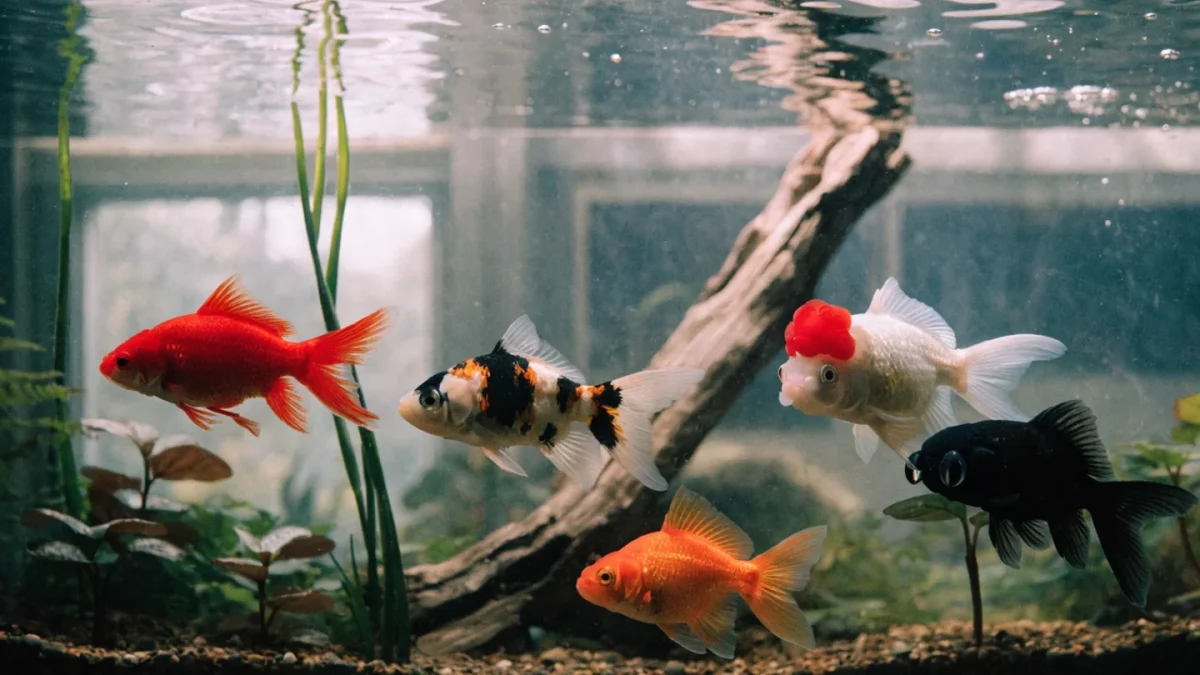
I brought a telescope-eye goldfish to a reptile expo once — long story, a friend needed help transporting fish she'd sold online — and three separate people asked me what species it was. One guy was convinced it was some kind of marine fish. The sheer range of goldfish varieties catches people off guard because the mental image most have is the plain orange fish from a carnival bag.
Goldfish types divide into two major groups: single-tail varieties, which are sleek, fast, and grow very large (best for ponds or oversized tanks), and fancy double-tail varieties, which are rounder, slower, and better suited to indoor aquariums. There are over 200 recognized varieties across these groups, though most keepers encounter maybe 15-20 commonly available ones. Knowing which group a goldfish belongs to determines everything about how you house and feed it.
If you're still getting your bearings on goldfish care fundamentals, start there before choosing a variety — tank size and filtration decisions depend heavily on which type you bring home.
Single-Tail Goldfish
Common Goldfish
The original. Flat-bodied, single-tailed, available in orange, red, white, and yellow. Commons are the hardiest goldfish alive and also the most abused, since they're the ones sold in bulk at fairs and pet stores for nearly nothing.
What people don't realize: these fish routinely reach 25-35 centimeters and can live past 20 years. They belong in ponds or tanks of 150 liters minimum for one fish. I've seen commons kept in outdoor ponds reach sizes that shock visitors — "that's a goldfish?" is a reaction I never get tired of.
Comet Goldfish
Similar to commons but with a longer, more deeply forked tail fin that trails behind like a banner. Comets are faster swimmers and even more active, which makes them spectacular in ponds but difficult in tanks — they need room to sprint. Most comets you'll find are solid orange or red-and-white (sarasa pattern).
A comet in an adequate pond with good water quality is one of the most striking freshwater fish you can keep. The same fish in a 40-liter tank is a tragedy in slow motion.
Shubunkin
The calico of the single-tail world. Shubunkins have the same body shape as commons but carry a blue, orange, black, and white calico pattern with a nacreous (semi-transparent) scale type. London shubunkins look more like commons; Bristol shubunkins have wider, more developed tail fins.
I have a particular fondness for Bristols. The tail shape is genuinely elegant, and the blue coloring gets deeper with age in well-kept fish.
Fancy (Double-Tail) Goldfish
This is where things get diverse — and where the care requirements start diverging from variety to variety.
Oranda
The one with the "wen" — that lumpy, raspberry-like growth on the head. Orandas are probably the most popular fancy variety, and for good reason. They're hardy by fancy standards, personable, and available in nearly every color. Red-cap orandas (white body, red wen) are iconic.
The wen needs monitoring. It can overgrow and cover the eyes, and the folds trap bacteria if water quality isn't maintained. But in clean water, orandas are a forgiving first fancy for beginners.
Ryukin
Deep-bodied with a pronounced shoulder hump behind the head. Ryukins have flowing double tails and come in red, white, calico, and chocolate. They're one of the sturdier fancy types — good appetites, active swimmers (for fancies), and less prone to swim bladder issues than some of the more extreme body shapes.
A friend of mine keeps a pair of calico ryukins that are easily 15 centimeters each after four years. They're the fish that made me take goldfish seriously when I was primarily focused on reptiles.
Ranchu
Sometimes called the "king of goldfish" in Asia, ranchus have no dorsal fin, a curved back, and a wide head with wen development. They're essentially round viewed from above. Beautiful, but that extreme body shape comes with trade-offs — they're slow swimmers, sensitive to temperature swings, and prone to buoyancy problems.
Not a beginner variety. I've kept them, and I'll be honest: they require more vigilance than many tropical species I've worked with.
Telescope Eye
The signature feature is obvious — protruding eyes that bulge significantly from the head. Available in black (the classic "black moor"), red, calico, and panda patterns. Their vision is actually poor despite the eye size, which means they struggle to compete for food and can injure their eyes on sharp decorations.
Tank setup for telescopes needs to be sparse and smooth. No sharp rocks, no pointed driftwood, no rough plastic plants. I use rounded river stones and silk plants exclusively with my telescopes.
Pearlscale
Each scale has a raised, dome-shaped center that creates a pearl-like texture across the body. Combined with their nearly spherical shape, pearlscales look like swimming golf balls. They're fragile — damaged pearl scales don't regenerate with the same raised shape, and their round bodies make them highly susceptible to swim bladder issues.
Celestial Eye
The eyes point permanently upward. These fish were bred to be viewed from above in shallow ponds. They can't see food that sinks quickly, they can't navigate obstacles below them, and they need tankmates (if any) that won't outcompete them. One of the more challenging varieties.
Bubble Eye
Fluid-filled sacs beneath the eyes that wobble as the fish swims. The sacs are fragile and can rupture on sharp objects — they do heal, but slowly and often unevenly. No filter intakes without sponge covers, no sharp decor, no aggressive tankmates. These are display-only fish for experienced keepers.
I've seen a lot of burst bubble eyes at reptile expos where sellers didn't pack them carefully. It's not pretty.
Lionhead
Similar to ranchus but with a more pronounced wen and a straighter back profile. Lionheads are the precursor variety to ranchus, originating from different breeding programs. Care requirements are essentially the same — no dorsal fin, sensitive to currents, prone to buoyancy problems.
Choosing the Right Type
Your decision should start with your setup, not your preference. Work backwards:
Have a pond or plan to build one? Commons, comets, and shubunkins. They'll thrive outdoors year-round in temperate climates and reward you with stunning growth and color.
Have a large indoor tank (100+ liters)? Orandas or ryukins. Hardy, personable, and visually striking without being as delicate as extreme fancy types.
Experienced with fish keeping and want a challenge? Ranchus, telescopes, pearlscales. Beautiful but less forgiving of mistakes.
Want to watch goldfish from above (tub or shallow pond)? Ranchus and celestials were literally bred for this viewing angle.
The one pairing to absolutely avoid: any single-tail with any fancy in the same tank. Singles are faster, more aggressive feeders, and will slowly starve fancies out. I've watched it happen even in well-fed tanks — the speed difference is just too significant.
Frequently Asked Questions
What is the hardiest goldfish type for beginners?
Common goldfish are the toughest overall — they tolerate a wider range of temperatures and water conditions than any fancy variety. But if you want an indoor aquarium fish, orandas are the most forgiving fancy type. They eat readily, handle minor water quality fluctuations better than telescopes or ranchus, and they're interactive enough to feel like actual pets.
How big do fancy goldfish get?
Most fancies reach 15-20 centimeters body length at maturity, though orandas can push past 25 centimeters in spacious tanks with good nutrition. That's body length only — tail fins add substantially more. People buying 3-centimeter fancies at pet stores rarely realize they're looking at a fish that won't reach full size for another three to four years.
Can I keep different fancy types together?
Yes, with some caution. Stick to varieties with similar swimming ability. Orandas, ryukins, and fantails work well together. Telescopes, bubble eyes, and celestials should be kept with their own kind or with equally slow varieties — faster fancies will outcompete them at feeding time.
Do goldfish colors change over time?
Constantly. Juvenile goldfish start bronze or dark, then develop their adult coloring over months. After that, color can continue shifting throughout life. Orange fish may lighten to yellow or white. Calico patterns shift. Black moors sometimes develop orange patches with age. Diet, lighting, and genetics all play a role, and none of it indicates illness on its own.