

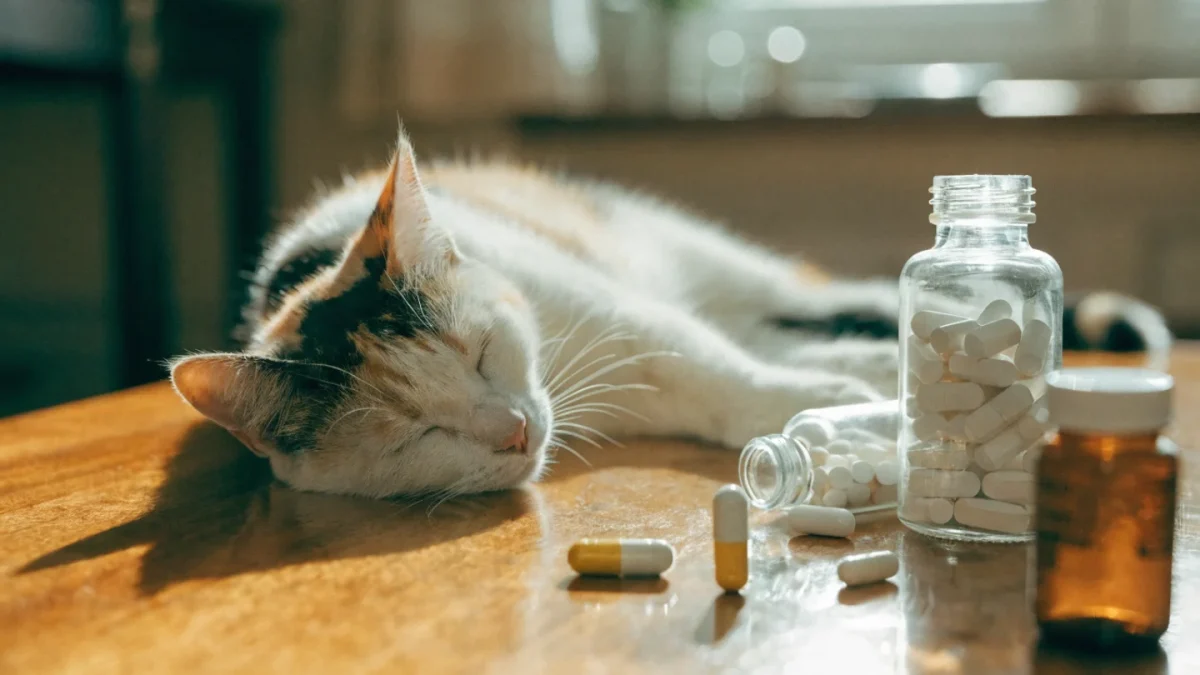
In fifteen years of practice, I've never once seen a pet poisoned because the owner meant to harm them. Every single medication accident I've worked involves an owner who didn't know the risk, didn't realize the pet could access it, or made an honest error. Which is exactly why I think every pet owner needs to know this list.
Not to make you anxious. To give you the information that makes accidents preventable.
The Most Dangerous Human Medications for Pets
1. Ibuprofen and Naproxen (Advil, Motrin, Aleve)
Consistently among the top causes of pet poisoning calls. These NSAIDs cause GI ulceration and acute kidney failure in dogs. The toxic dose is lower than most owners assume — a single 200mg ibuprofen tablet can cause significant GI damage in a small dog. Naproxen (Aleve) is even more potent; the margin between "therapeutic" and toxic doesn't really exist in veterinary terms.
In cats, these are even more dangerous. Cats have much less capacity to metabolize NSAIDs and experience kidney failure faster.
Signs: vomiting (sometimes bloody), diarrhea, lethargy, not eating, kidney signs (increased or decreased urination, depression).
Timeline: GI signs within hours. Kidney failure may develop over 24–72 hours.
2. Acetaminophen (Tylenol)
The go-to safe alternative in human medicine. Extraordinarily dangerous for cats; a single 325mg regular-strength tablet can kill a cat. Cats cannot glucuronidate acetaminophen (the metabolic pathway that renders it harmless in humans), so it accumulates as toxic metabolites that destroy red blood cells' ability to carry oxygen and cause liver damage.
Dogs are more tolerant than cats but still susceptible to liver failure at higher doses or with repeated exposure.
Signs in cats: brown or blue-tinged gums (this is the red blood cell damage), difficulty breathing, facial and paw swelling, collapse. Onset within 1–4 hours.
Signs in dogs: lethargy, vomiting, yellow tinge to gums (jaundice), painful abdomen. Liver damage may take longer to manifest.
3. SSRIs and Antidepressants
Fluoxetine (Prozac), sertraline (Zoloft), escitalopram (Lexapro), and similar SSRIs are among the most prescribed drugs in North American households. They're kept on nightstands, on bathroom counters, in pill organizers.
In pets, these cause serotonin syndrome — a serious and uncomfortable condition involving agitation, restlessness, muscle tremors, elevated heart rate, elevated temperature, dilated pupils, and in severe cases, seizures.
Tricyclic antidepressants (amitriptyline, clomipramine) add cardiac effects to this picture: arrhythmias, dangerous heart rhythm disturbances.
Signs: appear within 1–4 hours. The dog that seemed to eat a pill and then got strange, frantic, or developed muscle twitching needs to be seen immediately.
4. ADHD Medications (Methylphenidate, Amphetamines)
Ritalin, Concerta, Adderall, Vyvanse — these are stimulants. In pets they cause stimulant toxicity: extremely elevated heart rate, high blood pressure, hyperthermia, hyperactivity progressing to tremors and seizures.
These are high-risk because households with children on ADHD medication may have pills dispensed into smaller containers, left accessible during morning medication routines, or dropped without notice.
Signs: rapid onset, within 30–60 minutes. Hyperactivity, elevated temperature, tremors, cardiovascular signs.
5. Blood Pressure Medications
Calcium channel blockers (amlodipine, diltiazem, verapamil) and beta blockers (metoprolol, atenolol, propranolol) are prescribed for hypertension and cardiac conditions. They work in pets the same way they work in humans — by slowing the heart and reducing blood pressure. Too much = cardiovascular collapse.
Signs: profound lethargy, weakness, slow heart rate, low blood pressure. May not appear until 2–6 hours after ingestion for some formulations. Extended-release formulations delay onset significantly.
6. Sleep Aids and Benzodiazepines
Zolpidem (Ambien), diphenhydramine-based sleep aids, benzodiazepines (Valium, Xanax, Ativan) — sedation, disorientation, respiratory depression in pets. An important note: benzodiazepines cause paradoxical excitement in some cats rather than sedation. A cat that's gotten into Xanax can become bizarrely agitated and uncoordinated.
7. Vitamin D Supplements
High-dose vitamin D (cholecalciferol) supplements cause hypercalcemia in dogs — elevated blood calcium that leads to kidney failure, soft tissue calcification, and cardiovascular problems. The rodenticide bromethalin and some others also contain cholecalciferol.
Symptoms are often delayed 12–36 hours, then include vomiting, increased thirst and urination, and progressive weakness as kidney function declines.
8. Iron-Containing Supplements
Prenatal vitamins, iron supplements, and some children's multivitamins contain enough iron to cause toxicity. Iron is directly corrosive to the GI lining and then causes systemic toxicity affecting the heart, liver, and kidneys. Onset is staged: GI signs first (bloody vomiting, diarrhea), then a period of apparent improvement, then cardiovascular and organ failure 12–24 hours in. That "apparent improvement" phase fools owners into thinking the dog is recovering.
9. Topical Hormones and Creams
Estrogen-containing creams (topical hormone replacement therapy) and testosterone gels are absorbed through skin — including a cat or dog that grooms a person who has applied the medication to their own skin. Estrogen toxicity in cats causes bone marrow suppression. These presentations are sometimes mysterious until the connection is made.
What Happens If My Pet Ingests One of These
Call ASPCA Animal Poison Control (888-426-4435) or your veterinarian — with the medication name and quantity in hand. Time matters.
Do not induce vomiting unless specifically directed. For many of these medications, particularly stimulants and medications causing rapid neurological effects, vomiting creates its own risks.
Full guidance on what to do in a medication emergency is in the medication safety for pets guide. And safe medication storage is where the prevention happens.
FAQ
My dog ate a dropped pill before I could get to it. He seems fine. Do I still need to call?
Yes. Most of the medications on this list have delayed-onset toxicity. The dog that seems fine at 6 PM after eating a Tylenol may be in liver failure by the next morning. Call Poison Control with the medication and your dog's weight for accurate risk assessment.
Is there a dose that's actually safe? Maybe a tiny piece of ibuprofen for pain?
No. For NSAIDs, acetaminophen, and other medications on this list: there is no established safe dose for home use in pets. Some have very low toxic thresholds. Veterinary pain management options are safe and appropriate alternatives.
My cat is in pain and the vet is closed. What can I do?
Call the after-hours line or an emergency animal hospital for guidance. Do not give human medications. There are safe bridging options a vet can discuss with you.
Are veterinary-formulated versions of these medications safe?
Some are. Veterinary-formulated NSAIDs (carprofen, meloxicam, grapiprant) are designed for pet metabolism and are used safely under veterinary supervision. The issue is human formulations used without that supervision — different concentrations, different metabolic considerations.
What if my cat was exposed to permethrin in a dog flea product?
This one is severe enough to warrant its own entry. Permethrin toxicity in cats causes severe neurological signs — tremors, seizures — and is a genuine emergency. If your cat was exposed to a permethrin-containing dog product, go to an emergency vet immediately.