

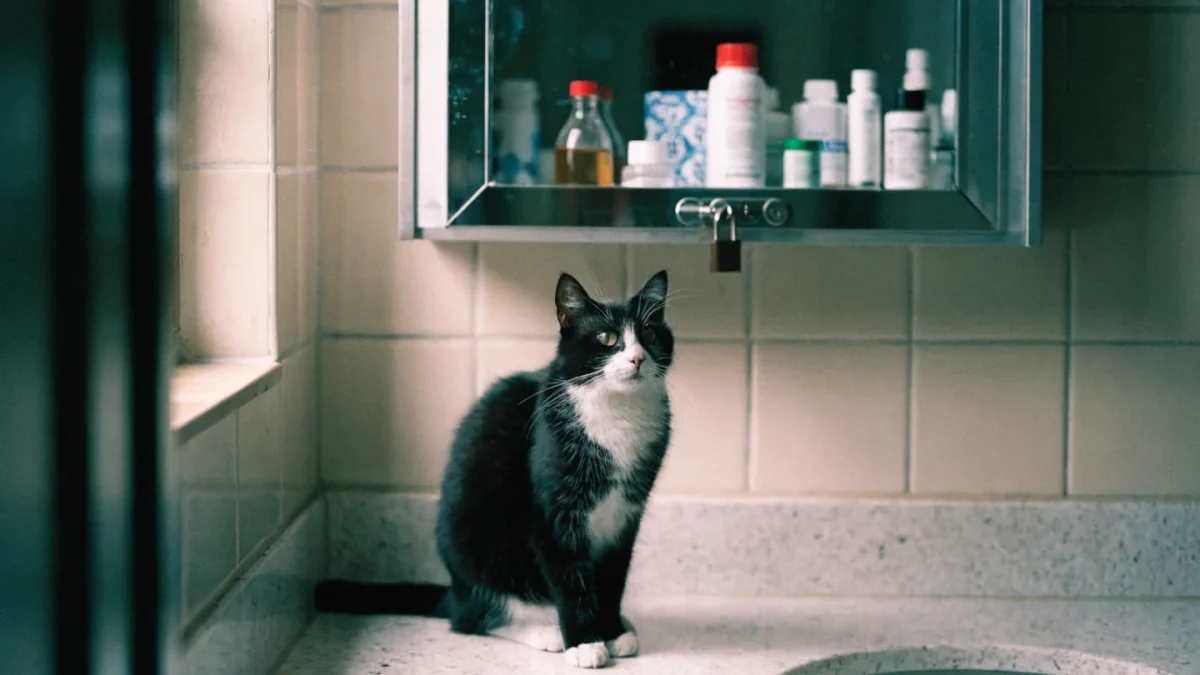
Biscuit, my four-year-old orange tabby, has eaten a foam earplug, a rubber band, and — the incident that still bothers me — a single ibuprofen tablet I'd left on my nightstand while getting ready for bed. I found the tablet gone, no sign of it on the floor. I induced vomiting at my own clinic at 11pm. He was fine. The experience of being both the vet and the panicking owner simultaneously is not one I recommend.
That incident was entirely my fault. The pill was out for four minutes. He found it in the dark.
Medication storage for pet owners isn't complicated, but it requires acknowledging a few specific risk points that standard "medicine cabinet" advice doesn't cover — because most accidents don't happen at the medicine cabinet.
The Standard Advice (And Why It's Incomplete)
"Keep medications in a locked medicine cabinet" is correct but incomplete. Most pet medication accidents don't involve a medicine cabinet. They involve:
- The purse
- The nightstand
- The countertop
- The floor (dropped pills)
- Guests and visitors
Fix these five, and you've addressed the vast majority of real-world medication incidents.
The Purse Problem
This is my number-one storage conversation with clients, because it surprises them every time.
A purse left on the floor or a low chair is an accessible container full of interesting smells, and prescription medications often live in purses. Dogs in particular will push their way in, noses following scent traces, and can work a pill bottle out quickly. A Lab can open a standard child-resistant pill bottle.
Solutions:
- Hang bags on hooks at human height, not on low chairs or the floor
- Keep medications in a hard-sided latching container inside the bag rather than loose
- When you get home, the bag goes directly to a shelf or hook above dog reach
Visiting family members' bags are in the same category. A guest who takes daily medication and leaves their bag on a guest room floor while they shower has just created a hazard. This is worth a gentle conversation with houseguests.
The Nightstand Problem
Daily medications, particularly anything taken at bedtime (sleep aids, antidepressants, blood pressure drugs, thyroid medications), commonly live on nightstands. The accessibility that makes it easy for you to take them also makes it easy for a cat who jumps on the nightstand at 3am or a dog who steals off the surface.
A small lockbox on the nightstand, or a drawer that latches, solves this completely. Or a habit change: medications go in the bathroom cabinet when not actively being taken. The few seconds of convenience of having them visible doesn't outweigh the risk.
The Countertop Problem
Medications taken with meals are often left on kitchen or bathroom counters. A cat on the counter (all of them), or a medium-to-large dog who can reach a kitchen counter with their chin, can access these easily.
The zero-pills-out rule: no pill stays on any surface when you leave the room. It goes back into its container, which goes back into storage. The pill you'll take in five minutes gets left out less safely than the pill you'll take in five days if you're not thoughtful about it.
Dropped Pills
Medication accidents in a surprising number of cases involve a pill that was dropped during dispensing and not found. Arthritic hands, distraction, rushing — pills escape.
Dispense medications in a location where a dropped pill is visible and retrievable: at a table, over a clean counter with no floor access below. If you drop a pill and aren't sure where it went, make finding it before it disappears the immediate priority.
Guest and Visitor Medications
This requires direct conversation, which feels awkward but matters. When guests come to stay:
"We're so glad you're here. Could you keep your medications in a zipped bag in the bedroom? Our [dog/cat] can get into things we'd rather they didn't."
Most people are completely understanding and would feel terrible if their medications caused harm. Make it easy: have a small latching travel container available for guests to use. A brief conversation prevents a middle-of-the-night emergency.
Pet Medications: A Separate Storage Issue
Pet medications have their own storage error mode: they smell like treats.
Chewable pet medications — joint supplements, heartworm preventatives, flavored antifungals — are formulated to be palatable. Dogs will eat an entire month's supply of heartworm prevention if they find the bottle. Flavored veterinary medications should be treated with the same secure storage discipline as human medications.
Also: keep pet medications clearly labeled and separate from human medications. The scenario of a family member giving a dog's pill to a person or vice versa is uncommon but happens enough to be worth preventing with clear labeling.
For background on which medications are most dangerous to your pets, the guide on which medications are dangerous for pets is worth reading. And the full medication safety for pets guide covers the emergency response side.
Disposal: The Last Step
Medications that are expired, no longer needed, or left over from a course of treatment need to be disposed of properly.
Drug take-back programs at pharmacies are the gold standard. Medications in the household trash — even in closed bottles — are accessible to pets that tip over garbage cans. The FDA guidelines on medication disposal identify which medications can be safely flushed (and that list is shorter than most people assume).
Don't leave old medications indefinitely in the cabinet "in case you need them." A child or pet with access to an old prescription of a powerful medication you no longer take is a real risk.
FAQ
Are child-resistant caps sufficient for pets?
For cats and small dogs with limited strength: often yes. For motivated large dogs: often no. "Child-resistant" means resistant to a young child's dexterity, not to a Labrador's jaw pressure and drive. A latching container or locked cabinet is a better standard.
What about pill organizers? Those daily medication dispensers?
These are one of the higher-risk storage options — convenient for the human, easy for a pet to open. A dog that noses open a weekly pill organizer has access to seven days of medication at once. Store pill organizers in a drawer or cabinet rather than on a flat accessible surface.
Should I keep Poison Control's number posted?
Yes. ASPCA Animal Poison Control: 888-426-4435. Program it in your phone and post it somewhere visible. In an emergency, having it immediately available matters.
My cat is in a room with the medications locked up. Do I still need to worry?
If medications are locked or in a latching cabinet, the risk is low. The scenarios that cause problems are accessible surfaces. A cat that can't physically reach the medications doesn't present much risk regardless of room assignment.