

I probably see more vomiting and diarrhea cases than any other category of complaint. Read our guide to pet digestive health: understanding for detailed information. It's the veterinary equivalent of "my kid has a stomach bug" — extremely common, usually self-limiting, but occasionally the opening act for something that could kill the pet. The diagnostic challenge isn't figuring out that the GI system is upset. It's figuring out why and how urgently.
A German Shepherd puppy came in on a Sunday afternoon — seven months old, vomiting since the previous night, lethargic, wouldn't eat. The owners assumed he'd eaten something in the yard and it would pass. It didn't. Parvovirus test came back positive within ten minutes. That puppy spent four days in the hospital on IV fluids and anti-nausea medication, and he made it — but barely. If they'd waited another day, I'm not confident he would have.
The same week, a client rushed in with a cat who'd vomited twice. The cat was alert, bright-eyed, and tried to eat a treat in the exam room. A hairball. That's it. Two very different scenarios, both presenting as "my pet is vomiting."
Vomiting: The Spectrum
Single episode, otherwise normal pet. This is the most common presentation and the least worrying. Dogs eat garbage. Cats lick things. One vomit followed by a pet who seems fine, is interested in food, and has normal energy is usually dietary indiscretion. Monitor for 12 hours. If nothing else happens, you're likely in the clear.
Multiple episodes over hours. This moves up the concern scale. The GI tract is irritated and not settling. Withhold food for 8-12 hours (water is fine in small amounts), then reintroduce bland food. If vomiting continues past 24 hours, or the pet becomes lethargic, get them seen.
Vomiting with blood. Bright red flecks or streaks in vomit can come from esophageal irritation — the act of vomiting itself can cause small tears. That's not always alarming. But frank blood, coffee-ground-colored material (digested blood), or large volumes of bloody vomit suggest gastric ulceration, a clotting disorder, or a serious erosive process. Vet visit, same day.
Unproductive retching. This is the presentation I train my staff to triage as highest priority on the phone. A large, deep-chested dog who is retching, gagging, heaving — but nothing comes up — may have gastric dilatation-volvulus. The stomach has twisted on its axis, trapping gas inside and cutting off blood supply. Without surgery, this is fatal within hours. Every minute counts. If someone calls describing a bloated, retching, restless large dog, we tell them to come immediately.
Projectile vomiting. Forceful vomiting that shoots food several feet from the pet suggests pyloric obstruction — something blocking the outflow of the stomach. Foreign bodies are the usual culprit in dogs (socks, toys, corn cobs — I've seen it all). Cats swallow linear foreign bodies: string, ribbon, thread with a needle attached. Linear foreign bodies are particularly dangerous because they can saw through intestinal walls.
Diarrhea: Color, Consistency, and What They Tell You
Soft stool — formed but not firm, like soft-serve consistency — is the mildest form and often resolves with a day or two of bland feeding. Dietary changes, stress, and mild GI upset are the usual culprits.
Watery diarrhea — no form at all, liquid — indicates more significant inflammation or secretory activity in the intestines. This causes rapid fluid loss, which matters particularly in small dogs, puppies, and cats. Dehydration from watery diarrhea can become serious within 24 hours in small patients.
Color matters. Yellow or greenish diarrhea suggests rapid transit through the GI tract — food moving too fast for normal bile pigment processing. It's common with dietary indiscretion. Orange-tinged diarrhea can indicate liver or biliary issues. Black, tarry stool (melena) means bleeding in the upper GI tract — stomach or small intestine — and the blood has been partially digested. This is always worth investigating. Bright red blood in stool (hematochezia) indicates large intestine or rectal bleeding — colitis, polyps, or rectal irritation.
Mucus-covered stool — stool with a slimy, jelly-like coating — points to colitis (large intestine inflammation). Dogs with colitis often strain to defecate, producing small amounts frequently, sometimes with urgency. It looks distressing but is less medically critical than small intestinal diarrhea in most cases.
One pattern that worries me: diarrhea with vomiting together, especially in young unvaccinated animals. That combination in a puppy is parvovirus until proven otherwise. In kittens, panleukopenia. Both are devastating viral diseases.
The Urinary System: Where Waiting Can Kill
I switch gears here because urinary symptoms get lumped with GI complaints by owners constantly — "something's wrong with his stomach, he keeps squatting" — when actually the pet is straining to urinate, not defecate. The distinction matters enormously.
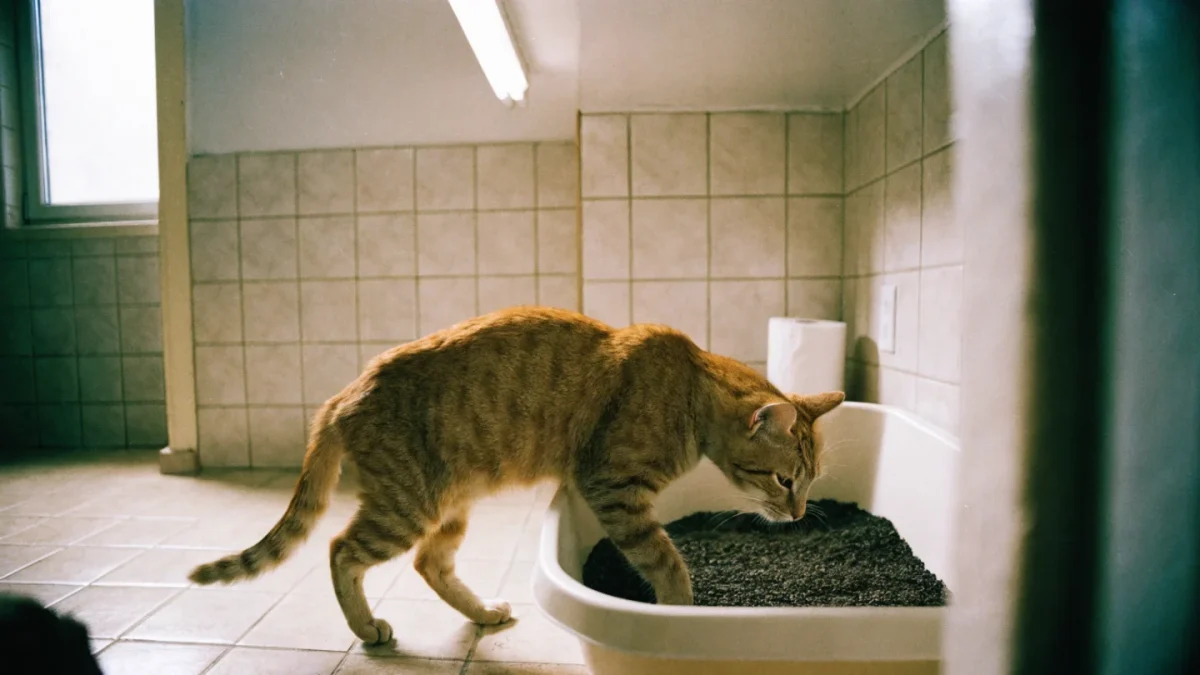
Urinary obstruction in male cats is the single most time-sensitive non-trauma emergency in my practice. A male cat whose urethra is blocked by crystals, mucus plugs, or stones cannot urinate. The bladder distends. Potassium levels rise in the bloodstream because the kidneys can't excrete it. Hyperkalemia causes cardiac arrhythmias. This kills cats, and it kills them within 24-48 hours of complete obstruction.
Signs to watch for: repeated trips to the litter box producing nothing or tiny amounts, crying or vocalizing while in the box, licking the genital area excessively, lethargy, vomiting (from the uremic toxin buildup). A blocked cat's bladder feels like a firm, tense, golf-ball-to-tennis-ball-sized mass in the lower abdomen. If you feel that, don't wait.
Frequent urination in small amounts without complete obstruction — the pet is producing some urine, but going to the bathroom every hour and sometimes having accidents — usually indicates a urinary tract infection, bladder stones, or feline lower urinary tract disease (FLUTD). These are uncomfortable and need treatment, but they're not the same emergency as complete obstruction.
Blood in urine. Pink or red-tinged urine can come from infection, stones, trauma, or tumors. In younger pets, infection is most likely. In older pets, especially older dogs, I want to rule out bladder cancer with imaging. Blood in urine always warrants investigation — not always urgently, but always.
What You Can Do at Home (and What You Shouldn't)
For mild, uncomplicated vomiting or diarrhea in an adult pet who's otherwise alert and hydrated: withhold food for 8-12 hours, offer small amounts of water, then reintroduce a bland diet (boiled lean protein and plain white rice or boiled potato for dogs; boiled chicken in small amounts for cats). Feed small meals frequently rather than normal portions.
Do not give human anti-diarrheal medications without veterinary guidance. Some are safe for dogs at specific doses. Others are toxic to cats. Bismuth subsalicylate (the active ingredient in several common stomach remedies) contains salicylate — an aspirin relative — and can cause problems in cats and dogs on certain medications.
Do not withhold water from a vomiting pet. Dehydration from vomiting is dangerous. If the pet vomits water back up immediately, offer ice chips or very small amounts frequently rather than letting them gulp a full bowl.
For urinary symptoms — just go in. There's no home remedy for a urinary obstruction, and there's no way for you to distinguish obstruction from infection without examination. I'd rather see a cat with a simple UTI and send you home with antibiotics than have you wait two days and bring in a cat in kidney failure. For related context, see appetite and weight changes in.
Recognizing Dehydration
Dehydration is the consequence of prolonged vomiting, diarrhea, or both, and it's the main reason these conditions become emergencies.
Check skin turgor: gently pull up the skin on the back of your pet's neck, then release. In a well-hydrated animal, it snaps back immediately. In a dehydrated animal, it stays tented for a second or more before settling. Severely dehydrated animals have tented skin that barely returns to normal.
Other dehydration signs: dry, tacky gums (run your finger along them — they should feel wet and slippery); sunken eyes; lethargy; and reduced urine output. A pet who hasn't urinated in 12 or more hours despite having access to water may be dehydrated enough to need IV fluids.
Puppies, kittens, and small breed dogs reach critical dehydration faster than large dogs. A five-pound Chihuahua puppy with watery diarrhea can become critically dehydrated within hours in a way that a 70-pound Labrador would not.
When All of These Overall Pet Health Warning Signs Combine
The scariest presentations I see involve simultaneous GI and urinary symptoms. A dog who's vomiting, has diarrhea, and isn't urinating may have acute kidney injury — from toxin ingestion (antifreeze, lilies in cats, NSAIDs), from severe dehydration, or from an infectious cause like leptospirosis.
A pet who's vomiting and straining to defecate may actually have an intestinal obstruction — the straining is the body trying to push contents past a blockage. Palpation and imaging sort this out, but the combined presentation is a strong prompt to get to the clinic.
Frequently Asked Questions
How long can a dog safely go without eating if they have an upset stomach?
A healthy adult dog can safely fast for 24-48 hours without nutritional consequences. Beyond that, I want to know why they're still not eating. Puppies should not fast for more than 12 hours — their glycogen reserves are small, and hypoglycemia is a real risk. Cats should not voluntarily fast beyond 24 hours due to the hepatic lipidosis risk I've described elsewhere.
Should I bring a stool sample to the vet?
Yes, if you can. A fresh sample (less than 12 hours old, kept cool) allows fecal testing for parasites, bacterial cultures, and sometimes parvovirus antigen testing. It saves a step during the exam and sometimes avoids the need for the vet to obtain a sample manually — which, trust me, nobody enjoys.
Can I give my dog pumpkin for diarrhea?
Plain canned pumpkin (not pie filling — no sugar or spices) does contain soluble fiber that can firm up loose stools. A tablespoon or two mixed into bland food is reasonable for mild cases. It won't fix anything serious, and it won't address the underlying cause, but it's unlikely to cause harm. I consider it a reasonable first-day home remedy for dogs with simple soft stool.
My cat keeps going in and out of the litter box — is that an emergency?
It depends on whether urine is being produced. If your cat is making frequent trips but depositing at least some urine each time, it's likely a lower urinary tract issue (infection, inflammation, crystals) that needs treatment but isn't immediately life-threatening. If no urine is being produced at all — empty litter box, a straining cat, a hard bladder you can feel — that's a potential obstruction and yes, it's an emergency. When in doubt, go in.