

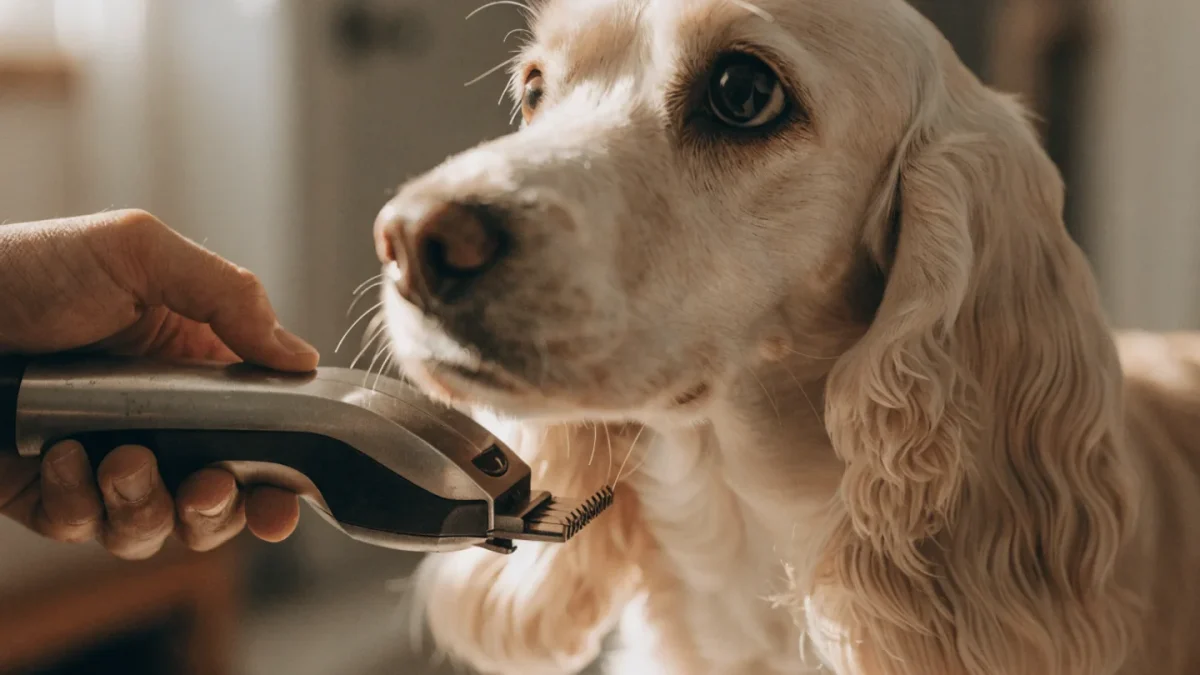
Buying dog grooming clippers for home use is one of those purchases that feels straightforward until you're standing in front of twelve options at different price points with different claimed features, none of which tell you whether the thing will actually cut through your Goldendoodle's coat without dragging and screaming.
The honest truth: clippers are one of the few grooming purchases where spending more money reliably gets you better results. The difference between a $30 clipper and a $150 clipper on a thick, curly, or matted coat is not subtle. But you also don't need professional-grade equipment for routine maintenance on a short-coated Lab.
Here's what actually matters.
Motor Type: The Most Important Variable
Every clipper has one of two basic motor types:
Rotary motor (pivot motor): A rotary motor spins continuously, driving the blade at high cutting speeds. These are the preferred motors for professional grooming — they can handle thick, dense, and difficult coats without laboring, and they hold up under hours of continuous daily use. Rotary motor clippers run warmer (the blade heats up during extended use) and tend to be louder than pivot motors, but the cutting power is superior.
Pivot (magnetic) motor: Uses an electromagnetic oscillating mechanism. Quieter than rotary motors, lighter weight, and runs cooler. Better for short or soft coats but less powerful against thick or matted fur. Most consumer-grade clippers use pivot motors; the best use rotary.
For home use on a single dog with a short to medium coat: a quality pivot motor clipper is usually sufficient. For thick double coats, long-coated breeds, or matted situations: you need rotary motor power.
Single speed vs variable speed: Variable-speed clippers let you adjust cutting speed — higher for thick coat, lower for sensitive areas and noise-sensitive dogs. The lower speed also reduces both noise and vibration, which is significant if your dog is anxious about clipper sounds. For most home use, single-speed works fine. Variable-speed is worth the premium for noise-reactive dogs.
Blade System: Fixed vs Detachable
Fixed blade clippers: The blade is a permanent part of the unit; cutting length is changed by attaching plastic comb attachments over the blade. These are the most common consumer clippers. The comb attachments are intuitive and change quickly. The limitation: the plastic combs are less precise than metal blades, and the single fixed blade underneath (usually a #10) limits what you can do without a comb.
Detachable blade system: The metal blade itself swaps out, allowing you to attach different blade sizes directly. The same system professionals use. More expensive, and you need to invest in multiple blades, but precision and versatility are significantly better. If you're going beyond basic maintenance clips and want to produce actual groomed shapes, a detachable blade system is where you need to be.
For occasional maintenance trimming on a pet dog: fixed blade with combs is fine. For serious home grooming on a regularly clipped breed (Poodle, Bichon, Cocker Spaniel): detachable blades.
Corded vs Cordless: The Real Trade-Off
Corded clippers: Constant, consistent power without battery limitations. No mid-groom power failure, no fade as the battery drains. Heavier motors are easier to accommodate in corded designs. The constraint is cord management — with a wriggling dog on a table, the cord is a genuine hazard to manage.
Cordless clippers: Freedom of movement, no cord underfoot. The negatives: battery life (typically 60–90 minutes of continuous use on quality models, less as the battery ages) and the fade effect — some cordless clippers lose cutting efficiency as the battery depletes. Lithium-ion batteries are significantly better than older NiMH in terms of consistent power delivery.
For quick maintenance trims on a small or medium dog: cordless is convenient and usually sufficient. For a large dog that requires 45+ minutes of clipper time, or for thick-coated breeds where power fade is immediately apparent: corded.
Some higher-end clippers offer both modes — corded/cordless convertible designs that run on battery normally but can be plugged in for extended sessions. This is the best of both approaches for regular home groomers.
Noise and Vibration: Why They Matter
Dog anxiety around clippers is primarily driven by two factors: the sound and the vibration transferred through the blade to the skin. Both vary significantly between models.
Quieter pivot motor clippers generally measure in the 55–65 dB range. Louder rotary motor clippers can reach 75–80 dB. That's a meaningful difference to a dog's auditory system — dogs hear frequencies about four times higher than humans and are more sensitive to decibel levels in general.
Vibration is equally important and harder to measure without testing the actual clipper. Generally: higher blade speeds create more vibration. Single-speed clippers running at maximum speed create more vibration than variable-speed clippers running on low. Clippers with external vibration-damping (rubberized grips, isolated motor housings) transmit less vibration to the dog.
For a dog with known clipper anxiety: start with the quietest, lowest-vibration option in your budget and introduce the clipper turned on in the room before actually approaching the dog with it.
Blade Heat: The Issue No Marketing Mentions
Clipper blades heat up during use, and this is the most common cause of accidental minor burns in home grooming. A blade that's comfortable after 5 minutes of use may be uncomfortably hot after 15.
Managing blade heat:
- Blade coolant/lubricant spray applied every 5–10 minutes of continuous use cools the blade and lubricates it simultaneously
- Have a second blade to swap out when the first gets hot
- Test blade temperature on the back of your wrist before placing it against skin
Quality clippers run cooler. Inexpensive clippers tend to run hotter, faster. This is one area where the price difference is directly tangible.
The Coat Type Match
Short or smooth coat (Beagle, Boxer, Lab): Occasional trim around feet, sanitary areas, and ears doesn't require significant clipper investment. A decent pivot motor clipper with comb attachments handles light work.
Medium coat, soft texture (Golden Retriever, Border Collie): A solid pivot motor or entry-level rotary will manage most trim work.
Thick double coat (Husky, Malamute, German Shepherd): Double coats are not typically clippered for maintenance — professional opinion strongly advises against body clipping double-coated breeds. If you're trimming the feet and sanitary areas only, any clipper works. If you're ignoring this advice and clipping the body coat, you need rotary motor power and sharp blades.
Curly or wavy coat (Poodle, Bichon, Doodle): This is the category where home clipper quality matters most. Curly, continuously-growing coats are the most demanding for clipper work — they catch, drag, and dull blades faster than straight coats. Invest in a rotary motor clipper with a detachable blade system. Use sharp blades; a dull blade drags and pulls rather than cuts, which is uncomfortable and inefficient.
What to Actually Buy
For light maintenance on a short-to-medium-coated pet dog: a quality pivot motor clipper with comb attachment set, in the $50–$90 range.
For regular home grooming of a curly, wavy, or regularly-clipped breed: a variable-speed rotary motor clipper with detachable blades, in the $120–$200 range.
For professional-level home grooming: the same equipment professionals use, in the $200–$400 range, if you're genuinely going to use it regularly enough to justify the investment.
Start with fresh blades. A good clipper with a dull blade performs worse than a budget clipper with a sharp blade. Blade sharpening services exist in most cities; replacements are available online for standard sizes.
For a full overview of grooming equipment beyond clippers, see the complete pet grooming tools and equipment guide. For brush selection, see the dog grooming brushes guide.