

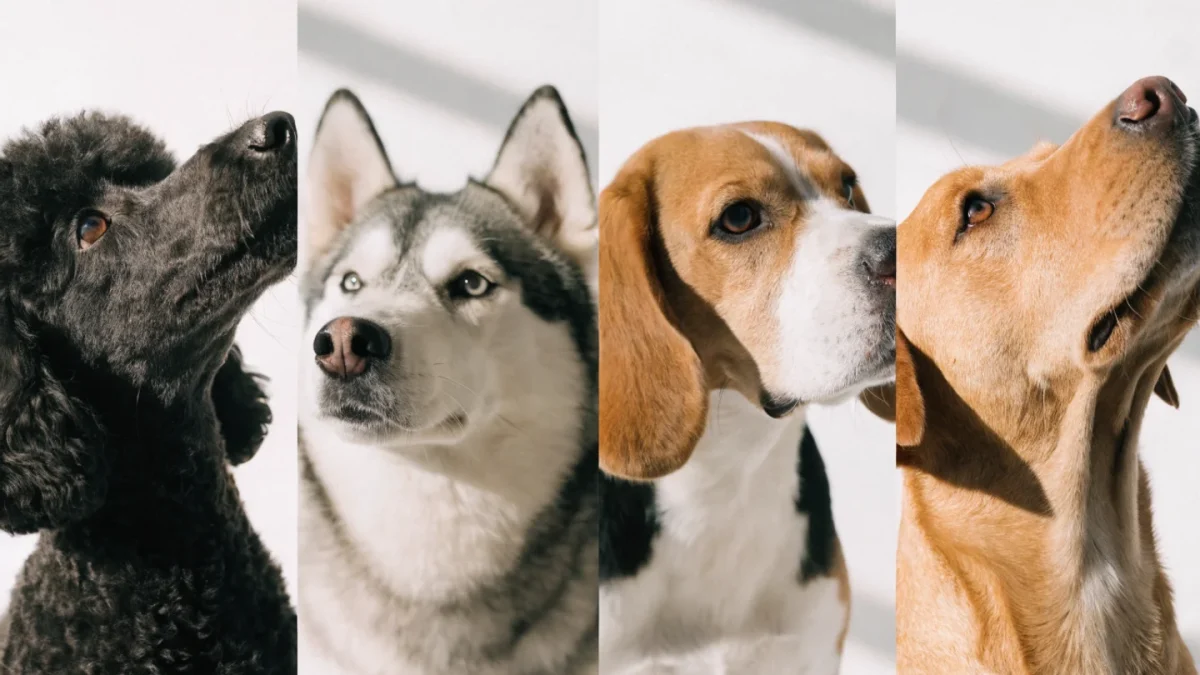
There's a grooming advice problem that I've noticed across pet media for years: most of it assumes dogs are interchangeable. "Brush your dog twice a week." "Bathe your dog every four to six weeks." "Trim nails monthly." These generics might be directionally useful for the median mixed-breed dog, but they're useless — or actively wrong — for most purebred dogs whose coats represent centuries of selective breeding for specific textures, lengths, and functional properties.
A Border Collie shouldn't be bathed the same way as a Chinese Crested. A Standard Poodle's grooming isn't even the same species of task as a Doberman's. An Akita being brushed with the same frequency as a Boxer would be either laughably under-groomed or laughably over-groomed depending on the season. The breed isn't just flavor on top of generic dog physiology — in terms of coat care, the breed is almost the whole story.
This guide covers the major coat types, what they require, which breeds have vulnerabilities that their coat creates, and how to match your grooming approach to what your specific dog actually needs.
Understanding the Major Coat Types
Short, Single-Coated
Breeds: Greyhounds, Whippets, Vizslas, Weimaraners, Boston Terriers, Boxers, Bulldogs.
Single-coated short dogs lack an undercoat — the dense, soft layer of secondary hairs beneath the longer guard hairs. Their coat is essentially one layer of short, relatively sparse hair directly over skin.
Maintenance requirements: minimal. Bathing every 4–8 weeks, or when visibly dirty. Weekly wiping with a damp cloth or rubber grooming mitt maintains shine and removes loose hairs. Shedding is present but light and year-round rather than seasonal. No trimming, clipping, or stripping required.
The vulnerability specific to this coat type: these dogs have essentially no insulating undercoat. In cold weather, they lose heat much faster than double-coated breeds. This has nothing to do with grooming technique but matters for owners — short single-coated dogs need coats in cold environments.
Skin visibility is also higher in single-coated dogs. Skin lumps, irritations, and parasites are more easily noticed — which is a genuine advantage for early detection.
Short, Double-Coated
Breeds: Labrador Retrievers, Beagles, Hound breeds, Pugs, many terriers.
These dogs have a short outer guard coat plus a soft, dense undercoat. The undercoat is what creates the infamous "shedding season" — twice yearly for many double-coated breeds, when the undercoat blows out in large volumes.
Maintenance: regular brushing (2–3 times weekly during shedding season, weekly otherwise) with a deshedding tool that reaches the undercoat is essential. Without it, dead undercoat accumulates against the skin, creating mats in some areas and a dull, compressed coat overall.
Bathing frequency: every 4–6 weeks is appropriate. After bathing, thorough blow-drying with a high-velocity dryer blows out residual dead undercoat far more effectively than air drying. Groomers who specialize in double-coated breeds use this technique routinely — it's why a dog looks considerably less dense after a grooming salon visit than after a home bath.
Don't shave double-coated dogs. This is one of the most important and most violated rules in dog grooming. The undercoat and guard coat work together as a thermal regulation system — in summer, the undercoat acts as insulation against external heat as much as cold. Shaving disrupts this system, exposes skin to UV radiation, and in some dogs triggers "post-clipping alopecia" — a condition where the coat never grows back normally. Brushing out the undercoat is the correct response to summer heat, not clipping. For a complete treatment of double-coat care, see the double-coated dog grooming guide.
Long, Double-Coated
Breeds: German Shepherds, Golden Retrievers, Collies, Australian Shepherds, Bernese Mountain Dogs, Siberian Huskies, Alaskan Malamutes.
These are the high-maintenance dogs. The combination of length and density creates genuine mat-potential — particularly in friction zones where the coat rubs against itself (behind the ears, in the armpits/groin region, around the collar, between the rear legs).
Daily brushing during shedding season isn't excessive for most of these breeds. The line between manageable and unmanageable with long double coats is often just brushing frequency. A Golden Retriever brushed three times a week rarely mats. The same dog brushed weekly will have behind-ear mats within a month.
The equipment matters significantly. A slicker brush reaches the outer coat. A long-pin undercoat rake reaches the secondary coat. Finishing with a deshedding tool during coat blow removes the maximum dead undercoat. Using only one of these tools addresses one layer of a two-layer problem.
Bathing for long double-coated breeds: monthly or when dirty, but always with complete drying. A large, dense-coated dog that doesn't dry thoroughly to the skin layer develops moist dermatitis — "hot spots" — where the moisture is trapped against skin under dense fur.
Wire-Coated (Hand-Stripped)
Breeds: Wire Fox Terriers, Welsh Terriers, Airedale Terriers, Border Terriers, German Wire-Haired Pointers, Scottish Terriers.
Wire coats are genetically distinct from smooth or long coats. The guard hairs have a harsh, rough texture from the harsh outer cortex of the hair shaft. This texture provides natural water-shedding properties and a degree of dirt resistance that smoother coats don't have.
Wire coats are maintained through hand-stripping: individually pulling dead hairs by the roots rather than clipping. This is labor-intensive, requires skill, and most general-practice groomers don't do it properly. The reason it matters: clipping a wire coat (running clippers through it rather than stripping) severs the hair shaft rather than removing it by the root. The regrowth is softer and lighter-colored than the original wire coat — the harsh texture that defines the breed and protects the dog is lost, and once converted to a clipped coat it doesn't return.
Show dogs in wire-coated breeds are always hand-stripped. Pet dogs whose owners don't care about maintaining breed texture can be clipped; they'll be comfortable and groomed, just no longer correct coat texture.
Rolling the coat — a technique where stripping is done in sections on a rotating schedule, maintaining the coat at different growth stages in different areas — is the show grooming approach for wire-coated breeds and keeps them in continuous work condition.
Curly and Continuously Growing Coats
Breeds: Poodles (all sizes), Bichon Frises, Portuguese Water Dogs, Lagotto Romagnolos, Barbet.
These dogs don't shed in the normal sense. Their hair grows continuously, like human hair, and falls very rarely. This is the basis for their popularity with people sensitive to dog hair. But "doesn't shed" means "needs to be cut" — hair that never falls out grows indefinitely without grooming intervention.
Poodles left ungroomed don't stay fluffy — they cord. The continuously growing hair twists and felts against itself into thick cords if not brushed out and trimmed regularly. Corded Poodles exist as a deliberate style choice in some show rings, but unintentional cording from neglect is painful (the cords pull skin), impossible to brush out, and requires complete shaving.
Maintenance frequency: grooming every 6–8 weeks minimum, with brushing 2–3 times weekly at home. The areas most prone to matting: behind the ears, in the armpits and groin, at the base of the tail.
There is no "set and forget" for curly continuously-growing coats. The maintenance is ongoing and non-negotiable.
Silky and Semi-Long Coats
Breeds: Yorkshire Terriers, Maltese, Silky Terriers, Papillons (semi-long), Cavalier King Charles Spaniels.
Silky coats are single-coated with fine, straight, or slightly wavy hair that can grow very long. They lack the harsh guard coat and dense undercoat of double-coated breeds. Silky coats feel luxurious; they also tangle extremely easily.
The paradox: silky coats are often perceived as low-maintenance because the hair is fine and light. They're actually high-maintenance because fine hair tangles more readily than coarser hair. A Maltese kept at full floor-length coat requires daily brushing. A Maltese kept in a "puppy cut" (trimmed shorter for practicality) needs brushing 2–3 times weekly.
Combination Coats
Some breeds have different coat types in different body regions. The Afghan Hound has thick, long facial hair (the "topknot") and saddle, with shorter body coat in the saddle region. The Briard has a distinctive wavy long coat that requires regular brushing but doesn't mat as readily as a Poodle. The Komondor and Puli have cords that are intentionally developed and maintained — a completely different category of grooming task.
Breed-Specific Vulnerabilities
Ear Problems by Coat Type
Breeds with floppy, heavily-furred ears — Cocker Spaniels, Basset Hounds, Standard Poodles — are anatomically predisposed to ear infections because the ear flap blocks airflow over the canal. Combine this with Poodles' intracanalicular hair growth and you get the breed with probably the highest ear infection rate of any popular companion dog.
Ear care frequency scales with ear anatomy. An erect-eared German Shepherd may go years without an ear problem. A Poodle or Cocker Spaniel needs weekly cleaning.
Skin Fold Conditions
Shar-Peis, Bulldogs, Pugs, Basset Hounds, and Bloodhounds have skin folds that trap moisture, bacteria, and yeast. The folds around the nose (nasal fold), facial wrinkles, vulvar folds in female dogs, and tail pocket (particularly in Bulldogs with corkscrew tails) all require regular cleaning — typically daily for dogs with severe folds — to prevent fold dermatitis.
This isn't optional maintenance. Untreated fold dermatitis becomes painful, chronically infected, and may require surgical correction of the fold in severe cases.
Double Coat Management in Northern Breeds
Siberian Huskies and Alaskan Malamutes have the densest double coats of any common breed. During spring coat blow, the volume of dead undercoat being shed is extraordinary — what other dogs shed in a year, a Malamute sheds in a month. High-velocity blowers, slicker brushes, and frequent professional deshedding sessions are the appropriate tools.
These dogs should absolutely never be shaved. Beyond the thermal regulation disruption, some individual Huskies and Malamutes develop post-clipping alopecia (coat doesn't regrow correctly after clipping) that can be permanent.
Working Retrievers vs Pet Retrievers
Labrador Retrievers have what looks like a simple short coat. But the Lab coat is specifically evolved for water work: a dense, slightly oily outer coat and a thick undercoat that together repel water. That undercoat sheds heavily and requires regular deshedding brushing. Labs that swim regularly accumulate water and debris in the undercoat that needs brushing out after water exposure — otherwise the trapped moisture creates skin problems.
Golden Retrievers are substantially more high-maintenance than their gentle demeanor might suggest. The feathering on legs, belly, and tail is beautiful and also prone to matting without consistent brushing. Golden Retriever owners who want a low-maintenance dog often transition to keeping the dog in a shorter trim — which is fine and doesn't harm the dog, but requires professional grooming every 8–10 weeks.
Grooming for Athletic vs Companion Coats
English Springer Spaniels bred for field work often have shorter, tighter coats than their show-bred counterparts. The same breed, bred for different purposes, can have grooming needs that look completely different. Show Springers have elaborate, lengthy feathering on the ears, legs, and belly; field Springers may be clipped shorter for practicality in working conditions.
This divide — field coat vs show coat — appears in multiple breeds (English Setters, Gordon Setters, Irish Setters, Cocker Spaniels). Understanding which version of the coat your dog has matters for grooming expectations.
Getting the Right Tools
Generic grooming advice often underspecifies tools, which leads to owners using the wrong brush for their coat type. Quick reference:
Rubber curry or grooming mitt: Short single-coated dogs. Removes loose hair, stimulates skin, no bristle contact needed.
Bristle brush: Short single or double-coated dogs, finishing brush for smooth coats. Distributes oil, adds shine.
Slicker brush: Long and curly coats. Metal pins that remove tangles and dead hair from outer coat. Incorrect for single short coats — no undercoat to reach.
Deshedding rake / undercoat rake: Double-coated breeds during shedding. Long pins or wider tines that reach into and through the undercoat.
Pin brush: Long, silky coats and long double coats. More flexible than slicker, better for everyday detangling.
Dematting comb: For working through existing tangles on long or curly coats without breaking the hair.
Stripping knife / stripping stone: Wire-coated breeds requiring hand stripping.
Professional Grooming vs Home Grooming
Breeds with continuously-growing coats (Poodles, Doodles, Bichons) require professional grooming every 6–8 weeks regardless of home brushing frequency. Home brushing maintains the coat between appointments; it doesn't replace the professional cut.
Breeds with hand-stripped coats (wire-coated terriers) require groomers specifically experienced in hand stripping. Most strip-capable groomers are found through breed clubs rather than general grooming salons.
Double-coated breeds that go to a groomer primarily for deshedding benefit from the professional high-velocity dryer and deshedding tools — a salon deshedding session removes more undercoat than most home brushing sessions can accomplish.
Short single-coated breeds largely don't require professional grooming. Occasional bathing, nail trims, and ear checks are the extent of it. The specifics of managing smooth and short coats are covered in the smooth and short-coated dog grooming guide.
Building a Breed-Specific Grooming Plan
Start by identifying your dog's coat type from the categories above. Then map the vulnerabilities specific to that coat type and your breed — ear anatomy, fold presence, coat blow pattern, mat-prone zones.
Daily: check ears, armpits, groin, and collar area for debris or early mat formation in long-coated breeds. Wipe skin folds if applicable.
Weekly: full brushing session for long and double-coated breeds. Ear inspection and cleaning for prone breeds. Dental care.
Monthly: bathing (adjusted to breed and lifestyle). Nail trim.
Every 6–8 weeks: professional grooming for continuously-growing coat breeds.
Twice yearly: professional deshedding for heavy double-coated breeds during coat blow season.
Annually: professional dental cleaning under anesthesia; full health check.
The breed isn't incidental to grooming. It's the starting point for every decision.
Frequently Asked Questions
My dog is a mix. How do I figure out what grooming they need?
Look at the coat, not the parentage. What texture is it — wiry, curly, smooth, long, plush? Does it have a clearly differentiated undercoat when you part the guard hairs? Coat type assessment tells you more than guessing at dominant parent breed. When in doubt, consult a professional groomer who can assess the coat directly.
Is it true you should never shave a double-coated dog?
For the vast majority of double-coated dogs, yes. The thermal regulation function of the double coat applies in summer as well as winter. A few specific medical situations (skin conditions requiring vet-directed shaving, surgery sites) are exceptions. "It's summer and they look hot" is not one of those exceptions.
How do I know if my dog is overdue for grooming?
For long and curly-coated dogs: run a comb from skin outward through the coat. If the comb cannot pass through without pulling in any area, there are mats forming. For double-coated dogs: part the coat and look at the undercoat layer — if it's dense, felted, or clumping, it needs brushing out. For any dog: visible tartar on teeth, nails clicking on hard floors, discharge in ear canals — these are overdue markers.
Do dogs bred for grooming show purposes need grooming differently than pets?
Yes, often substantially. Show grooming for wire-coated breeds involves hand stripping to maintain correct texture; pet grooming typically clips them out. Show Poodle grooming involves patterns maintained to breed standards; pet Poodle grooming allows practical trims. The pet versions are perfectly valid — the distinction is about breed standard compliance vs functional maintenance.