

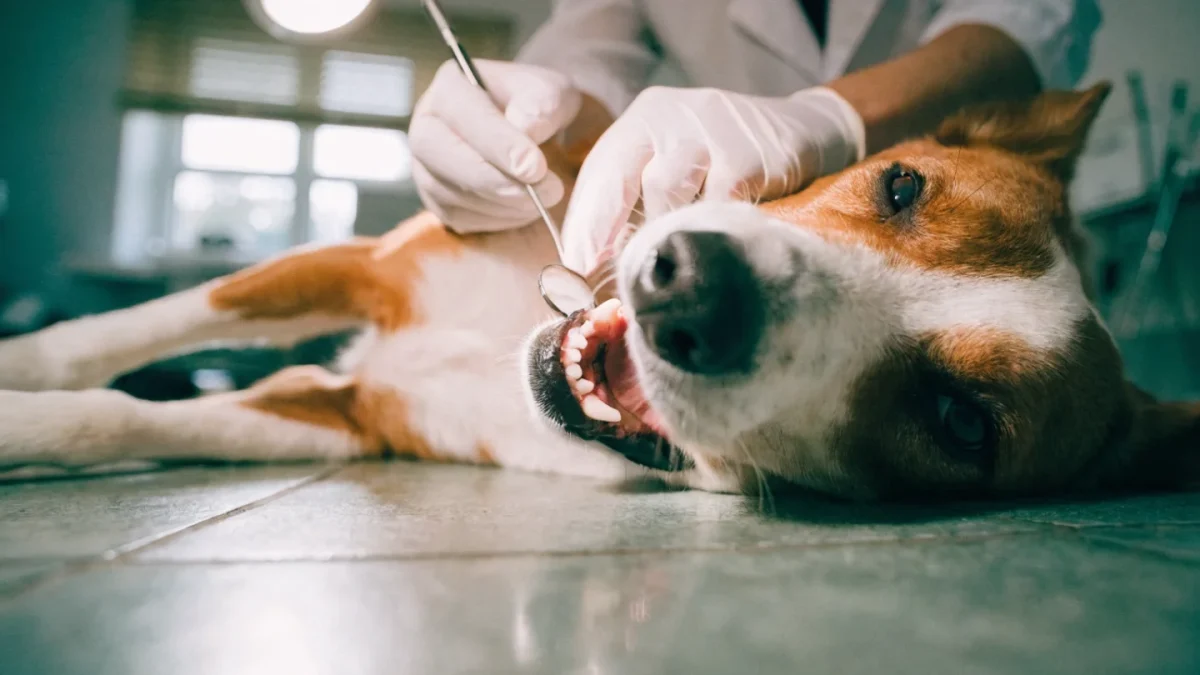
Eighty percent of dogs and seventy percent of cats show signs of periodontal disease by the time they're three years old. Three years old. The veterinary community has been repeating this statistic for decades, and it still shocks people — mostly because dental disease in pets is largely silent until it isn't. Dogs and cats don't drop their food bowl and announce that their gums hurt. They adapt. They compensate. They keep eating right up until they can't.
By then, the damage is substantial: bone loss around tooth roots, root resorption, abscesses, teeth loose enough to fall out during a kibble meal. And underneath all of it, mounting evidence that chronic oral bacteria contribute to systemic problems — kidney disease, heart disease, liver damage — through bacteremia that occurs when inflamed gum tissue bleeds during eating.
This is the situation that good dental care prevents.
How Pet Dental Disease Develops
It starts with plaque — a biofilm of bacteria that adheres to tooth surfaces within 24 hours of cleaning. Plaque is soft and removable. But if it isn't removed, it mineralizes within 3–5 days into tartar (calculus): a hard, rough-surfaced deposit that cannot be brushed away and provides an expanded surface area for more bacteria to colonize.
Tartar accumulation at the gumline triggers gingivitis — inflammation and redness of the gum tissue. Gingivitis is reversible with professional cleaning and consistent home care. But if ignored, gingivitis progresses into periodontitis: infection of the structures supporting the tooth (periodontal ligament, alveolar bone). Periodontitis causes irreversible bone loss. No amount of cleaning restores bone that's already gone.
This progression — plaque to tartar to gingivitis to periodontitis — takes months to years depending on the individual. Some animals progress rapidly; others maintain early-stage disease for years. Genetics, diet, anatomy, and home care all influence the rate.
What You Can Do at Home
Tooth Brushing: The Gold Standard
Nothing else removes plaque as effectively as mechanical disruption with a toothbrush. Not dental chews. Not water additives. Not dental diets. These options can supplement brushing, and they help dogs who won't tolerate brushing, but brushing remains the most effective intervention available without professional equipment.
The goal is daily brushing, or at minimum every other day. Plaque mineralizes into tartar within 72 hours in some animals — brushing every 48 hours keeps you ahead of the mineralization window.
Getting started with a reluctant dog:
Start weeks before you introduce the brush. Let the dog lick a small amount of pet toothpaste from your finger — the flavors (poultry, beef, seafood) are designed to make this rewarding. Then graduate to rubbing your finger along the outside of the teeth. Then introduce a finger brush or soft-bristled toothbrush, still just rubbing the outer tooth surfaces. The inner (tongue-side) surfaces are less critical for most dogs — their natural tongue movement provides some cleaning there.
Use pet-specific toothpaste. Human toothpaste contains fluoride and xylitol, both of which are toxic to dogs and cats. Pet toothpastes are safe to swallow.
The full technique: angle the brush at 45 degrees to the gumline, targeting where tooth meets gum. Use small circular or gentle elliptical strokes. Focus on the upper back teeth — the carnassial teeth (upper fourth premolars) — which accumulate tartar fastest due to their anatomy and the salivary glands positioned nearby.
Two minutes total, every one to two days. That's the target. Most dogs tolerate this well once conditioned; most cats require more patience and shorter sessions.
For cats specifically: Cats are more variable than dogs. Some cats accept brushing readily; others are firmly opposed regardless of conditioning effort. See our dedicated guide on brushing a cat's teeth for cat-specific technique and alternatives.
Dental Chews and Treats
The Veterinary Oral Health Council (VOHC) maintains a seal of acceptance that it awards to products with published clinical data showing measurable plaque or tartar reduction. This seal — the VOHC Seal of Acceptance — is the most reliable way to evaluate dental products' claims.
Products with the VOHC seal have demonstrated at least a 10% reduction in plaque or tartar in controlled studies. That's not a transformation, but it's real and meaningful as a supplemental measure. Many popular dental chews do not have this seal, meaning their efficacy claims are marketing rather than evidence.
Rawhide chews have some evidence for plaque reduction but also carry choking and obstruction risks — not a recommendation I'd make categorically. The textured chews specifically formulated for dental benefit, with VOHC approval, are a better choice.
Treat these as supplements to brushing, not replacements. A dog that receives a daily dental chew but never gets their teeth brushed will still develop periodontal disease. The chew extends the interval; it doesn't eliminate the problem.
Water Additives
Liquid products added to the drinking bowl that claim to reduce oral bacteria. The evidence for water additives is weaker than for dental chews — there are VOHC-accepted water additives, but the mechanism (slightly altering oral bacteria levels) is less direct than mechanical plaque removal.
Worth considering for dogs and cats who resist all physical dental interventions. Unlikely to cause harm. Not a substitute for more direct approaches.
Dental Diets
Prescription dental diets (different from regular "dental" labeled kibble) use larger kibble sizes and fiber matrix structures that require the tooth to penetrate the kibble before it fractures — creating a mild abrasive cleaning action. Hill's Prescription Diet t/d has VOHC acceptance; so does Royal Canin Dental.
These diets help. They're not as effective as brushing, but for pets who won't tolerate any brush, they're a meaningful tool. The limitation: they're typically not balanced for all life stages, and the caloric profiles may not suit every dog.
Professional Dental Cleanings
Home care slows dental disease — it doesn't stop it entirely, and it can't address disease that's already present below the gumline. Professional cleanings under general anesthesia are the only way to clean subgingival (below the gumline) deposits and assess the full extent of periodontal health.
Why Anesthesia Is Non-Negotiable
So-called "anesthesia-free dental cleanings" — offered by some groomers and pet stores — remove visible tartar from the crown of the tooth. They cannot clean subgingival pockets, cannot take dental radiographs to assess root and bone health, and cannot address any finding that requires treatment. Worse, the restraint required for a fully conscious animal makes the procedure traumatic, and a dog or cat that moves unexpectedly during scaling risks soft tissue injury.
The American Veterinary Dental College considers anesthesia-free dental cleanings to be inadequate care. Full stop.
Modern veterinary anesthesia protocols, including pre-anesthetic bloodwork, IV fluids, monitoring throughout, and appropriate drug selection for age and health status, make the risk of anesthesia for healthy pets very low. The risk of untreated periodontal disease is far higher.
How Often?
Frequency depends on the individual. Some dogs need annual cleanings; others go two or three years between procedures. Factors that accelerate disease: small breed or brachycephalic anatomy, crowded teeth, diet, genetics, home care compliance.
A vet who examines teeth at every annual wellness visit can advise when a cleaning is due based on what they're actually seeing, rather than a fixed schedule.
What Happens During a Cleaning
Pre-anesthetic exam and bloodwork. Induction of anesthesia. Full-mouth dental radiographs — this is critical. Radiographs reveal root health, bone levels, and pathology that looks normal from above the gumline. Studies have found that 27–70% of pathology identified in veterinary dental radiographs is invisible to clinical examination alone.
Scaling of supra- and subgingival tartar with ultrasonic and hand instruments. Probing of periodontal pockets. Tooth extractions if indicated. Polishing to smooth scaled tooth surfaces (polishing removes micro-scratches that accelerate plaque adhesion).
After a professional cleaning, home care maintains the result. The cleaner the teeth are kept between professional cleanings, the longer the interval before the next one is needed.
Breed-Specific Risks
Small and Toy Breeds
Chihuahuas, Yorkshire Terriers, Pomeranians, Toy Poodles, Dachshunds, Shih Tzus — these dogs have adult teeth sized for a larger skull crammed into a small jaw. Crowding forces teeth out of normal alignment, trapping food and plaque in areas that neither tongue movement nor chewing can reach. Retained deciduous (baby) teeth — which should fall out as adult teeth erupt but sometimes persist alongside them — compound the problem.
Toy breeds typically need professional cleanings beginning at 1–2 years of age, then annually or more frequently. Home dental care is proportionally more important for these dogs because the disease progresses faster.
Brachycephalic Breeds
Bulldogs, Pugs, Cavalier King Charles Spaniels, Persian cats — their compressed facial anatomy forces the same number of teeth into less jaw space than the teeth were designed for. Rotation and crowding are common. The short muzzle also changes how the tongue contacts teeth, reducing natural cleaning.
Persian cats in particular have remarkably poor dental health as a breed and routinely need professional cleanings starting in the second or third year of life.
Large Breeds
German Shepherds are disproportionately affected by a specific dental condition: slab fractures of the carnassial teeth. The large upper fourth premolar fractures when the dog chews something too hard — bones, antlers, hard nylon chews. These fractures typically expose the pulp, requiring root canal treatment or extraction. Large-breed owners should avoid giving "tooth-cracking" hard objects.
Cats
Cats have an additional dental disease unique to them: tooth resorption (formerly called feline odontoclastic resorptive lesions). The cat's own immune cells begin destroying the tooth root and crown from within. It's painful, progressive, and the only treatment is extraction. About 30–70% of adult cats are affected by at least one resorptive lesion. Regular professional dental radiographs are essential for cats because resorptive lesions are often invisible above the gumline.
Putting It Together: A Realistic Dental Care Plan
Daily or every-other-day: Tooth brushing with pet-formulated toothpaste.
Supplemental: VOHC-accepted dental chew or water additive, especially on days brushing isn't possible.
Annual: Veterinary oral examination at wellness visit. More frequent professional cleanings as your vet recommends.
Monitor for: Bad breath (beyond normal "dog breath"), dropping food, difficulty chewing, pawing at the mouth, drooling more than usual, visible tartar or swollen gums.
Dental disease is nearly universal in middle-aged and senior pets. It's not, however, inevitable — it's the consequence of insufficient prevention, and prevention is entirely within reach. The daily investment is small. The payoff is a pet who can eat comfortably and live without chronic oral pain well into old age. For a parallel look at another preventive grooming routine, the complete guide to pet ear cleaning follows the same logic — early habits prevent problems that are much harder to manage once established.
Frequently Asked Questions
My dog has never had their teeth brushed and they're five years old. Is it too late to start?
No — but a professional cleaning first will give you a clean baseline. Brushing an already-tartar-covered tooth doesn't remove tartar. Once the cleaning is done and the gum health is restored, brushing prevents re-accumulation. It's never too late to start, and five years old is not old.
My cat refuses all brushing. What are my realistic options?
VOHC-accepted dental diet (Hill's t/d Feline or Royal Canin Dental), VOHC-accepted water additive, and more frequent professional cleanings (annually rather than every 1–2 years). The combination won't match daily brushing's effectiveness, but it substantially reduces disease progression.
Do hard kibble diets clean teeth?
Not meaningfully. Most kibble shatters before it contacts the gumline where cleaning matters. Prescription dental diets are specifically engineered to not shatter — regular kibble is not.
How do I know if my pet is in dental pain?
Often you don't, until it's significant — pets are remarkably good at masking pain. Behavioral changes (eating more slowly, dropping food, preferring one side of the mouth, increased irritability when the face is touched) are subtle early signals. Don't wait for obvious distress; regular vet examinations catch pathology long before it reaches that stage.
What's the risk of a dental cleaning under anesthesia?
For a healthy adult dog or cat with pre-anesthetic bloodwork confirming organ function, the anesthetic risk for a routine dental procedure is very low — comparable to or lower than most elective surgical procedures. The risk rises with age and systemic disease, which is exactly why cleanings earlier in life, before disease accumulates, serve the animal best.