

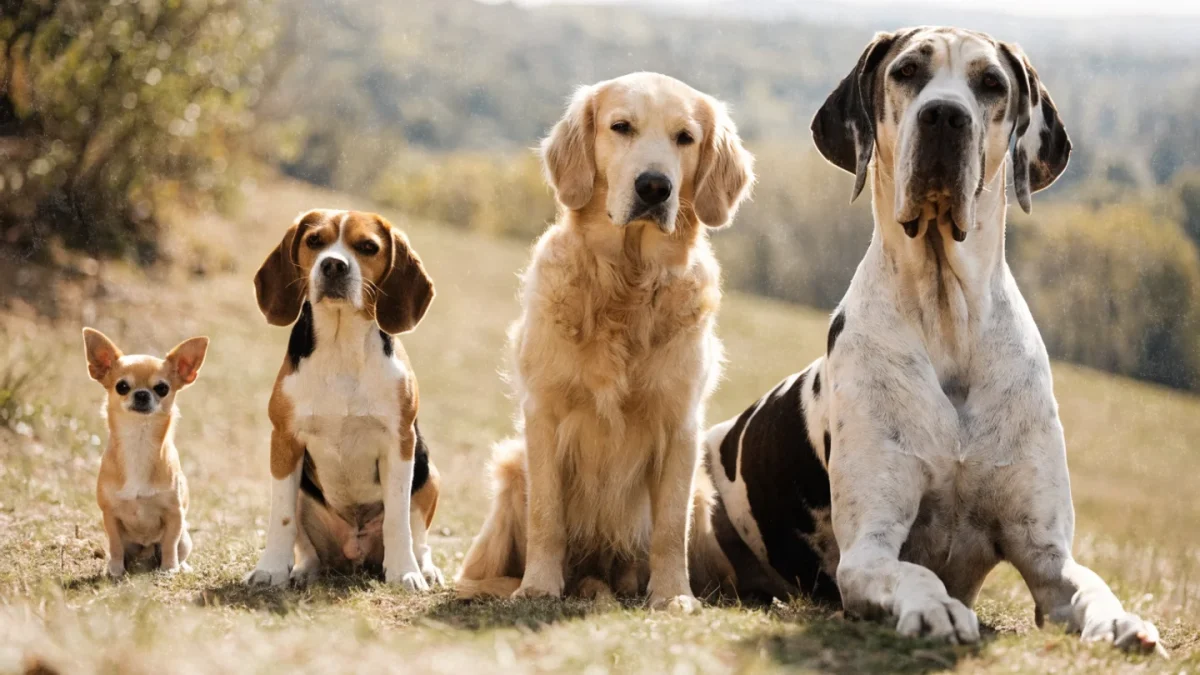
Size and coat type are the two primary axes of dog grooming. Coat type — smooth, double, wire, curly, silky — determines the technique. Size changes the practical reality: the volume of coat to manage, the time required, the physical effort, the cost of professional grooming, and the specific vulnerabilities that manifest at the small or giant end of the scale.
A Toy Poodle and a Standard Poodle have virtually identical coat type. But a Standard Poodle takes two to three times as long to groom, produces far more waste coat, requires larger quantities of shampoo and conditioner, and costs more at a professional salon — not because of any difference in what they need, but because of sheer scale. Multiply that across the range from a 5-pound Chihuahua to a 180-pound Mastiff and size becomes its own grooming variable.
Small Breeds (Under 25 Pounds)
Small breeds span an enormous range of coat types — from the smooth, minimal coat of the Chihuahua to the continuously growing coat of the Maltese to the wire coat of the Cairn Terrier. Size itself creates some consistent patterns that cut across coat type.
Dental issues are amplified. This is the most significant size-specific grooming consideration for small dogs. The tooth crowding, retained deciduous teeth, and accelerated periodontal disease characteristic of toy breeds is a direct consequence of fitting adult teeth into minimal jaw space. Small breed dental care requires both more intensive home care (daily brushing is particularly non-negotiable) and earlier, more frequent professional cleanings than larger breeds.
Nail growth and nail care. Small dogs that primarily walk on softer surfaces — carpet, grass, owner laps — don't wear nails down naturally. Long nails on small dogs change the angle of the paw, affecting gait and eventually joint comfort. The nails are small enough that trimming without hitting the quick requires precision; overgrown dew claws (particularly on rear legs) in small dogs can curl and grow into the paw pad. Monthly nail trims, at minimum.
Coat volume. Even a fully coated Maltese or Pomeranian produces a fraction of the shed hair volume of a Golden Retriever or Husky. This makes home management of small long-coated dogs more feasible than the same coat type on a larger dog.
Professional grooming cost. Small dog grooming, even for complex coats, costs less than large dog grooming — shorter time, less product, easier physical handling. This is sometimes used to justify less frequent grooming appointments, but the appropriate interval is based on coat type, not cost savings.
Cold sensitivity. Short single-coated small breeds — Chihuahuas, Italian Greyhounds, Miniature Pinschers — have minimal insulating coat and lose body heat rapidly in cold environments. This isn't a grooming issue per se, but it affects how thoroughly you can dry them after baths (must be completely dry before outdoor exposure) and whether they need clothing in cold weather.
Medium Breeds (25–55 Pounds)
The medium range is perhaps the most coat-variable of any size class. Medium breeds include everything from the short-coated Beagle to the densely double-coated Australian Shepherd to the wire-coated Welsh Terrier. Size-specific grooming patterns in this group are less pronounced than in toy breeds or giants; most of the considerations are coat-type driven.
A few size-relevant patterns:
Shedding volume becomes noticeable. A medium double-coated dog — Australian Shepherd, Border Collie, English Springer Spaniel — sheds enough during coat blow to be genuinely disruptive to a household. Weekly brushing is maintenance; during shedding season, 2–3 times weekly is necessary to keep up. Many medium double-coated breed owners add a professional deshedding session in spring and fall.
Mat-prone zones. Medium dogs with long or combination coats frequently develop mats in the armpits and groin where legs move against the body, behind the ears where the ear lightly compressed the fur against the skull, and in the collar zone. Checking and brushing these specific areas weekly prevents the kind of mat formation that would require dematting or shaving.
Activity and coat condition. Working or highly active medium breeds (hunting dogs, herding breeds) accumulate burrs, seeds, mud, and debris in their coats at rates that affect grooming frequency significantly. A field-worked English Springer Spaniel may need brushing after every outing in addition to regular maintenance.
Large Breeds (55–100 Pounds)
Large breeds introduce scale considerations that make home grooming significantly more physically demanding. Bathing a 80-pound Golden Retriever at home requires preparation — a bathtub or outdoor wash area with a sprayer, sufficient towels, and a high-velocity dryer for optimal coat condition.
The same tasks that take 20 minutes for a small dog can take 60–90 minutes for a large dog, which affects both frequency and whether owners manage home grooming at all.
Undercoat volume. Large double-coated breeds — German Shepherds, Golden Retrievers, Labrador Retrievers, Siberian Huskies — shed undercoat in volumes that make weekly brushing non-negotiable rather than merely recommended. A German Shepherd without regular brushing doesn't just look messy — the accumulated dead undercoat creates a dense, impacted layer against the skin that prevents airflow and can contribute to hot spots in warm weather.
Professional deshedding efficiency. A professional groomer using a high-velocity dryer on a large double-coated breed blows out dead undercoat in quantities that multiple home brushing sessions can't match. For large double-coated breeds, a professional deshedding session every 8–12 weeks — more frequently during seasonal coat blow — is the most efficient way to manage the volume.
Ear size and ear care. Large floppy-eared breeds — Basset Hounds, large Spaniels, Bloodhounds — have larger ear canals with more surface area for infection. The management principles are the same as for smaller floppy-eared breeds, but the canal volume means more cleaning solution and more thorough attention.
Joint and mobility considerations. Large breed dogs often develop joint conditions — hip dysplasia, elbow dysplasia, arthritis — that affect how comfortable they are in grooming positions. A young Labrador can be rolled onto its side without complaint; a 9-year-old Lab with hip dysplasia may need grooming done in a standing position. Adapting grooming technique to the dog's mobility is a practical large-breed consideration.
Giant Breeds (Over 100 Pounds)
Great Danes, Mastiffs, Saint Bernards, Newfoundlands, Bernese Mountain Dogs, Leonbergers — these dogs present grooming challenges that exist primarily at this end of the size spectrum.
Physical management. Grooming a 150-pound Newfoundland is a physical undertaking. Getting the dog onto a grooming table typically requires a ramp or hydraulic table. Bathing requires a walk-in shower or a tub with a handheld sprayer. Drying requires either significant time with high-velocity tools or an extended air-dry period in a warm environment. Most giant breed owners rely heavily on professional grooming for anything beyond maintenance brushing.
Drool and facial fold care. Giant breeds with heavy flews (lips) — Mastiffs, Saint Bernards, Bloodhounds, Great Danes — produce significant drool that accumulates around the lips and in lip folds. Daily wiping of the lip fold area with a clean, slightly damp cloth prevents the dermatitis that develops from chronic moisture and bacterial accumulation in these folds.
Shedding volume at giant scale. A Bernese Mountain Dog or Saint Bernard during coat blow sheds quantities that can fill a garbage bag in a single brushing session. This isn't an exaggeration. The practical implication: during shedding season, these dogs need brushing every 1–2 days to stay ahead of the shedding volume, and professional deshedding sessions provide substantial relief.
Nail care. Giant breed nails grow proportionally and in some individual dogs grow very fast. Overgrown nails on a 150-pound dog exert meaningful leverage on the paw structure with every step — the joint angle changes, and the long-term orthopedic impact is real. Monthly nail trims keep a reasonable length; for fast growers, every 3 weeks. The nails are large enough that an appropriate large-breed nail grinder can smooth the cut edge and reduce sharp edges that can catch on flooring.
Coat shine and skin health at scale. Giant breeds with dense coats have proportionally more skin surface area than smaller dogs but often receive less skin inspection — simply because turning a giant dog over for examination is an undertaking. During grooming, deliberately check skin in the armpits, groin, between rear legs, and around the collar area. Friction zones that create hot spots in medium dogs create them in giant breeds too, compounded by the weight pressing skin surfaces together.
The Size-Grooming Relationship in Practice
The most useful practical observation across the size spectrum: the time and effort required scales with the dog, but neglect affects every size approximately equally in terms of disease consequences. A giant breed Bernese Mountain Dog and a Maltese will both develop painful mats, both get ear infections if prone to them, both develop dental disease without care. The giant dog's problems just take more effort to address when they occur.
Building a size-adjusted grooming schedule:
Small breeds: Dental care daily. Nail trim every 3–4 weeks. Coat maintenance based on coat type. Professional grooming every 6–8 weeks for groomed coats.
Medium breeds: Coat maintenance 2–3x weekly for double-coated. Dental care daily or every other day. Nail trim monthly. Professional grooming or deshedding based on coat type.
Large breeds: Coat maintenance 2–3x weekly minimum. Professional deshedding 4x yearly. Dental care as above. Nail trim monthly or more often for fast growers.
Giant breeds: High-maintenance coat breeds (Saint Bernard, Bernese, Newfoundland) need near-daily brushing during shedding season. Fold care daily if applicable. Professional grooming every 8–10 weeks minimum. Dental care as above.
The pattern: more dog means more grooming commitment. Anyone who tells you a giant breed is "low maintenance" because the coat type is simple is not accounting for what bathing, drying, and deshedding a 150-pound dog actually involves.
For deep dives into coat types specific to individual breeds within each size class, see our breed-specific grooming guide.