

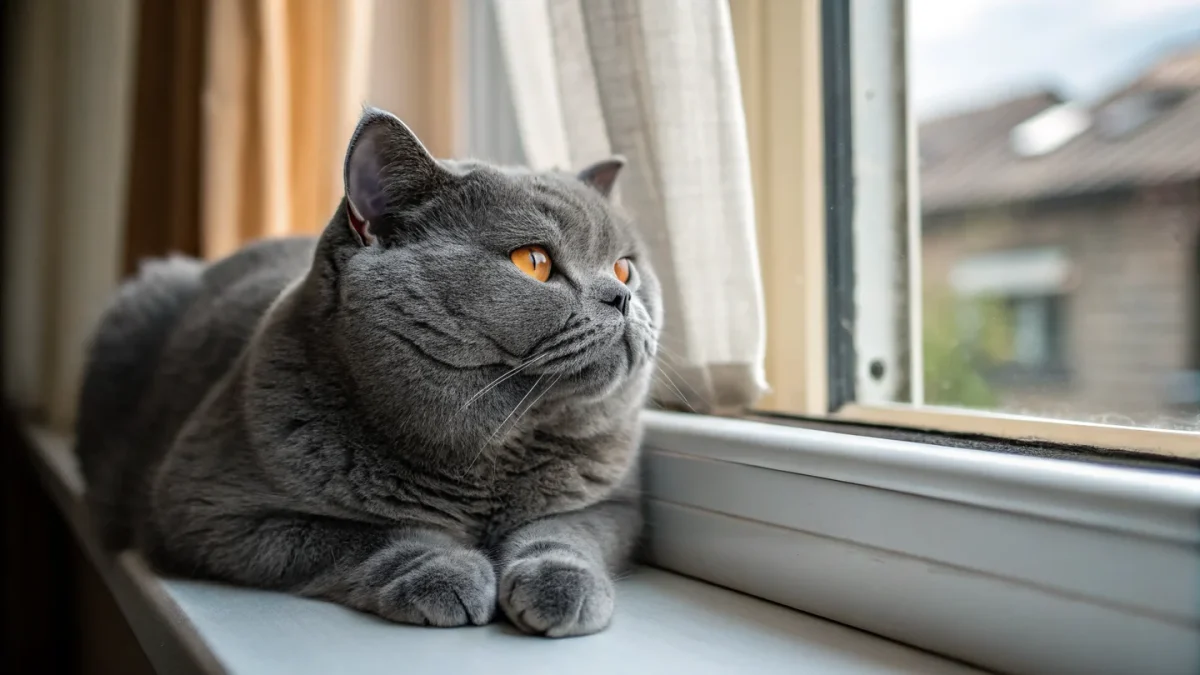
The British Shorthair attracts a particular kind of cat owner: someone who wants a substantial, beautiful cat that has its own inner life, doesn't perform on demand, and makes an honest and satisfying companion on terms that both parties can respect. That person exists, and for them the British Shorthair is close to ideal.
For the complete breed picture, see the complete British Shorthair breed guide and the detailed look at British Shorthair temperament.
What the British Shorthair Actually Needs
Grooming: Weekly brushing, increasing to 2-3 times weekly during shedding seasons. The short, dense coat doesn't mat. This is the most genuinely low-maintenance coat among the popular indoor cat breeds.
Space: British Shorthairs adapt well to apartment life. They're not climbers that need floor-to-ceiling vertical installations. They're content with standard home furniture, a few comfortable resting spots, and access to windows. They don't have a demanding space requirement.
Presence: They're more tolerant of moderate alone time than more social breeds. Working professionals with normal 8-9 hour days generally have no problem with British Shorthairs. They shouldn't be left alone for very extended periods regularly, but they don't need constant company to be well.
Stimulation: Moderate. Interactive play sessions matter most during kittenhood and young adulthood. Adult British Shorthairs are more self-sufficient about entertainment — a window with bird activity, some rotating toys, and a few weekly play sessions are generally adequate. They're not going to take the ceiling apart out of boredom.
Who Matches Well
Working professionals who want a companion animal without intensive caretaking requirements. The British Shorthair is present and pleasant without demanding constant attention, tolerates regular working hours without visible distress, and is genuinely easy to live with.
People in apartments. The breed's low activity level, low noise output, and limited vertical space requirement make it among the best options for smaller living spaces.
Households with older children. The British Shorthair's patience, non-reactive temperament, and sturdy build make it more forgiving with children than more delicate or reactive breeds. The self-determination the cat exercises — choosing when to interact and when to leave — is actually a good model for children learning about animal agency.
People who appreciate a self-contained personality. If you genuinely enjoy a companion that has its own perspectives and its own schedule, rather than one that mirrors your emotional states constantly, the British Shorthair's independence is a feature rather than a problem.
People seeking a second cat for a multi-cat household. British Shorthairs adapt to other cats better than many territorial breeds, provided introductions are handled properly and there's enough space and resources for everyone.
Who Should Think Carefully
People who want constant physical affection. British Shorthairs are affectionate, but on their own terms and schedule. If your ideal cat is one that's always available for cuddles, climbs into your lap every evening, and wants to be physically close at all times, the British Shorthair will disappoint you. They sit beside you, not on you.
Households with very young children. British Shorthairs are patient but self-determined — when they've decided an interaction is over, they'll enforce that. With toddlers who can't read those signals, this requires parental management rather than breed patience alone.
People who want a highly interactive, stimulating companion. British Shorthairs aren't entertainment. They have moments of play and genuine engagement, but they're not a breed that performs for their owner or responds enthusiastically to every social initiative. If you want a cat that actively seeks your engagement and responds eagerly to every interaction, consider a Maine Coon or a Burmese.
The Weight Gain Consideration
British Shorthairs are genuinely prone to weight gain. Their moderate-to-low activity level combined with the breed's tendency toward food motivation means portion control is important throughout their lives. An overweight British Shorthair's famous roundness becomes something different — you can feel the difference when you run your hands along the sides.
This isn't a reason not to get one. It's a reason to be a deliberate feeder rather than a free-feeder, and to consult your veterinarian about appropriate portions for the cat's age and size.
The Honest Summary
The British Shorthair suits households that are honest about what they want: a cat that's beautiful, calm, easy to maintain, and genuinely present in the household — but that operates on its own terms rather than conforming to its owner's social needs.
That description suits more people than you'd think. And for those people, the British Shorthair is an excellent choice that will reward the match for 12-17 years of consistently pleasant, low-drama companionship. If you're working through a broader breed comparison, how to choose a cat breed provides a structured framework for matching personality and lifestyle factors across breeds.