

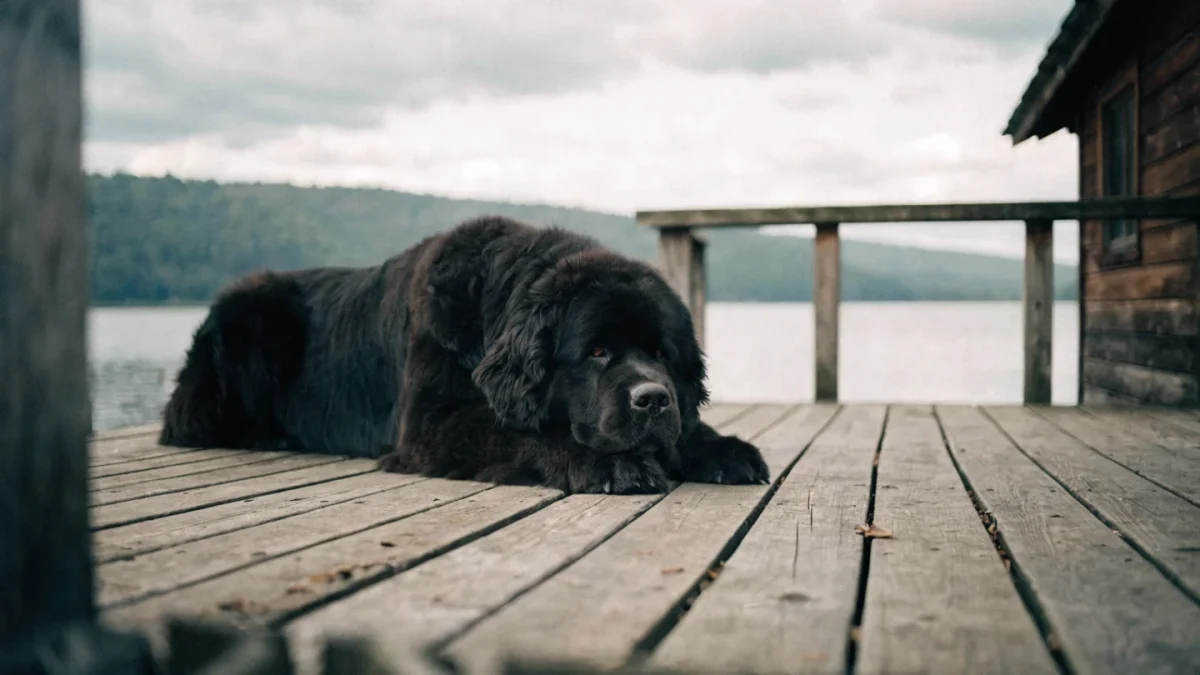
Every year, people fall in love with the idea of a Newfoundland — the gentle giant, the nanny dog, the massive teddy bear that swims like a seal and loves children. And every year, a significant number of those Newfoundlands end up in breed rescues because the reality overwhelmed the expectation. The breed's sweet temperament is genuine, but so are the costs, the mess, the health challenges, and the sheer logistical demands of sharing your life with a dog that outweighs most adults.
This is the honest version. No sugarcoating. If a Newfoundland is right for you, you should know exactly why. If it isn't, you should know that too — before you bring one home.
The Space Question
A Newfoundland doesn't need a mansion, but it does need room to exist comfortably. An adult male can stand 71 centimeters at the shoulder and weigh 60 to 70 kilograms. That body takes up physical space in every room it occupies — doorways, hallways, the area around the kitchen table. A small apartment is technically possible if the owner is dedicated to daily outdoor exercise, but most Newfoundland owners find that moderate indoor space with a yard makes daily life significantly easier.
The yard doesn't need to be large, but secure fencing matters. Newfoundlands are not escape artists by nature, but a standard waist-high garden fence won't contain a determined 65-kilogram dog.
The Budget Reality
Giant breeds cost more. That's not opinion — it's arithmetic.
Food consumption runs considerably higher than medium-sized breeds. Veterinary costs scale with body weight for medications, anesthesia, and surgical procedures. Orthopedic surgery — which Newfoundlands face at above-average rates due to hip and elbow dysplasia predispositions — is significantly more expensive in giant breeds. A cruciate ligament repair that costs a certain amount for a 25-kilogram dog costs substantially more for a 65-kilogram one.
Grooming expenses add up whether you do it yourself (equipment, time) or use a professional groomer (who will charge a giant-breed premium). The Newfoundland breed guide details the coat care requirements — this is a breed that demands regular attention.
Pet insurance premiums are higher for giant breeds, and some conditions common to Newfoundlands may carry waiting periods or exclusions. Factor this into your planning before, not after, you acquire the dog.
The Drool Factor
There is no way to write about Newfoundland ownership without addressing drool. This breed drools. Consistently, copiously, and with zero self-consciousness. After drinking, after eating, when anticipating food, when warm, when excited, and sometimes for no discernible reason at all.
Drool cloths stationed around the house become standard equipment. Water-resistant covers on furniture are common among experienced Newfoundland owners. Guests will be drooled on. Your clothing will be drooled on. If you wear dark colors, you will learn to stop wearing dark colors.
Some Newfoundland owners adjust to drool immediately and find it a minor nuisance. Others never quite accept it. Know which category you fall into before committing to the breed. This is not a trait that diminishes with training or age.
The Grooming Commitment
The dense double coat requires thorough brushing a minimum of three to four times per week, increasing to daily sessions during the two major seasonal coat blows. Mats form behind the ears, in the armpits, and around the hindquarters. Left unmanaged, mats tighten against the skin and cause discomfort and hot spots.
Bathing a Newfoundland is a project. The sheer volume of coat means thorough wetting takes time, shampoo distribution takes time, rinsing takes time, and drying takes significant time. An incompletely dried Newfoundland coat develops an unmistakable odor and creates a warm, damp environment where skin infections thrive.
If you don't enjoy grooming or aren't willing to learn, you'll need a professional groomer experienced with giant breeds — and you'll need the budget to support visits every four to six weeks.
The Temperament Match
The Newfoundland temperament is the breed's greatest asset and the primary reason people want one. These are profoundly gentle, patient dogs that bond deeply with their families and have an almost uncanny awareness of human emotion. They're outstanding with children, tolerant of other pets, and naturally protective without aggression.
That temperament comes with a requirement: presence. Newfoundlands do not handle extended isolation well. A dog that bonds this deeply suffers when left alone for eight or ten hours daily. Separation anxiety in Newfoundlands manifests as destructive behavior, excessive drooling, and vocalization — and the scale of destruction a distressed 65-kilogram dog can cause is considerable.
If your household has someone home most of the day, or if you can arrange midday visits or doggy daycare, the breed thrives. If the dog will be alone for the majority of each workday, this is not the right match.
The Lifespan Conversation
Newfoundlands live approximately 8 to 10 years. That's shorter than most medium-sized breeds, and it's the reality of giant-breed ownership. The combination of a shorter lifespan with a dog that forms exceptionally deep bonds means the grief arrives sooner than many owners anticipate.
Health challenges are part of the landscape — hip and elbow dysplasia, subvalvular aortic stenosis, cystinuria, and cruciate ligament injuries all appear at elevated rates. Proactive health screening reduces surprises but doesn't eliminate risk.
The Right Owner
If you are drawn to giant breeds and weighing your options, the Great Dane breed guide profiles the other major gentle giant — a breed that shares the Newfoundland's calm indoor temperament but differs sharply in coat, water affinity, and some key health considerations.
A Newfoundland is right for you if you have moderate indoor space and a secure outdoor area, can afford the elevated costs of giant-breed ownership, genuinely enjoy grooming or are willing to invest in professional care, tolerate drool without resentment, spend significant time at home, want a deeply bonded companion that will follow you from room to room and lean against your legs while you cook dinner, and accept that you'll likely have 8 to 10 years rather than 12 to 15.
A Newfoundland is wrong for you if you value a clean, dry, hair-free home, are away most of the day without arrangements for the dog, live in a consistently hot climate without air conditioning, expect an athletically demanding exercise partner, or are not prepared for the veterinary costs that accompany giant breeds.
The breed gives everything it has — devotion, gentleness, and a presence that changes the character of a household. What it asks in return is honest preparation and a life structured to accommodate its considerable needs.