

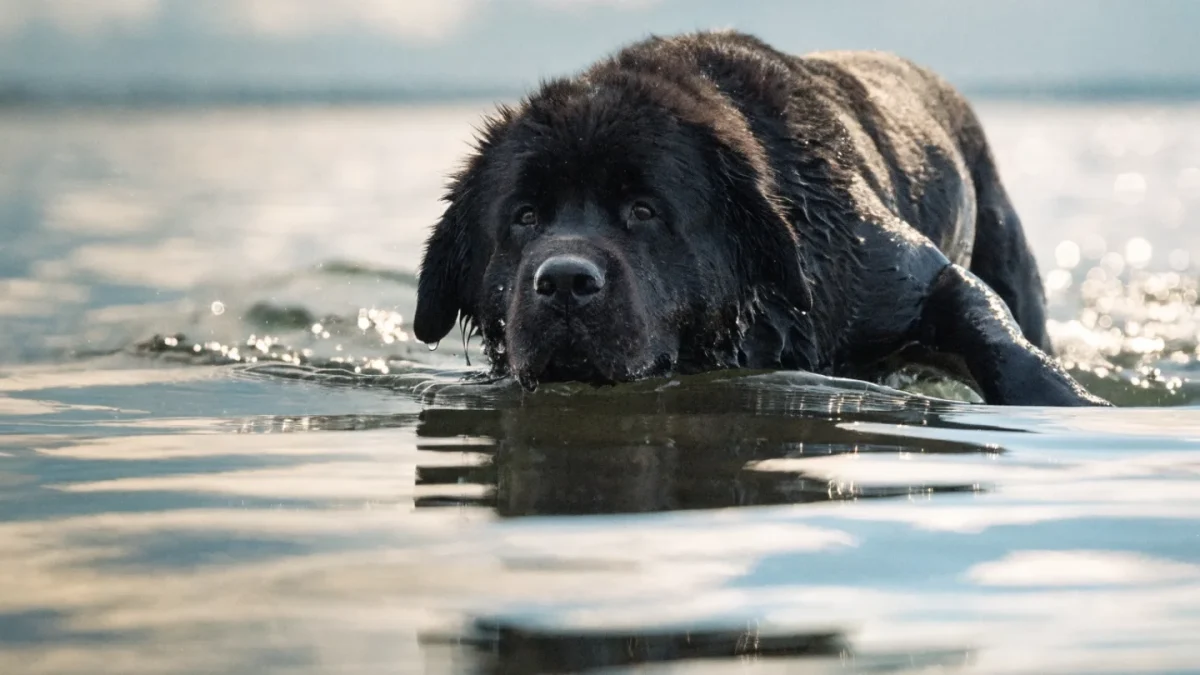
A Newfoundland can haul a drowning adult from rough surf and tow a fully loaded dory to shore. That's documented, not folklore — the breed was pulling fishermen out of the North Atlantic as early as the 1700s. But that same dog will also refuse to jog around the block with you and lie down on the sidewalk at the 400-meter mark if the temperature is above 22 degrees Celsius. Understanding Newfoundland exercise needs means accepting that this breed's remarkable physical capability operates on its own terms.
An adult Newfoundland in good health needs roughly 30 to 60 minutes of moderate exercise daily. That number is lower than most people expect for a dog that can weigh 60 to 70 kilograms, but the key word is "moderate." This is a draft and water-rescue breed, not a running partner. Everything about the Newfoundland's exercise profile is shaped by its size, its joint vulnerability, and its legendary affinity for water.
What Moderate Means for This Breed
Walking
Two daily walks of 15 to 30 minutes each form the baseline. The pace should be steady but unhurried — Newfoundlands move with a rolling, ground-covering gait that isn't designed for speed. Let the dog set a comfortable rhythm. Forcing a Newfoundland into a brisk jog puts unnecessary load on hips and elbows that are already bearing significant weight.
Vary the route. Newfoundlands are more observant than their lumbering appearance suggests, and a dog that walks the same path daily loses interest. New scents and environments provide mental stimulation that supplements the physical component.
Swimming
If you own a Newfoundland and you have access to water, swimming should be the core of your exercise plan. No other activity matches it for this breed. The Newfoundland breed guide covers the breed's water-rescue heritage in depth — the webbed feet, the water-resistant double coat, the powerful swimming stroke that's closer to a breaststroke than the typical dog paddle. All of that anatomy is purpose-built, and swimming engages it fully.
Swimming provides resistance-based, full-body exercise with zero joint impact. For a giant breed predisposed to hip dysplasia, elbow dysplasia, and cruciate ligament injuries, that matters enormously. A 20-minute swimming session delivers more cardiovascular benefit than a 40-minute walk, with a fraction of the orthopedic risk.
Introduce puppies to water gradually. Most Newfoundlands take to swimming instinctively, but some need encouragement during their first exposure. Shallow, calm water with a gently sloping entry is ideal for initial sessions.
Play Sessions
Newfoundlands enjoy play, but their style is deliberate rather than frenetic. Short games of fetch — particularly water retrieves — work well. Tug games are fine with appropriate toys sized for a giant mouth. Expect play to occur in moderate bursts followed by rest. A Newfoundland that lies down after ten minutes of activity is not lazy. It's pacing itself the way a working draft dog should.
Puppy Exercise Restrictions
Giant-breed puppies grow at an alarming rate. A Newfoundland puppy can gain 2 kilograms per week during peak growth phases, and that mass lands on bones whose growth plates won't close until 18 to 24 months of age. Forced exercise during this window — running on pavement, extended stair climbing, jumping from vehicles or decks — risks permanent damage to developing joints.
The five-minutes-per-month-of-age guideline applies here. A five-month-old Newfoundland puppy gets roughly 25 minutes of structured exercise per session, twice daily. Free play on soft ground where the puppy controls the pace is separate from structured exercise and can be more generous.
No distance walking before 12 months. No running on hard surfaces before growth plates close. Swimming is safe earlier than most land-based activities because it eliminates impact, making it an excellent option for young Newfoundlands.
Heat: The Hard Limit
The Newfoundland temperament makes this breed content to lounge indoors, and during hot weather, that instinct should be respected. The dense double coat that insulates a Newfoundland in frigid water traps body heat on warm days. Heatstroke is a genuine risk at temperatures many other breeds handle without issue.
Above 25 degrees Celsius, reduce exercise duration and intensity. Above 30 degrees, limit outdoor activity to brief bathroom outings and move exercise indoors or to early morning and late evening windows. Always provide shade and fresh water. If the dog lies down and refuses to continue, stop immediately.
Swimming is the best warm-weather option because the water itself provides cooling. But even swimming sessions should be monitored in extreme heat — a Newfoundland working hard in warm water can still overheat.
Signs You're Getting It Wrong
A Newfoundland that isn't getting enough exercise will tell you, though the signals are subtler than with high-energy breeds. Restlessness, mild destructive behavior (particularly chewing), and weight gain are the common indicators. Obesity in Newfoundlands is dangerous — every excess kilogram accelerates joint degeneration in a breed already fighting genetic odds on orthopedic health.
On the other end, a Newfoundland that limps after exercise, shows reluctance to rise after rest, or consistently lies down during walks may be dealing with joint pain. Pushing through that reluctance causes harm. A veterinary evaluation is the right response, not more exercise.
The Right Routine
The most effective exercise routine for an adult Newfoundland is simple: a morning walk of moderate length, an afternoon activity session (ideally swimming when available, otherwise a second walk or play session), and mental enrichment through puzzle feeders or scent games. Owners who build swimming into the weekly routine — even two or three sessions — see measurable differences in their dog's fitness, weight management, and joint health. This breed was built for water. Use it.