

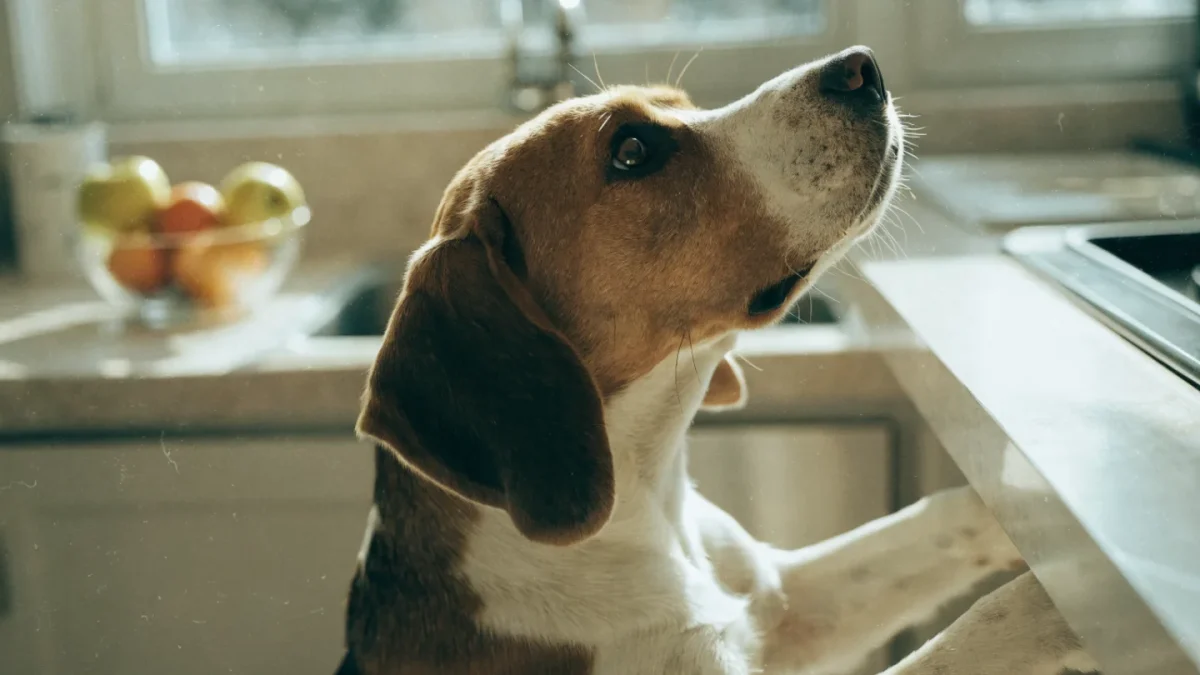
My colleague had a Labrador named Fletcher who managed to eat an entire loaf of raisin bread off the counter while she was in the shower. One lapse in judgment — leaving the bread out instead of in the cabinet — and she spent an afternoon at her own clinic inducing vomiting and monitoring kidney values.
Fletcher was fine. Grapes and raisins cause fatal kidney failure in dogs, but they caught it early. The point is that "our kitchen" and "a Labrador's kitchen" are two different environments with very different risk profiles, and what's safe for humans to leave out casually is often not safe with a dog in the house.
Counter Access: Your First Assumption
Here's the thing to accept upfront: if you have a dog of medium size or larger, or any cat, you have an animal that can access your countertops. Not "might be able to" — can. Full stop.
Labs, Golden Retrievers, German Shepherds, Beagles — all of them will counter-surf given sufficient motivation (hunger, curiosity, interesting smell) and sufficient opportunity (unattended). Cats are counter-habitual regardless. Design your kitchen for this reality.
What belongs off countertops entirely:
- Grapes, raisins, currants — kidney failure in dogs, even small amounts
- Onions, garlic, leeks, chives — hemolytic anemia in dogs and cats
- Anything containing xylitol — check ingredient labels on sugar-free gum, some peanut butters, candies, mouthwash, vitamins, and baked goods
- Macadamia nuts — neurological symptoms in dogs
- Chocolate of any kind — yes, even a small amount of baking chocolate
- Medications of any kind — I'll cover this more below
What's fine on the counter: Most human produce, cooked grains, plain meats. The list of dangerous foods is specific, not vast.
The Under-Sink Cabinet
If I had to pick the single most important pet-proofing intervention in any kitchen, it would be a child-safety latch on the under-sink cabinet. Every kitchen has one; every kitchen fills it with the same things: dish soap, dishwasher pods (highly concentrated detergent — one pod can cause serious chemical burns to a cat's esophagus), all-purpose cleaner, drain cleaner, oven cleaner.
These are not mildly irritating substances. Many are caustic — capable of causing chemical burns to mucous membranes and the esophagus on contact. Drain cleaners and oven cleaners are among the most aggressively caustic household chemicals outside of industrial settings.
Child-safety latches are available at any hardware store for under five dollars. They install without tools in about sixty seconds on most cabinet styles. This is perhaps the highest return-on-investment pet-proofing measure in the entire house.
Appliance Hazards
The trash can. Perhaps the most consistent source of dog GI problems I see. Cooked bones (which splinter and perforate), onion scraps, coffee grounds, moldy food, chocolate wrappers with residue, sugarless candy wrappers, and an array of random contaminants. A trash can with a step-open lid that your dog can operate with their paw isn't secure. Get one with a locking lid, keep it inside a cabinet, or accept that your trash can is your dog's personal buffet. More on this in the keeping dogs out of the trash guide.
The dishwasher. Primarily a risk during loading and unloading — sharp knives and forks at dog nose height, residual detergent in the dispenser accessible to curious licking cats. Close and latch after loading.
The oven and stove. Burns from touching hot burners; grease residue that attracts dogs. Don't leave hot pots unattended with dogs nearby who might try to investigate. Cats on countertops near active burners are at burn risk.
The refrigerator. Mostly secure, but cats occasionally figure out French door refrigerators with handles they can bat open. If this becomes an issue, a refrigerator lock (made for toddlers) works fine.
Medications in the Kitchen
Many people keep medications in the kitchen — vitamins, supplements, prescription bottles on the counter. This is where I see acetaminophen and ibuprofen poisonings most commonly, because they're stored in the one room where cabinets are opened frequently and things end up on the counter.
A cat knocked a bottle of ibuprofen off a counter. The lid was loose enough that several fell out. The owner found the dog (not the cat) chewing on one. Luckily they saw it happen and got to us quickly.
No medications on kitchen counters, ever. Locking or high cabinets only. This includes vitamins and supplements, which can cause problems in doses that look trivial.
Specific Foods to Understand
Xylitol deserves its own paragraph because it's genuinely dangerous in tiny amounts and it hides in unexpected products. In dogs, xylitol causes rapid, severe hypoglycemia and can cause liver failure. One piece of xylitol-sweetened gum can cause hypoglycemia in a small dog. Check the ingredient labels of any sugar-free product in your kitchen.
Cooked bones. Raw bones are a debated topic (raw versus cooked); cooked bones are not debated. Cooking makes bones brittle — chicken bones, pork ribs, turkey bones — they splinter into sharp shards that can perforate the esophagus, stomach, or intestines. Throw cooked bones directly into a lidded trash can.
Alcohol. Dogs and cats are significantly more sensitive to ethanol than humans. Beer, wine, spirits, and products containing alcohol can cause vomiting, disorientation, respiratory failure. Fermenting bread dough also produces alcohol and causes the same issues plus gastric dilation from the yeast.
The Layout Fix
After all of this, the practical takeaway is fairly simple:
- Install child-safety latches on under-sink and any low chemical-storage cabinets
- Get a trash can with a locking lid or store the trash inside a cabinet
- Move toxic foods to high cabinets or the refrigerator, not countertops
- Store medications in a closed, high cabinet — not on counters or tables
- Don't leave unsecured food unattended on counters
That's it. Five changes, maybe one afternoon of work, and you've addressed the majority of kitchen hazard risk.
For the broader home context, see the complete room-by-room pet-proofing guide. For the chemical hazard details — what each substance does and how to respond to ingestion — household chemicals dangerous to pets goes deeper.
FAQ
Q: My cat jumps on the counter no matter what I do. How do I keep food safe?
Cats and counters are an ongoing negotiation. The realistic answer isn't "keep the cat off counters" — it's "don't leave anything dangerous accessible." Store toxic foods in the refrigerator or high cabinets, not on the counter surface. The cat being on the counter is annoying; the cat accessing toxic foods is dangerous. Solve the dangerous part.
Q: Are there any kitchen cleaning products that are safe if my pet licks them?
Diluted white vinegar and diluted castile soap are genuinely pet-safer alternatives for surface cleaning. After using any commercial cleaner, allow surfaces to dry completely before pets access them — the dried residue is typically less harmful than wet product. That said, there are no cleaning products I'd call safe to consume.
Q: My dog ate an onion from the trash last night. What do I do?
Call your vet or the ASPCA Poison Control line (888-426-4435). One small onion piece may not cause significant harm to a large dog, but dose matters and it's worth a call to get guidance. Clinical signs of onion/garlic toxicity (weakness, reduced appetite, pale or yellowish gums, reddish urine) may not appear for several days.
Q: I use sugar-free peanut butter as a training treat. Is this dangerous?
Only if it contains xylitol. Many sugar-free peanut butters don't — they use other sweeteners. Check the ingredient label specifically for "xylitol" or "birch sugar." If it's not listed, the peanut butter is fine. This check takes ten seconds and is absolutely worth doing.