

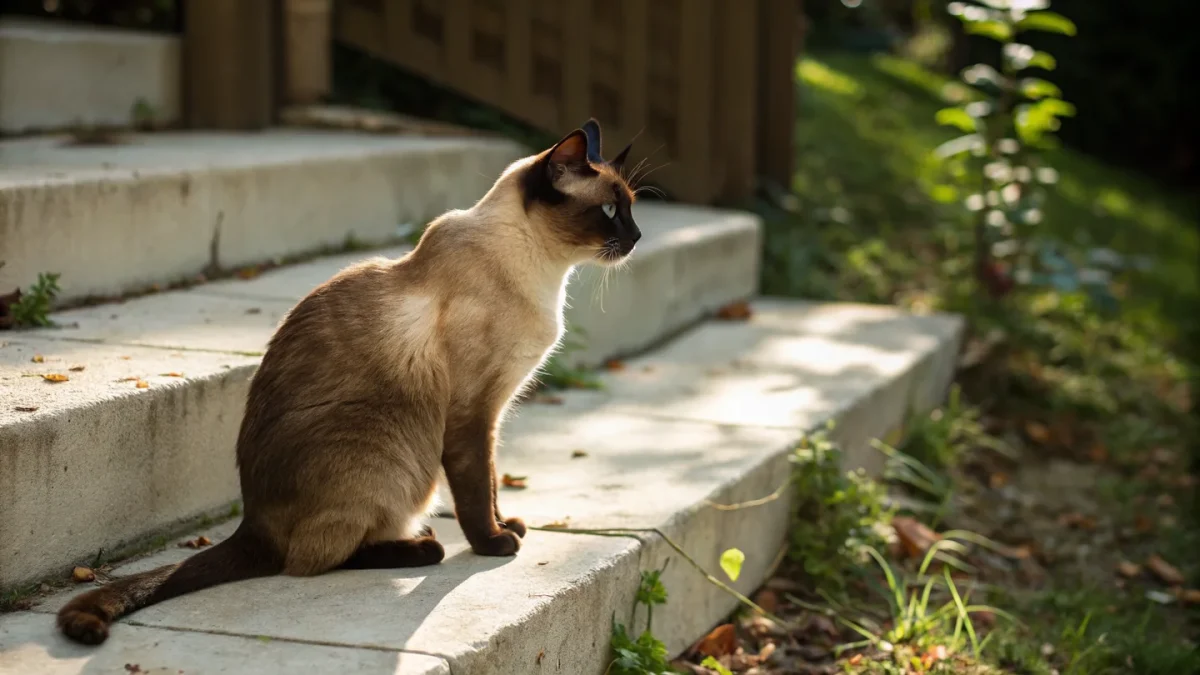
Here is a fact about the Siamese color pattern that most people don't know: the same cat will look different depending on the climate it lives in. A Siamese in a cold region develops darker, more saturated points than the same genetic cat kept in a warm environment. This is not because they tan, or because the coat changes with season in the way a dog might blow its coat. It happens because of a temperature-sensitive enzyme at the core of how Siamese pigmentation actually works.
The Siamese color point pattern is one of the most elegant examples of conditional gene expression in domestic animals. Understanding it makes the breed more interesting, and it also explains several peculiarities that confuse new owners.
The Genetics: Pointed is a Recessive Trait
The gene responsible for the Siamese point pattern is a variant of the tyrosinase gene — the gene that controls a key enzyme in the melanin pigmentation pathway. The Siamese variant, called cs (for "Siamese"), produces a tyrosinase enzyme that is temperature-sensitive. Above approximately 33°C (around 91°F), the enzyme doesn't function properly and little pigment is produced. Below this threshold — at the skin surface of extremities, which is cooler — the enzyme works normally, producing full pigmentation.
The result: pale body where core body temperature keeps the skin warm, dark points where the extremities are cooler. Ears, face, paws, tail — all cooler, all pigmented. The torso, belly, and back — warmer, all pale.
This trait is recessive. A cat needs two copies of the cs gene to express the point pattern. Cats with one copy of cs and one copy of the full-color gene (C) are genetically colorpointed but express full pigmentation — they carry the pattern invisibly and can pass it to offspring.
Why Siamese Kittens Are Born White
Newborn Siamese kittens are uniformly white or very pale cream, with no visible points. This surprises many new owners, but it makes perfect genetic sense.
In the womb, the kitten is surrounded by the mother's body heat — temperatures that suppress tyrosinase throughout the entire kitten's body. Without functional tyrosinase, no melanin is produced. The kitten is born with a blank coat.
As the kitten cools to room temperature after birth, the enzyme begins working in the cooler extremities. Points develop gradually over weeks and months, darkening as the kitten matures. The full adult coloration isn't typically established until around twelve months of age, and in some individuals continues to shift through two years.
The Four Traditional Point Colors
The cs gene restricts pigmentation but doesn't determine which color the pigmentation will be. That depends on other genes operating normally in the pigmentation pathway. The four colors recognized as "traditional" by most major cat registries are:
Seal point
The most common Siamese color. "Seal" refers to the brownish-black of a harbor seal. The points are deep, warm brown-black; the body is pale fawn to cream, often with a slight warm ivory tone. Seal point is the most visually striking of the traditional colors because of the high contrast between point and body.
Blue point
Blue point is the dilute version of seal. The dilute gene (the d allele) reduces pigmentation intensity, converting black to blue-gray and warm browns to cool slates. Blue point Siamese have grayish-blue points against a pale, cool blue-white body. The contrast is softer than seal point — more sophisticated in some people's eyes, less dramatic.
Chocolate point
Chocolate point expresses a different allele at the brown gene locus — the b allele, which converts black pigment to a warm milk-chocolate brown. The result is warm, moderately saturated brown points against an ivory-white body. Chocolate point is sometimes confused with seal by the untrained eye, but the warmth and lighter saturation of the chocolate pigment is distinct. The body tone is also cooler and paler than seal point's warm fawn.
Lilac point
Lilac point (also called "frost" in some registries) is the combination of the blue dilute gene and the chocolate brown gene — two diluting factors together. The points become a pale, warm pinkish-gray, almost lavender in good light, against an almost pure white body. Lilac is the rarest of the traditional four because it requires the cat to carry two copies of both the dilute and brown modifiers.
The Color Changes with Temperature and Age
Because the point color reflects the temperature environment, a few phenomena follow directly from the genetics:
Cold climates = darker points. A Siamese cat living in a cold environment maintains lower skin temperatures, so the body areas that normally stay pale may develop some pigmentation — the overall cat looks darker, with less stark contrast.
Warm climates = lighter points. The reverse is true. A Siamese kept in warm indoor conditions through winter may lighten somewhat.
Aging. The Siamese body tends to darken with age regardless of climate, as body temperature regulation changes and the enzymatic threshold shifts slightly. Elderly Siamese are often considerably darker than they were as young adults — some appear nearly uniformly brown from a distance.
Fever or illness. High body temperature suppresses the enzyme across more of the body, and anecdotally, some owners notice their Siamese cats growing in a patch of lighter fur during or after a significant fever. This isn't something with a body of formal clinical documentation behind it — it's a reasonable extension of the same temperature mechanism rather than a well-studied phenomenon — but color returns to normal as that fur cycles out and new growth comes in under normal body temperature.
Additional Point Colors
The history of selective breeding in Siamese and the introduction of crosses with other breeds in the 20th century expanded the color palette beyond the traditional four. Colors including flame (red), cream, tortie, and lynx (tabby) points exist in many registries and are the product of introducing different pigment genes from other breeds while preserving the cs temperature-sensitive background.
The original Siamese breed overview recognizes the four traditional colors as foundational. Many registries outside the traditional show world also accept the expanded palette.
The Practical Takeaway
For owners rather than geneticists: the main things to understand are that your Siamese's coloration will evolve over their lifetime (darkening with age is normal and not a health concern), that temperature affects color (nothing to be done about it, and not a problem), and that the body contrast you fall in love with in a young adult will shift gradually over the cat's fifteen-plus years. The personality — loud, social, demanding, brilliant — stays consistent regardless of what the points do.