

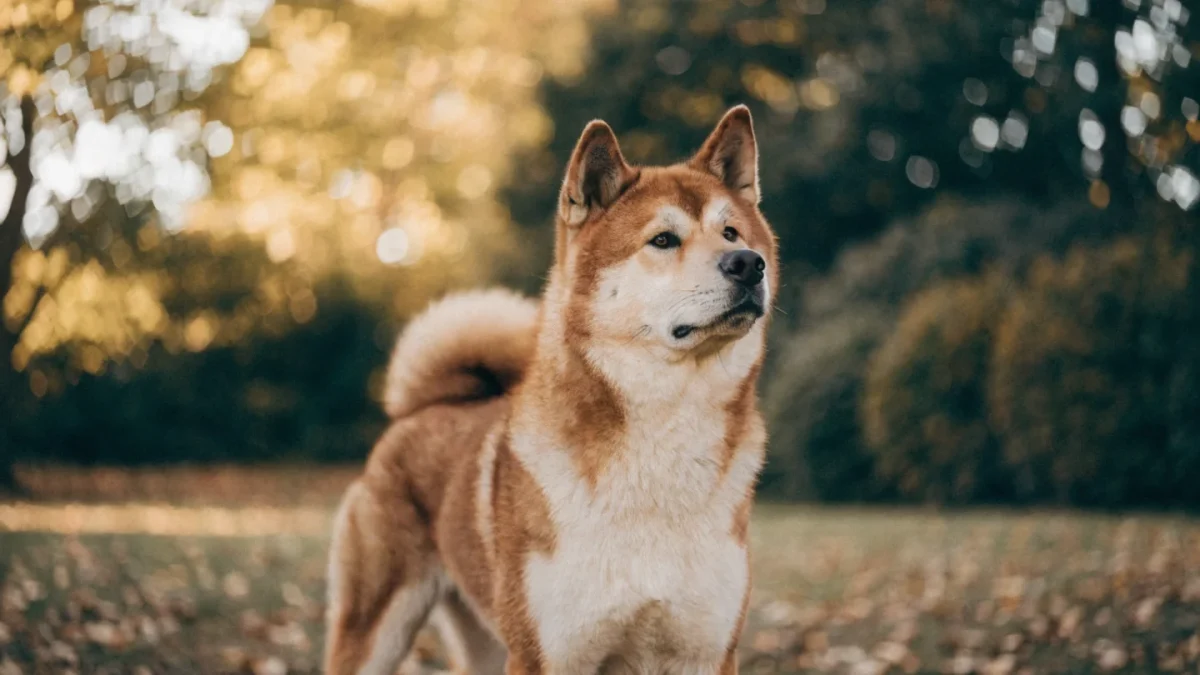
The Japanese Akita and the American Akita are not just two looks within one breed. They are two divergent genetic populations that share a common ancestor and then went, for about two decades, in almost completely different directions — one incorporating German Shepherd, Great Dane, and Mastiff-type genetics during wartime crossbreeding, the other being carefully restored toward an older, more uniform type afterward. The divergence is measurable at the DNA level. UC Davis VGL has genetically distinguished the two populations using 33 STR loci. Stand the two types next to each other at a show and you're not looking at variations on a theme — you're looking at the consequences of history written in phenotype.
That divergence matters beyond aesthetics. The coat color genetics differ. The body structure differs. And the autoimmune disease picture — particularly the predisposition to Vogt-Koyanagi-Harada-like syndrome — may differ between lines in ways the research is still working out. Understanding akita genetics in the Japanese versus American context isn't just interesting breed history. It's the foundation for reading health data, evaluating breeding pairs, and knowing what DNA tests can actually tell you about a dog in front of you.
The Divergence: How One Breed Became Two
The genetic split between Japanese and American Akitas traces to a specific historical window: 1944 to roughly 1955.
During World War II, Japanese breeders crossed Akitas with German Shepherds and other Western breeds to protect them from the military cull that targeted non-military dogs. After the war, American servicemen selected the larger, heavier dogs produced by these crosses and brought them to the United States. Japanese breeders, led by the Akita Preservation Society (AKIHO), worked in the opposite direction — selectively breeding back toward the original Matagi type by eliminating Western breed influence from their lines.
The result is two populations that share a common ancestor but have been under different selective pressures for roughly seven decades. Japanese Akitas were selected for lighter build, refined facial structure, and a restricted coat color palette. American Akitas were selected for — or at least not selected against — heavier bone, broader heads, and a wide range of coat colors that reflect the retained Western breed genetics.
Genomic studies comparing the two types show measurable genetic differentiation. The UC Davis Veterinary Genetics Laboratory has tested over 500 Akitas using 33 STR loci across the genome, identifying Japanese Akita, American Akita, and blended populations as genetically distinguishable groups. While specific Fst values for the Japanese-American Akita comparison are not widely published, the differentiation is sufficient that most major kennel club organizations — including the FCI, the Kennel Club (UK), and the UKC — recognize them as separate breeds.
Coat Color Genetics
Coat color is the most visible genetic difference between the two types, and the underlying genetics explain why.
Japanese Akita colors are restricted to four patterns: red, brindle, white, and sesame (red hairs with black tips). All non-white Japanese Akitas must display urajiro — cream-to-white markings on the muzzle, cheeks, undersides of the jaw, chest, belly, inner legs, and underside of the tail. This restriction is enforced by breed standard and maintained through selective breeding.
The red color in Japanese Akitas is produced primarily by phaeomelanin — the pigment responsible for yellow-to-red coloration in dogs. The specific shade is influenced by intensity genes that control how deep or pale the phaeomelanin expression appears. The brindle pattern involves alternating stripes of eumelanin (black/dark pigment) over a phaeomelanin base.
American Akita colors include virtually everything in the canine color spectrum: solid white, pinto (large colored patches on white), brindle, fawn, red, sesame, black, brown, and combinations with black masks. This broad range reflects the retained genetics from the wartime outcrosses — German Shepherds contributed saddle-pattern and black-and-tan genetics, while other breeds brought additional color alleles into the American population.
The E locus (Extension gene) and A locus (Agouti gene) are particularly relevant. American Akitas carry alleles at both loci that are absent or extremely rare in the Japanese population — including the melanistic mask (Em) allele and various eumelanin-dominant patterns. Japanese breeding programs have systematically selected against these alleles over decades to maintain the restricted color palette.
The VKH Question
Vogt-Koyanagi-Harada-like syndrome (VKH or UDS — uveodermatologic syndrome) is the most significant genetic health concern specific to Akitas. This autoimmune condition attacks melanocyte-containing tissues — the eyes, skin, and meninges — causing uveitis (inflammation inside the eye), skin depigmentation, and in severe cases retinal detachment and blindness.
VKH occurs in other breeds, but its prevalence in Akitas is disproportionately high compared to the general dog population. The condition appears to have a genetic basis, though the specific genes involved have not been fully characterized. Research suggests it involves the immune system's recognition of melanocyte proteins as foreign targets — essentially, the dog's immune system attacks its own pigment-producing cells.
The genetic mechanism is believed to be polygenic (involving multiple genes) with potential environmental triggers. This makes it harder to screen for than single-gene conditions like PRA, where a simple DNA test identifies carriers. Currently, the best screening tool for VKH in breeding programs is pedigree analysis — tracking the incidence of the condition across generations and avoiding breeding combinations that concentrate affected bloodlines. The akita puppy buying guide covers the specific questions to ask breeders about autoimmune line history.
Research has identified a specific genetic association: a study by Angles et al. published in Tissue Antigens found that the DLA-DQA1*00201 allele conferred a relative risk of 15.3 for uveodermatologic syndrome in American Akitas. This DLA class II association is the strongest genetic marker identified to date, though broader GWAS approaches may identify additional loci beyond the MHC region as research continues.
The complete Akita breed guide covers VKH's clinical presentation and management. From a genetics perspective, the key point for prospective owners is that VKH risk cannot currently be eliminated through DNA testing, which is why pedigree transparency from breeders matters enormously.
Autoimmune Predisposition: Broader Patterns
VKH is the most dramatic autoimmune condition in Akitas, but it's part of a broader pattern of autoimmune predisposition in the breed. Autoimmune thyroiditis (leading to hypothyroidism), pemphigus foliaceus (an autoimmune skin disease), and sebaceous adenitis (destruction of sebaceous glands) all occur at elevated rates.
This clustering of autoimmune conditions suggests a shared genetic vulnerability in the breed's immune regulatory pathways. The Major Histocompatibility Complex (MHC) — a family of genes that governs immune recognition — is a likely contributor. Certain MHC haplotypes have been associated with autoimmune disease susceptibility across multiple species, including dogs. The Akita's relatively limited genetic diversity, compounded by wartime population bottlenecks and subsequent selective breeding, may have concentrated susceptible MHC variants within the breed.
Research into canine MHC associations with autoimmune disease is ongoing, and the Akita is a breed of particular interest to immunogeneticists precisely because of its high autoimmune burden. The Angles et al. study also documented that American Akitas possess markedly reduced DLA diversity — only 6 of 16 known DQA1 alleles, 8 of 61 DRB1 alleles, and 9 of 47 DQB1 alleles — confirming the loss of immune-gene diversity that likely concentrates autoimmune susceptibility within the breed.
What DNA Testing Can Tell You
Several commercially available DNA tests are relevant for Akita owners and breeders:
Progressive retinal atrophy (PRA). DNA testing can identify carriers and affected dogs for certain PRA variants present in the breed. This is a straightforward single-gene test, and responsible breeders should screen for it.
Coat color genotyping. DNA testing can determine a dog's genotype at the E, A, K, and other color loci. This is particularly useful for Japanese Akita breeders who need to confirm that dogs carrying non-standard color alleles are identified before breeding.
Breed identification and ancestry. Genomic testing can confirm the relative proportion of Japanese vs. American Akita ancestry in dogs of uncertain background. This matters for breed-specific rescue organizations and for breeders working to maintain type integrity.
What testing cannot do yet: There is no commercially available DNA test for VKH susceptibility, autoimmune thyroiditis predisposition, or generalized autoimmune risk. These conditions remain best screened through pedigree analysis, clinical testing, and line history — not genetic panels.
The Genetic Legacy
The akita's history left a distinctive genetic fingerprint. The breed's ancient origins, geographic isolation in northern Japan, wartime population collapse, and subsequent divergence into two selectively bred types created a genetic profile that is both remarkably distinct and, in some ways, constrained.
That constraint has consequences. Limited genetic diversity concentrates both desirable traits and disease-associated alleles. The same population bottleneck that preserved the Akita's ancient spitz characteristics likely also concentrated the autoimmune vulnerabilities that challenge the breed today.
For breeders, the implication is clear: genetic diversity within the breed is a health resource that warrants deliberate management. For owners, the takeaway is that the Akita's genetics make health screening, pedigree transparency, and informed breeding choices more consequential than in breeds with broader genetic pools.