

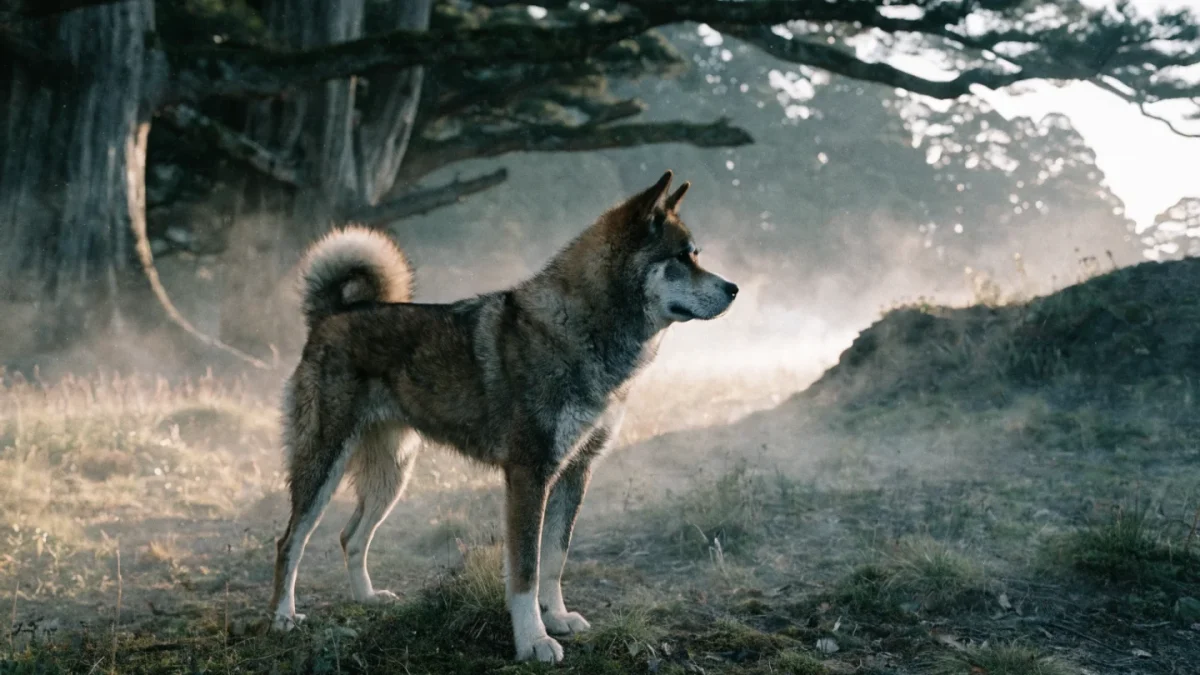
Here's what the Akita gets that almost no other breed gets: two completely opposite distortions running at the same time. On one side, you have the Hachiko romanticization — the loyal, noble, eternally devoted companion whose fidelity is the stuff of films and statues. On the other, you have the dangerous-breed fear, the insurance refusals, the "I heard they turn on their owners" crowd. Both versions of the Akita are wrong. And both, weirdly, trace back to the same core trait — a dog that bonds with extreme intensity and doesn't extend that intensity to anyone who hasn't earned it.
The Hachiko story is real, but the lesson people take from it isn't. That kind of loyalty isn't warmth. It's fixation. The same dog who waited nine years at a train station for a man who would never come is also the dog that doesn't trust your visitors, doesn't tolerate strange dogs, and will make its own decisions about what constitutes a threat. Loyalty and compliance are different things. Akita owners learn this distinction, sometimes the hard way.
The akita breed guide you're reading covers what the breed actually is — origins in feudal Japan, the health risks that matter, the temperament no one warns you about clearly enough, and the honest picture of whether this dog fits your life. It's a breed I have a lot of respect for. It's also a breed I'd never recommend without full disclosure.
Origins and History
The Akita's lineage traces to the Matagi-inu, hunting dogs used by the Matagi people of northern Japan for centuries. These dogs hunted in pairs to corner bears and hold them at bay until hunters arrived — work that required courage, power, and the independent decision-making that still defines the breed today.
During the Edo period (1603-1868), Akitas were associated with the samurai class and kept as both guard dogs and status symbols. Dog fighting became popular in the Akita region during the 1800s, and breeders crossed native Matagi-inu with larger imported breeds — including Tosa fighting dogs and, later, German Shepherds and Great Danes — to produce larger, more combative dogs. This crossbreeding diluted the original type considerably.
The breed nearly went extinct during World War II. The Japanese military ordered all non-military dogs killed to prevent the spread of disease and conserve resources. Leather from dog hides was used for military equipment. A small number of breeders hid their dogs in remote mountain areas or crossed them with German Shepherds (which were classified as military dogs and therefore exempt from the order) to protect them. This wartime crossbreeding is one of the key reasons the Japanese Akita and American Akita look so different today.
In 1931, the Japanese government designated the Akita as a Natural Monument — one of seven native Japanese dog breeds to receive this honor. The Akita Preservation Society (Akita Inu Hozonkai, or AKIHO) was founded in 1927 specifically to restore the breed to its pre-crossbreeding type. That restoration effort continues in Japan to this day.
American servicemen stationed in Japan after World War II brought Akitas home, favoring the larger, heavier-boned dogs that resulted from the crossbreeding era. This created the divergence between what are now recognized as two distinct types: the Japanese Akita (Akita Inu) and the American Akita. Many kennel club organizations outside Japan recognize them as separate breeds entirely, while others still consider them varieties of a single breed — the FCI made the split official in June 1999, initially under the name "Great Japanese Dog" before renaming it the American Akita in 2006.
Physical Characteristics
Size and Build
This is a substantial dog. Males typically stand 66 to 71 cm at the shoulder and weigh between 45 and 59 kg. Females range from 61 to 66 cm and 32 to 45 kg. The body is slightly longer than tall, heavily boned, and muscular. Everything about the Akita's build communicates power — the broad head, thick neck, deep chest, and heavy limbs give the breed an imposing physical profile that few other breeds match outside the giant breeds.
There's significant variation between the Japanese and American types. Japanese Akitas tend to be more refined, lighter in bone, and fox-like in facial structure. American Akitas are broader, heavier, and bear-like in the head. Japanese Akitas are restricted in color (red, brindle, white, and sesame), while American Akitas come in virtually any color including pinto patterns, black masks, and solid white.
Coat
The Akita carries a dense double coat built for harsh northern winters. The outer coat is straight and harsh, standing slightly off the body. The undercoat is thick, soft, and insulating. Coat length is moderate over most of the body but notably longer on the tail, which curls over the back in the breed's characteristic spitz plume.
The coat blows twice a year, and when I say "blows," I mean you will question whether your dog is actually losing all of its fur simultaneously. Spring and fall shedding events produce extraordinary volumes of undercoat. Between blowouts, shedding is moderate but constant. Anyone who tells you Akitas don't shed much between seasonal coat blows has never owned one.
Distinguishing Features
The Akita's most recognizable feature is the curled tail carried high over the back, forming a full or double curl. The small, triangular ears are thick, slightly rounded at the tips, and tilt forward — giving the breed an alert, watchful expression. The eyes are small, deep-set, and dark brown, contributing to the dignified, almost stern look that owners either love or find intimidating. The feet are thick, round, and cat-like, well-suited for walking on snow.
Temperament and Behavior
If the golden retriever is the dog that greets every stranger like a long-lost friend, the Akita is the dog that watches every stranger from across the room and decides whether they're worth acknowledging. These are fundamentally different animals in social orientation, and understanding that difference is essential before committing to this breed.
What Most People Get Wrong About Akitas
The biggest misconception I encounter: "Akitas are aggressive dogs."
That's an oversimplification that misses the point entirely. Akitas are reserved, vigilant, and selective — traits that people unfamiliar with the breed interpret as hostility. A well-socialized Akita is not aggressive toward people. It's indifferent to most of them. The breed was developed to guard without command, to assess threats independently, and to act on its own judgment. That's not aggression. That's a dog doing exactly what it was bred to do.
The real challenge isn't aggression toward humans. It's dog-directed intolerance. Many Akitas — particularly intact males — have pronounced same-sex aggression. This isn't a training failure; it's a breed characteristic rooted in the breed's fighting and hunting heritage. Owners who plan to have multiple dogs need to understand this reality before bringing an Akita home.
Loyalty and Bonding
Akita loyalty is legendary for good reason. The Hachiko story — the Akita who waited at Shibuya Station for his deceased owner every day for nearly ten years — is not folklore. It's documented historical fact. This breed bonds deeply and permanently, and that bond is both the Akita's greatest virtue and its greatest management challenge.
An Akita that bonds with its family becomes profoundly protective. They will position themselves between their person and perceived threats. They will monitor visitors. They will be the last dog asleep and the first awake if something in the house changes. This isn't trained behavior. It's instinct.
The flip side of that loyalty is that Akitas do not transition easily between families. Rehoming an adult Akita is genuinely difficult — they grieve, they shut down, and rebuilding trust takes considerable time and patience. This is a lifetime commitment breed.
Independence
Akitas think for themselves. They were bred to make decisions in the field without handler direction — holding a bear at bay while the hunter was still a hundred meters away required autonomous judgment, not obedience to commands. That independent thinking doesn't disappear because the dog now lives in a house.
An Akita will comply with a command when it sees the purpose. Repetitive drilling bores them. They learn quickly but are selectively obedient — they know what you want; they're deciding whether to comply. This is profoundly different from the eager-to-please temperament of retrievers or herding breeds, and owners who expect retriever-style responsiveness will be frustrated.
Health Profile
Akitas are a generally robust breed with some significant health predispositions that every prospective owner should understand clearly.
Hip Dysplasia
Hip dysplasia is one of the most common orthopedic issues in Akitas. The breed's size and weight place substantial stress on the hip joints. Responsible breeders screen parent dogs through standardized evaluation programs, but even screened parents can produce affected puppies — the condition involves multiple genes and environmental factors including growth rate and nutrition during development.
Autoimmune Conditions
Akitas have a notably higher prevalence of autoimmune diseases compared to many other breeds. Autoimmune thyroiditis (leading to hypothyroidism) is common. More concerning is Vogt-Koyanagi-Harada-like syndrome (VKH), an autoimmune condition that attacks pigmented cells in the eyes, skin, and meninges. VKH can cause uveitis, retinal detachment, skin depigmentation, and in severe cases, blindness. The condition is significantly overrepresented in Akitas compared to the general dog population — roughly 80% of documented canine VKH cases occur in this one breed, though nobody has pinned down a precise population-wide incidence rate.
Pemphigus foliaceus and sebaceous adenitis also occur at higher rates in the breed than in the general population.
Bloat (Gastric Dilatation-Volvulus)
As a deep-chested large breed, Akitas are at elevated risk for GDV — a life-threatening emergency where the stomach fills with gas and rotates on its axis, cutting off blood supply. GDV is fatal without emergency surgical intervention. Feeding multiple smaller meals, avoiding vigorous exercise immediately after eating, and discussing prophylactic gastropexy with a veterinarian are standard management strategies for at-risk breeds.
Other Health Concerns
- Progressive retinal atrophy (PRA): Genetic eye disease leading to progressive vision loss. DNA testing can identify carriers.
- Entropion: Inward rolling of the eyelid that causes corneal irritation. Correctable with surgery.
- Myasthenia gravis: An autoimmune neuromuscular condition that causes muscle weakness. Rare but documented in the breed at higher rates than average.
- Cruciate ligament injuries: The breed's weight and heavy build increase susceptibility to knee ligament tears.
Lifespan
The average Akita lifespan is approximately 10 to 13 years. Some individual dogs live to 14 or 15, but expecting that as a baseline isn't realistic for such a large breed. Size is the most consistent predictor of canine lifespan, and Akitas fall squarely in the large-to-giant range.
Grooming Requirements
Akita grooming is straightforward in concept but demanding in execution during shedding season. The rest of the year, maintenance is moderate compared to many long-coated breeds.
Coat Care
Brush the coat thoroughly once or twice per week during non-shedding periods. A pin brush and metal comb handle the outer coat and any tangles that form behind the ears or in the thick leg and tail furnishings. During the biannual coat blow, daily grooming with an undercoat rake becomes necessary — and even daily raking may not feel like enough. The volume of undercoat an Akita sheds in spring is genuinely remarkable. Budget extra time, extra vacuum bags, and extra patience.
Akitas are naturally clean dogs with almost cat-like grooming habits. Many owners report their Akitas actively groom themselves, avoid puddles and mud, and maintain a relatively odor-free coat. Bathing every six to eight weeks is typical, and the coat's natural oils repel dirt reasonably well between baths.
Never shave an Akita's coat. The double coat regulates body temperature in both heat and cold. Shaving disrupts that thermal regulation and the coat often grows back with altered texture.
Nails, Ears, and Teeth
Nail trimming every two to three weeks prevents overgrowth. The thick, round feet make overgrown nails particularly uncomfortable for this breed. Ear cleaning every week or two prevents buildup — the erect ears allow good air circulation, so ear infections are less common than in floppy-eared breeds, but monitoring is still necessary. Dental care through regular brushing reduces periodontal disease risk.
Exercise and Activity Needs
Akitas need moderate daily exercise — typically 60 to 90 minutes spread across two or more outings. They are not hyperactive dogs by nature. Their exercise needs are closer to a calm but steady baseline rather than the explosive energy of herding or sporting breeds.
What Works
- Long walks: Akitas are excellent walking companions. They move with a steady, ground-covering gait and handle distance well.
- Hiking: Mountain terrain suits a breed that evolved in mountainous northern Japan. They handle cold weather and rough trails with ease.
- Structured play: Tug games, controlled fetch sessions, and interactive toys engage both body and mind.
- Mental stimulation: Puzzle feeders, scent work, and problem-solving games are important. Akitas are intelligent and boredom leads to destructive behavior — and a bored Akita can do significant damage given its size.
What Doesn't Work
Dog parks are generally a poor choice for Akitas. Their intolerance of unfamiliar dogs, combined with their size and strength, creates a high-risk environment. Off-leash areas with unknown dogs invite exactly the kind of confrontation that responsible Akita ownership seeks to prevent. Exercise your Akita in controlled environments where you manage the social variables.
Climate Considerations
The double coat makes Akitas well-suited to cold climates. Snow, freezing temperatures, and winter conditions are this breed's natural element. Heat is more problematic — the dense coat can cause overheating during intense exercise in warm weather. During summer months, exercise early in the morning or late in the evening, ensure constant access to fresh water and shade, and watch for signs of heat stress.
Nutrition Fundamentals
Akitas are not as food-obsessed as retrievers, but their size means nutrition management still matters considerably.
Feeding Approach
Two measured meals per day for adults is standard. Puppies need three or four meals daily until roughly six months old, then transition to two. Avoid free-feeding — portion control prevents obesity, which compounds every orthopedic and cardiovascular risk the breed already faces. Caloric needs vary by activity level, age, and individual metabolism, but an average adult Akita at a healthy weight typically needs somewhere between 1,700 and 2,700 calories per day, with males and more active individuals landing at the higher end and females and neutered dogs closer to the lower end. Work with a veterinary professional rather than relying on bag-feeding guidelines.
GDV Prevention Through Feeding
Because Akitas are at elevated risk for bloat, feeding practices matter beyond simple nutrition. Feed two or three smaller meals rather than one large one. Avoid elevated food bowls — contrary to the persistent myth, elevated feeding does not prevent GDV and may increase risk. Avoid vigorous exercise for at least 30 minutes before and after meals.
Weight Management
A healthy Akita has a visible waist when viewed from above and a slight abdominal tuck from the side. The thick coat can mask weight gain, so hands-on rib checks are more reliable than visual assessment. Excess weight on a breed already prone to hip dysplasia and ligament injuries accelerates joint deterioration significantly.
Living Situation Compatibility
Akitas are surprisingly adaptable in terms of living space. They are calm indoor dogs — far calmer than their size might suggest. A dedicated Akita owner in a well-managed apartment can provide a better life than a neglectful owner with a large yard.
Indoor Life
Akitas are quiet dogs by nature. They don't bark excessively, which makes them better apartment or townhouse candidates than many smaller, more vocal breeds. When they do vocalize, it tends to be purposeful — alerting to something unusual, not barking at passing squirrels for an hour.
They do, however, take up significant physical space. A 50 kg dog lying in a hallway is a genuine obstacle. They tend to position themselves in central locations where they can monitor household activity — doorways, hallway intersections, and wherever their primary person is sitting.
Fencing and Containment
A securely fenced yard is strongly recommended. Akitas have moderate prey drive and will pursue small animals if given the opportunity. Fencing should be a minimum of 180 cm high — while Akitas are not typically escape artists in the way huskies are, they are physically capable of clearing lower barriers if motivated.
Multi-Pet Households
This requires honest assessment. Akitas can coexist with other dogs, but it requires careful management, same-sex pairings should generally be avoided, and introductions must be handled gradually and under control. Many Akitas do poorly at dog parks and with unfamiliar dogs. Cats and small animals can work if the Akita is raised with them from puppyhood, but the prey drive is real. Individual temperament varies, and blanket assurances about multi-pet compatibility would be irresponsible for this breed.
Choosing an Akita
Japanese vs. American Akita
The two types differ in appearance, temperament tendencies, and breed standard. Japanese Akitas tend toward a more reserved, almost aloof demeanor and a more refined physical build. American Akitas are generally bolder, heavier, and come in a wider color range. For a deeper look at the differences and what they mean for choosing a puppy, the distinctions are worth understanding before committing.
Health Screening
At minimum, parent dogs should have hip evaluations, thyroid testing, and eye examinations. DNA testing for PRA is available and should be standard. Ask about autoimmune history in the lines — VKH and autoimmune thyroiditis cluster in certain bloodlines more than others. A breeder who tracks autoimmune history across generations is a breeder who takes the breed's health seriously.
Red Flags
- No health clearances for parent dogs
- Puppies available before eight weeks of age
- No questions about your experience with large, independent breeds
- Selling "rare" colors at premium prices
- Inability to discuss autoimmune history in their breeding lines
- No contract requiring return of the dog if you can no longer keep it
The Right Owner for This Breed
An Akita is the right dog for you if:
- You have experience with large, independent breeds and understand that obedience must be earned, not assumed
- You can provide consistent socialization from puppyhood through adulthood
- You're comfortable with a dog that is loyal to you and indifferent to most other people
- You can manage same-sex dog aggression through environmental control and responsible ownership
- You have 60 to 90 minutes daily for structured exercise and mental stimulation
- You're prepared for significant grooming during shedding season and moderate maintenance year-round
- You understand and accept the breed-specific health risks, including autoimmune conditions
An Akita is the wrong dog for you if:
- You want a dog that loves everyone it meets
- You plan to be a regular at the dog park
- You're a first-time dog owner looking for a forgiving learning curve
- You want a breed that complies eagerly with every command the first time
- You're away from home most of the day without a plan for the dog
- You expect the dog to get along effortlessly with other animals in the house
The Akita is not a difficult dog. It's a specific dog — bred for a specific purpose, shaped by a specific history, and suited to a specific kind of owner. When the match is right, the bond between an Akita and its person is one of the most profound in the entire canine world. When the match is wrong, both the dog and the owner pay the price.
Frequently Asked Questions
Are Akitas good family dogs?
Akitas can be excellent family dogs for families that understand the breed. They are typically gentle and protective with children in their own household. However, they may not tolerate rough play from visiting children, and their size alone makes supervision around small children essential. They are not the indiscriminate "everyone's best friend" type — they bond with their family unit and are reserved with outsiders. Families with multiple dogs, frequent visitors, or very young children should carefully evaluate whether the Akita's temperament matches their household dynamics.
How much do Akitas shed?
Heavily during the biannual coat blow in spring and fall, and moderately the rest of the year. The coat blow lasts roughly two to four weeks per cycle and produces enormous volumes of undercoat. During these periods, daily grooming is necessary. Between blowouts, brushing once or twice per week manages loose hair. Akitas are relatively clean dogs that groom themselves, but the double coat means hair on furniture and clothing is a constant reality.
Are Akitas aggressive toward other dogs?
Many Akitas exhibit intolerance toward unfamiliar dogs, and same-sex aggression is a well-documented breed characteristic. This isn't universal — individual temperament varies — but it is common enough that responsible ownership requires managing the dog's interactions with other dogs carefully. Dog parks and off-leash areas with unknown dogs are generally inadvisable. With proper socialization starting in puppyhood, many Akitas learn to tolerate other dogs in controlled settings, but expecting an Akita to be dog-social in the way a Labrador or golden retriever is would be unrealistic.
What's the difference between a Japanese Akita and an American Akita?
Japanese Akitas (Akita Inu) are lighter in build, more fox-like in facial structure, and restricted to four color patterns: red, brindle, white, and sesame. American Akitas are heavier, broader in the head, and come in virtually any color including pinto and black mask patterns. Temperament tendencies differ slightly — Japanese Akitas are often described as more reserved and cat-like, while American Akitas tend to be bolder and more outwardly confident. Many kennel club organizations recognize them as separate breeds, while others still classify them as varieties of a single breed.
Do Akitas need a lot of exercise?
Akitas need moderate, consistent exercise — roughly 60 to 90 minutes daily. They are not hyperactive dogs and don't require the intense physical and mental work that herding breeds demand. Two solid walks daily combined with some structured play or mental stimulation satisfies most adults. They do best with a routine. Puppies need exercise calibrated to their developmental stage — avoid forced repetitive exercise on growing joints. The breed's calm indoor demeanor often surprises people who expect a dog of this size to be perpetually active.