

Someone messaged me through an online reptile forum last year asking why their 1,200-gram ball python was getting fat. They were feeding it a large rat every five days. That's roughly a 25% body weight meal twice a week — the equivalent of a human eating 35 pounds of food every few days. The snake was healthy, technically. Just spherical.
Feeding a ball python sounds simple because the mechanics are simple: thaw a rodent, warm it up, offer it with tongs. But sizing the prey correctly, spacing meals appropriately, and knowing when a refusal is normal versus when it's a problem — that's where the real skill sits. Here's how to get it right across every life stage.
Prey Sizing
The rule of thumb: the prey item should be roughly 10-15% of the snake's body weight, or approximately the same width as the widest point of the snake's body. After swallowing, you should see a modest lump — visible but not dramatic. If the snake looks like it swallowed a tennis ball, the prey was too large.
A kitchen scale removes the guesswork. Weigh the snake, weigh the prey, do the math. I weigh every snake in my collection monthly and adjust prey size accordingly.
Progression by age
Hatchlings (15-80g): Fuzzy or hopper mice. Some breeders start hatchlings on pinky rats instead — they're similar in size to hopper mice but introduce the rat scent early, which makes the eventual transition to rats smoother.
Juveniles (80-400g): Small rats, sometimes called "rat pups" or "weaned rats" depending on the supplier. This is the transition period from mice to rats, and some individuals resist the switch. Scenting a rat with mouse bedding or braining it (puncturing the skull to release scent) can help. Unpleasant? Yes. Effective? Almost always.
Sub-adults (400-900g): Small to medium rats.
Adults (900g+): Medium rats for most males, medium to large rats for females. Females are generally larger-bodied than males and can handle bigger prey.
Feeding Schedule
| Life Stage | Frequency | Prey Size |
|---|---|---|
| Hatchling (0-6 months) | Every 5-7 days | Fuzzy/hopper mice or pinky rats |
| Juvenile (6-18 months) | Every 7 days | Small rats |
| Sub-adult (18-36 months) | Every 7-10 days | Small-medium rats |
| Adult (3+ years) | Every 10-14 days | Medium rats |
| Breeding female (building follicles) | Every 7 days | Slightly larger than maintenance |
These intervals assume appropriate prey sizing. If you're feeding on the heavier end of the 10-15% range, space meals further apart. If lighter, you can feed more frequently.
I feed my adult males every 14 days and my adult females every 10-12 days outside of breeding season. Both maintain excellent body condition at those intervals. Some keepers stretch adult males to every 21 days — that works too, provided body weight stays stable.
The Frozen-Thawed Method
Step by step:
- Remove prey from freezer. Place it in a sealed plastic bag (zip-top works fine).
- Thaw in the refrigerator for 8-12 hours, or place the sealed bag in warm (not hot) water for 30-45 minutes. Never microwave prey — it heats unevenly and can cause internal hot spots that burn the snake's digestive tract.
- Warm the thawed prey by soaking the bag in warm water (about 40°C / 104°F) for 10-15 minutes. The goal is body temperature — ball pythons have heat-sensing pits along their upper lip, and warm prey triggers a stronger feeding response than room-temperature prey.
- Dry the prey briefly with a paper towel. Dripping wet rodents seem to put some snakes off.
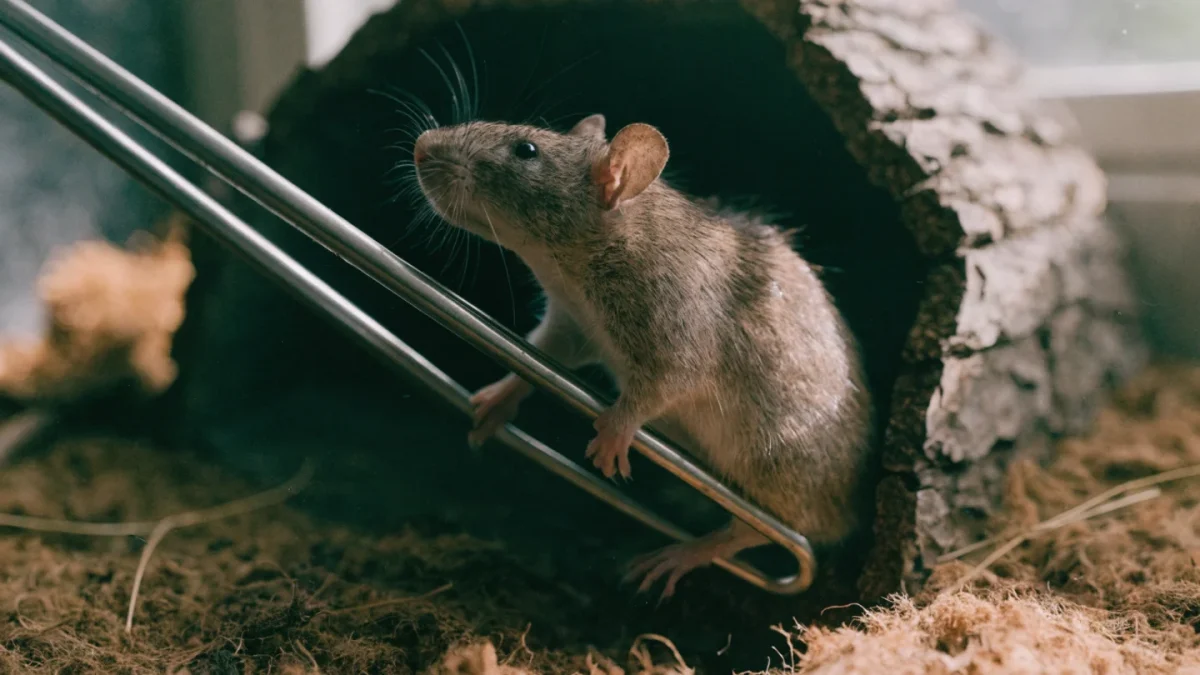
- Offer with long feeding tongs — 30 cm (12 inches) minimum. Present the prey headfirst near the snake's hide entrance. Gentle movement mimics a live animal and can trigger a strike.
- Give the snake privacy. If it doesn't strike within a few minutes, leave the prey in the enclosure near the warm hide and walk away. Check after 20-30 minutes. Some ball pythons won't eat with an audience.
If the snake doesn't eat within an hour, remove the prey and try again in 3-5 days. Don't leave uneaten prey overnight — it spoils and can introduce bacteria.
When Your Ball Python Refuses Food
This happens. A lot. And in most cases, it's not an emergency.
Ball pythons have earned a reputation as fussy eaters, and it's deserved. Males routinely fast during breeding season — roughly November through March, though captive snakes don't always follow the calendar. Some individuals fast for three, four, even six months and lose barely any weight. I had a male lesser morph that refused food for 22 weeks one winter. He lost about 40 grams total. Ate his first offered rat in April like nothing had happened.
Before panicking, run through this checklist:
Check the enclosure. Is the warm side actually hitting 30-33°C? Is humidity above 60%? Are there two snug hides? Problems here account for the majority of feeding refusals I troubleshoot. Even a 2-degree drop in warm-side temperature can suppress appetite. The enclosure setup matters more than any feeding trick.
Consider the season. Winter fasting in males is hormonal and normal.
Was the snake recently moved, handled excessively, or exposed to vibration? Stress suppresses feeding. Give it a week of zero handling and try again.
Is the snake in pre-shed? Many ball pythons refuse food from the moment their eyes go blue until a few days after shedding.
Has prey type changed? Some ball pythons imprint on a specific prey color, scent, or temperature. A snake that's eaten white mice its entire life may refuse a brown rat simply because it smells different. Try scenting, braining, or offering in a different way before assuming the snake is sick.
Body Condition Assessment
Weighing the snake regularly matters more than counting meals. Every two weeks is sufficient for adults, weekly for growing juveniles.
A healthy ball python viewed from above has a gently rounded cross-section — no visible spine, no sharp edges along the back. From the side, the belly makes gentle contact with the surface without excessive flattening.
Too thin: Spine visible as a ridge, triangular cross-section, loose skin.
Too heavy: Hose-clamp appearance (visible creasing between scales when the snake bends), round cross-section with no spine visibility, fat deposits visible at the base of the tail.
Obesity in ball pythons is a real problem in captivity. An overfed ball python doesn't just look chubby — excess weight stresses the organs, reduces lifespan, and complicates breeding. I've met keepers who are genuinely proud of how "thick" their ball python is, and I have to be the one to explain that their snake is morbidly obese. The exotic pet nutrition guide covers body condition scoring and portion control principles across species — the same logic applies whether you're feeding a gecko or a python.
Frequently Asked Questions
Can I feed my ball python chicken or other non-rodent meat?
No. Whole prey provides a complete nutritional profile — organs, bones, calcium, and a balanced ratio of nutrients that no other single food source replicates. Chicken breast is a muscle meat with none of the organ nutrition a snake needs. Stick to appropriately sized whole rodents.
How do I switch my ball python from mice to rats?
Start during the juvenile stage if possible — the transition gets harder with age. Offer a small rat that's the same size as the current mouse prey. If refused, try scenting the rat by rubbing it with soiled mouse bedding or placing both in the same bag before offering. Braining (making a small puncture in the rat's skull) releases scent that often overcomes reluctance. Persistence usually wins within a few attempts.
My ball python regurgitated its meal. What happened?
Regurgitation is a serious event for snakes — it damages the esophageal lining and depletes energy. Common causes: handling too soon after feeding (wait 48+ hours), enclosure too cold for proper digestion, prey item too large, or stress. After a regurgitation, wait 10-14 days before offering a smaller-than-usual prey item. If it happens a second time, see an exotic vet.
Should I feed inside the enclosure or in a separate container?
Feed inside the enclosure. The "use a separate feeding container to prevent cage aggression" advice has been largely debunked — ball pythons don't develop food-location associations the way that theory suggests, and the stress of being moved into an unfamiliar container is more likely to cause a refusal than prevent aggression. The snake is most comfortable in its own space. Feed it there.