

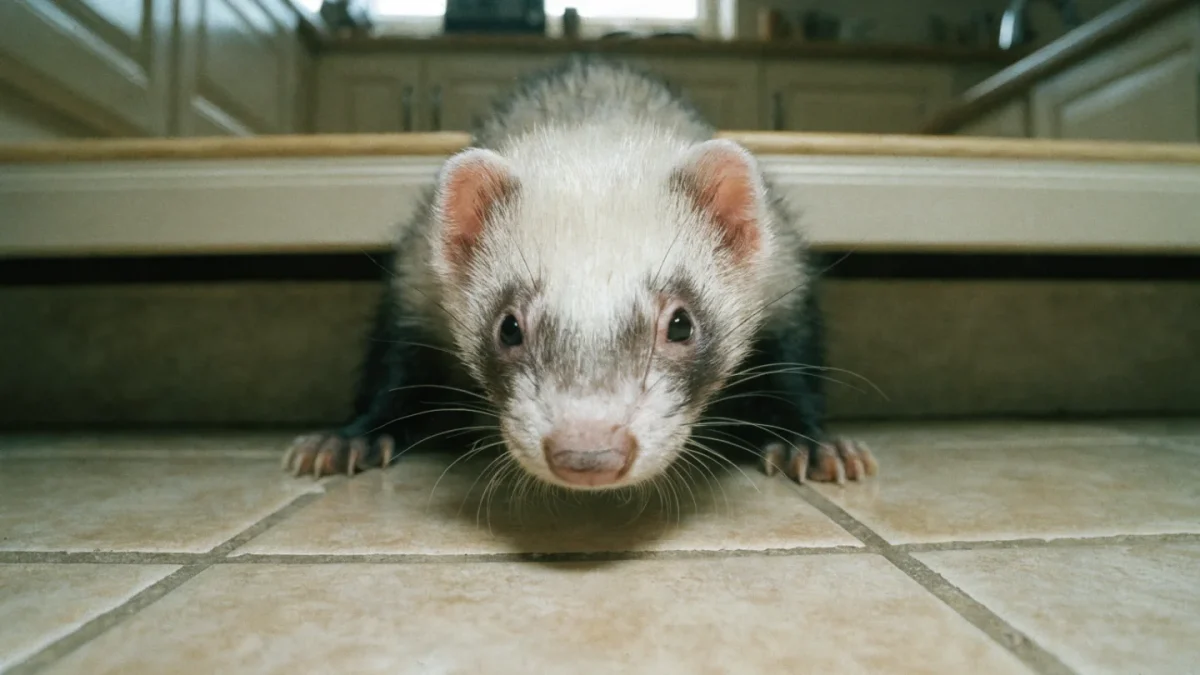
I got a phone call at 11 PM from a first-time ferret owner whose kit had vanished. Completely gone. They'd searched every room, every closet, under every piece of furniture. Forty-five minutes of near-panic before they found her — inside the box spring of their bed. She'd clawed through the thin fabric on the underside, climbed up into the springs, and fallen asleep. No harm done that time. But that call is why I take ferret proofing home seriously enough to dedicate a full walkthrough to it.
Ferret-proofing requires blocking gaps wider than 5 cm, removing rubber and foam objects, securing cabinets, and eliminating access to reclining furniture mechanisms. You have to think like a small, flexible, relentlessly curious animal with no concept of danger.
This isn't a one-time project either. Ferrets test boundaries constantly. What was secure last month might not be secure after they've spent four weeks working on it.
Before You Start: The Floor Test
Get on the floor. Seriously. Lie flat and look around at ferret height. You'll immediately see gaps under cabinets, openings behind appliances, cords dangling at chewing level, and spaces between furniture that look like invitations. Every ferret-proofing job should start here because the view from standing height misses half the problems.
Grab a roll of painter's tape and mark everything that looks like a gap, a chewable surface, or an escape route. Then work through the list systematically.
Living Room
This is usually the worst room in the house for ferret hazards, and it's also where most people let ferrets play.
Reclining furniture. Reclining chairs and sofas have killed ferrets. The mechanism creates a crushing gap that a ferret crawls into because it looks cozy. There is no safe way to ferret-proof a recliner — you either remove it from the play area or you never, ever recline it while a ferret is out. I've heard people say "I'll just be careful." That's not a safety plan. Your comprehensive ferret care approach should treat this as non-negotiable.
Couch cushions. Ferrets burrow into couches from underneath, clawing through the dust cover fabric. Sitting on a couch while a ferret is loose underneath it is exactly as dangerous as it sounds. Staple hardware cloth over the bottom or block access entirely.
Electrical cords. Ferrets chew them. Not all ferrets, but enough that you can't gamble on yours being the exception. Cable covers, cord concealers, or bitter-tasting sprays on exposed cords. Run cords behind furniture where possible.
Rubber and foam. Remote control buttons, shoe insoles, earbuds, yoga mats, foam padding on anything. Ferrets chew and swallow rubber and foam compulsively, and it doesn't pass through their digestive tract. Intestinal blockages from ingested foam are one of the most common ferret emergencies. If it's rubber or foam and it's within reach, remove it.
Kitchen
Cabinet gaps. The space between the bottom of kitchen cabinets and the floor is almost always exactly ferret-sized. Block it with foam board (secured so the ferret can't pull it out and chew it) or plywood strips.
Appliance access. Behind and under the refrigerator, dishwasher, stove, and washing machine. Warm, dark, full of electrical components and potentially toxic dust. Block access with rigid barriers screwed or wedged firmly in place. I use cut-to-size pieces of plywood held in place with heavy-duty adhesive strips.
Trash cans. Locking lid or inside a latched cabinet. Ferrets will knock over a trash can and eat things that send them to the emergency vet.
Cleaning supplies. Standard advice for any pet, but ferrets are small enough to get under sinks where cleaning products live. Child-proof latches on every cabinet that contains chemicals.
Bathroom
Close the door. That's the simplest approach and the one I recommend.
If you can't or won't close the door: toilet lids stay down and latched (ferrets can climb in and drown — they can't climb the slick porcelain sides to get out). Trash cans secured. No standing water in tubs or buckets. Soap, shampoo bottles, and anything with a chewable cap stored out of reach.
The gap behind the toilet where plumbing enters the wall is another classic escape route. Ferrets follow pipes into wall cavities.
Bedroom
Box springs. The scenario from my phone call. Staple plywood or hardware cloth over the bottom fabric to prevent entry.
Dresser drawers. Ferrets climb in from behind if the dresser isn't flush against the wall. They also climb inside open drawers and get trapped when you close them. Develop a habit of checking before closing.
Closets with bi-fold or sliding doors are manageable if you ferret-proof what's inside — no shoes with rubber soles on the floor, no foam items at ferret height.
Gaps, Vents, and Structural Openings
Ferrets can squeeze through any gap their skull fits through, which means anything wider than about 5 cm is a potential exit. Check around:
- Dryer vent hoses (often flexible and tearable)
- HVAC floor vents — secure with screws, not just gravity
- Gaps where plumbing or electrical conduit enters walls
- Spaces under doors (draft stoppers help, but determined ferrets push through soft ones)
- Window screens — ferrets can pop out loose or damaged screens
That last one catches people off guard. An open window with a screen feels safe. It's not, unless the screen is firmly secured in the track. I recommend treating any open window in a ferret play area as a potential escape until you've verified the screen holds against pushing.
The Ongoing Process
Ferret-proofing isn't something you do once and forget. Every few weeks, do another floor-level sweep. Check barriers for signs of chewing or displacement. Watch your ferret during playtime and notice what they investigate — that's your preview of next week's escape attempt.
New items brought into the home need assessment. That package with foam padding? The new yoga mat? The rubber doorstop? All ferret hazards until proven otherwise.
And if you're setting up the habitat itself, the same habitat setup fundamentals that apply to enclosure design — ventilation, temperature, materials safety — extend into the ferret play area too.
FAQ
Do I need to ferret-proof every room?
No. Most keepers designate one or two rooms as the ferret play zone and proof only those. It's more manageable and more thorough than trying to secure an entire house. Just make sure the doors to unproofed areas actually latch — ferrets figure out lever-style handles disturbingly fast.
Can ferrets and cats share a ferret-proofed space?
Usually yes. Cats and ferrets tend to coexist after an adjustment period, and cat-proofing overlaps with ferret-proofing in most areas. The main difference: cats won't eat your remote control buttons. Ferrets will.
How often do ferrets actually get into blocked areas?
Constantly. I've had ferrets that spent twenty minutes per play session testing the same barrier they failed to breach the day before. They're not discouraged by failure. Think of every barrier as something that needs to hold against daily testing indefinitely, not just once.