

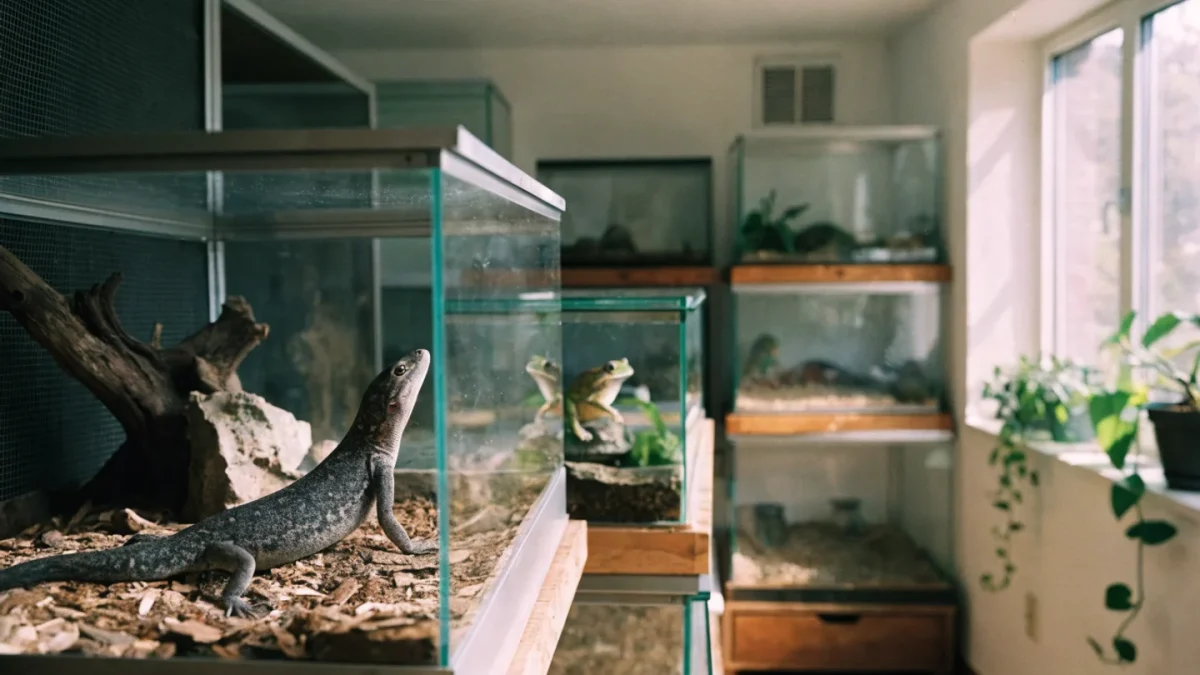
The ball python I bought at seventeen nearly died because I picked the animal before I picked up a single book. I'd held one at a reptile expo, loved the way it coiled around my wrist, and walked out with a snake, a screen-top aquarium, and a heat pad stuck to the bottom of the tank. No thermostat. No humidity gauge. No understanding that ball pythons need 55-60% humidity and mine was sitting at maybe 25% in a dry bedroom in January. That snake refused food for three months and went through a respiratory infection before I figured out what I was doing wrong.
Choosing your first exotic pet means matching your actual lifestyle — schedule, space, budget, comfort with feeding requirements — to a species whose needs you can realistically meet for its entire lifespan. That's the whole framework. Not "what looks coolest" or "what's trending on social media." The animal you can keep well is the right animal.
I've spent the years since that first ball python keeping over thirty species, consulting with hundreds of first-time keepers, and volunteering with reptile rescues where the story is almost always the same: someone chose the animal first and the husbandry second.
The Lifestyle Audit Nobody Wants to Do
Before you look at a single species, answer these honestly. Write them down. The temptation to fudge your answers toward the animal you already want is enormous — I've watched it happen in real time at expos.
How much daily time do you actually have? Not "how much time would I have if I reorganized my schedule." Right now. Some exotic pets need fifteen minutes a day. Others need an hour or more for feeding, misting, cleaning, and interaction. A crested gecko needs five minutes most days. A parrot needs hours of social interaction or it develops behavioral problems that will outlast your patience.
What's your space situation? A leopard gecko lives comfortably in a 20-gallon enclosure on a desk. A blue-tongued skink needs a 4-foot enclosure. A green iguana — the animal pet stores love to sell as a "cool beginner reptile" — needs a custom enclosure the size of a closet as an adult and reaches five feet long. I've taken in iguanas surrendered by people whose studios couldn't hold the adult enclosure. Every one of them was bought as a cute twelve-inch juvenile.
What's your real budget? Not just the animal. The enclosure, lighting, heating, thermostat, substrate, food, and the exotic vet visit you'll need within the first year. I'll give rough ranges later, but the number that stops most people is the ongoing food cost for insectivores — a bearded dragon's monthly cricket and roach bill is real money.
Are you squeamish about feeding? Many exotic pets eat live or frozen-thawed insects, rodents, or whole prey. If the thought of keeping a colony of dubia roaches in your closet makes you physically uncomfortable, that eliminates a big chunk of the species list. No shame in it — but know it now.
What's your travel frequency? Dogs have boarding facilities everywhere. Finding someone to pet-sit a snake or monitor your terrarium temperatures while you're away for a week is genuinely harder than most people expect.
Matching Species to Reality
I'm going to skip the "here's a list of fifty species" approach because it doesn't actually help. Instead, here are the major categories and what they demand.
Reptiles
The most popular entry point, and for good reason. Many reptile species are low-interaction (they don't need you to play with them), have predictable care routines, and can be left alone for a day or two if the automation is set up correctly. The tradeoff: habitat setup fundamentals matter enormously. Get the temperature gradient or UVB wrong and you'll have a sick animal within months, sometimes without visible symptoms until the damage is advanced.
Good starter reptiles include leopard geckos, crested geckos, corn snakes, ball pythons, and bearded dragons — but each of these has different demands. A crested gecko needs no supplemental heating in most homes but requires nightly misting. A bearded dragon needs a significant UVB and basking setup but handles dry air just fine. "Beginner reptile" doesn't mean "all the same."
One thing I've learned from running my collection and talking to keepers who've been at it longer than I have: the reptile you pick first shapes your understanding of the entire hobby. Start with a species that teaches you thermal gradients, feeding schedules, and reading behavior cues, and everything else gets easier.
Fish
Fish are genuinely underrated as exotic pets. A well-planted freshwater tank is mesmerizing and the maintenance, once you understand the nitrogen cycle, becomes routine. The catch — and it's a significant one — is that the nitrogen cycle itself takes four to six weeks to establish before you add fish, and most beginners don't know it exists. I've watched people at pet stores walk out with a tank and fish on the same day, which is a setup for dead fish within two weeks.
Bettas are often recommended as "easy first fish," and they are, provided you give them a heated, filtered tank of at least 5 gallons — not the tiny unfiltered bowls they're often sold with. Corydoras catfish, guppies, and cherry shrimp are other solid options for planted community tanks.
Birds
I'll be direct. Most birds are not beginner exotic pets. Parrots — even small species like budgerigars — are social, intelligent, loud, and need daily interaction measured in hours, not minutes. They live for decades. A cockatiel can live 20-25 years. A larger parrot can live 50-80. That's not an abstract number — it means including this animal in your life planning through career changes, moves, and relationships.
If you're set on a bird, budgerigars and cockatiels are the standard starting point. They're hardy, relatively affordable, and their social needs, while real, are manageable for someone willing to make them part of daily life. But I've seen more birds surrendered to rescues than any other exotic pet category, and the reason is almost always the same: the owner didn't understand the time commitment.
Small Mammals
Hamsters, gerbils, hedgehogs, chinchillas, rats, guinea pigs. Wide range of commitment levels. Rats are shockingly social and intelligent — they're the exotic pet I most often recommend to people who want interaction but can't handle a twenty-year parrot commitment. They live two to three years, though, which is its own kind of difficult. You get attached fast.
Chinchillas live fifteen to twenty years and need cool, dry environments — no air conditioning in your home means no chinchilla. Hedgehogs are solitary, quiet, and manageable in terms of space, but they're nocturnal, so if you want a pet you interact with during the day, you'll be disappointed.
Amphibians
The sleeper category. Dart frogs in a bioactive vivarium are stunning to watch and surprisingly low-maintenance once the vivarium is established — though the initial setup is a project. Pacman frogs sit, eat, and sit some more, which is either boring or exactly what you want depending on your expectations. Fire-bellied toads are hardy and active. None of these need handling, which is either a pro or a con depending on what you're looking for.
The Cost Conversation
I had a conversation at a reptile expo last year with someone who was budgeting $50 total for a leopard gecko "complete setup." The gecko alone was $40 at the booth next to mine. The proper enclosure, heating, thermostat, hides, and supplements would run another $150-200 minimum. That's the upfront cost for one of the cheapest reptiles to keep.
A realistic budget framework:
Low-end setup (leopard gecko, crested gecko, corn snake): $150-300 for the enclosure and equipment, $20-50 for the animal from a reputable breeder, $10-30 per month for food and supplies.
Mid-range setup (bearded dragon, ball python, aquarium): $300-600 for setup, $30-100 for the animal, $30-60 per month ongoing.
High-end setup (chameleon, large snake, reef tank, parrot): $500-2000+ for setup, $100-500+ for the animal, $50-200+ per month ongoing.
And every category needs an exotic vet fund. A basic checkup runs $50-100. Treatment for a respiratory infection or parasite issue can run $200-500. These aren't optional costs — they're part of responsible ownership.
For a detailed breakdown of what you'll actually spend, I wrote about species-specific diets and supplements separately, because the feeding cost conversation alone deserves its own space.
Red Flags in Your Own Decision-Making
After years of talking people through this process — at expos, through online forums, during consultations — I've noticed patterns in the decisions that go badly.
"I want something nobody else has." Rarity is not a care plan. The rarer the species, the less keeping information exists, the harder it is to find a vet, and the more expensive everything becomes. First exotic pet means proven species with established care protocols and available veterinary support.
"It's for my kid." I have strong feelings about this one. Kids can participate in exotic pet care beautifully, but the parent is the keeper. Full stop. A twelve-year-old is not maintaining a bearded dragon's UVB schedule and calcium supplementation independently. If you, the adult, are not excited about the daily care routine, the animal will suffer when the child's interest wanes. And it will wane — that's developmentally normal, not a character flaw.
"I saw one on social media." Social media has done more to increase exotic pet interest and more to spread dangerous care misinformation than anything else in the hobby's history. The sugar glider TikTok video doesn't show you the 2 AM barking, the specialized diet, or the twenty-year lifespan. The cute hedgehog account doesn't mention that hedgehog is nocturnal and spends 90% of its life asleep when the camera isn't rolling.
"The pet store said it's easy." Pet stores sell animals. Some have knowledgeable staff; many don't. I've overheard care advice in pet stores that made me physically wince — recommending heat rocks (burn risk), suggesting cohabitation for solitary species (stress and aggression), and wildly understating adult sizes. Do your research independently. Multiple sources. Care sheets are a starting point, not a destination.
The Question Nobody Asks (But Should)
What happens if this doesn't work out?
Rehoming an exotic pet is harder than rehoming a dog or cat. Reptile rescues are overwhelmed. Bird rescues have waiting lists. Most fish don't survive rehoming at all if the new owner isn't prepared. Before you buy, identify your backup plan. Know a local reptile group? Have a friend who keeps the same species? Is there a rescue within driving distance that accepts your species?
I don't say this to discourage anyone. I say it because the people who think about the exit plan before they start are, without exception, the ones who don't need it. Responsible keepers plan for contingencies.
Making the Final Call
Pick two or three candidate species. Research each one independently — not from a single care sheet, but from keeper forums, veterinary resources, and ideally by talking to someone who's kept the species for several years. Ask them what they wish they'd known. Then set up the enclosure first, run it for a week to verify your temperatures and humidity are stable, and only then bring the animal home.
That one-week empty-enclosure trial is the single best piece of advice I can give. It's where you discover that your basking spot runs too hot, your misting system leaks, or your room temperature swings too much overnight. Discovering those problems with an animal already in the tank adds stress and risk to an already-steep learning curve.
Frequently Asked Questions
What's the easiest exotic pet to care for?
Leopard geckos come up most often, and reasonably so — they don't need UVB (though recent research suggests they benefit from low-level exposure), eat readily available insects, tolerate a temperature range that's easy to maintain, and they're handleable without being fragile. But "easiest" still means a proper heated enclosure with a thermostat, calcium supplementation, and live insect feeding. If live insects are a dealbreaker, a crested gecko eats a powdered diet mixed with water.
Can I keep an exotic pet in a small apartment?
Absolutely. Many exotic pets need less space than a cat. A crested gecko enclosure is roughly the footprint of a nightstand. A 10-gallon planted tank with a betta takes up less desk space than a monitor. The constraint in apartments is usually noise (birds are out), not space.
How much does an exotic pet cost per month?
Highly variable. A leopard gecko might cost $15-25 per month for feeder insects and electricity. A bearded dragon runs $30-50. A parrot can run $50-100+ for fresh food, toys, and destroyed perches. A reef aquarium might cost $50-150 in electricity, salt mix, and supplements. The purchase price of the animal is almost never the expensive part.
Do exotic pets bond with their owners?
Depends entirely on species. Parrots absolutely form deep social bonds — sometimes problematically so. Rats are genuinely affectionate. Bearded dragons and blue-tongued skinks learn to associate their owners with food and warmth and will calmly sit with you for hours. Snakes tolerate handling but don't seek it out. Fish don't bond at all in any way that resembles mammalian attachment. Know what you're looking for and choose accordingly.
Should I buy from a breeder or a pet store?
A reputable breeder, almost always. You'll know the animal's age, parentage, feeding history, and health background. You can see the conditions they were raised in. Pet stores are middlemen — the animals have been shipped, stressed, housed with unfamiliar cagemates, and the staff may or may not know the species. That said, rescues and reptile expos where breeders sell directly are both excellent options. The priority is knowing where your animal came from and that it's captive-bred.
I still have that first ball python. She's nineteen now, a solid four feet of muscle with a feeding response that hasn't slowed down. She survived my mistakes because ball pythons are tough animals, but I got lucky — a different species might not have been so forgiving. The difference between her rough first year and the smooth, confident way I set up every enclosure since then is simple: I stopped choosing animals and started choosing commitments.