

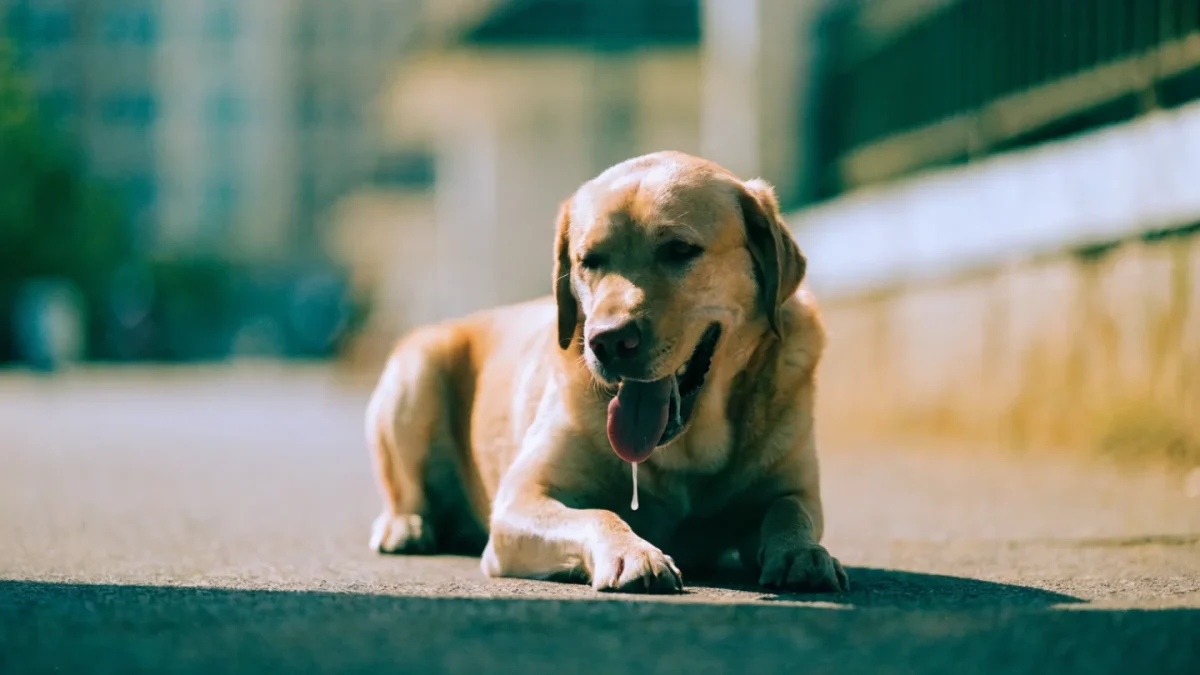
The call came in at 2:47 p.m. on a Thursday. A German Shepherd had been in the yard for "a couple of hours" — the owners had been home but inside, hadn't checked on him since noon. When they did check, he was lying in the sun unable to stand, panting so hard his whole abdomen was heaving.
By the time they arrived, his temperature was 106.8°F. We spent the next four hours working on him.
He survived. But I will tell you: not all of them do. And that dog should never have been in a yard without shade and constant water access in 91°F heat. He definitely shouldn't have gone unchecked for two hours.
What Is Heatstroke, Exactly?
Heat exhaustion is your dog struggling to compensate for an elevated body temperature — panting harder, seeking cool surfaces, slowing down. Heatstroke is what happens when that compensation fails.
Normal dog temperature: 100-102.5°F (37.8-39.2°C).
At 104°F (40°C): body systems under significant stress.
At 106°F (41.1°C): cellular damage accelerates. Proteins denature. The blood coagulation cascade goes wrong. Kidneys begin to fail.
At 107-109°F (41.7-42.8°C): brain damage, multi-organ failure, death without intervention.
This progression can happen in 20-30 minutes. It can happen during a car ride or a walk or while waiting in a hot yard.
Signs of Heatstroke in Dogs
Early (heat exhaustion):
- Rapid, heavy panting — more than you'd expect for the activity level
- Excessive drooling
- Restlessness, pacing, seeking shade
- Elevated heart rate
- Reddened (bright pink) gums
Progressing heatstroke:
- Thick, ropey, foamy saliva
- Gums turning deeper red
- Vomiting
- Weakness in the hind legs
- Confusion or disorientation
Severe/late heatstroke:
- Collapse
- Pale, grayish, or muddy-colored gums
- Bloody diarrhea
- Seizures
- Loss of consciousness
- Irregular or very rapid breathing
The gum color shift from bright red to pale or gray is a critical warning. Bright red gums mean blood is shunting to peripheral vessels in a compensatory response. Pale gums mean that compensation has failed.
Emergency First Response
1. Get them out of the heat immediately. Cool shade or air-conditioned space. Every minute in the heat worsens outcome.
2. Apply cool — not cold — water. Drench the coat, focusing on the neck, groin, armpits, and paws. These areas have major blood vessels closer to the surface. Use cool tap water. Not ice, not ice packs, not very cold water — rapid cooling causes vasoconstriction and can paradoxically worsen the situation by preventing heat dissipation and causing shock.
3. Create airflow. A fan blowing over the wet coat dramatically accelerates cooling. If you don't have a fan, fanning manually helps. Moving air is the mechanism — evaporative cooling is more efficient than conduction.
4. Offer small sips of cool water. If your dog is conscious and can swallow. Not a full bowl — small sips to begin rehydration without causing vomiting that could be aspirated.
5. Check temperature if you have a thermometer. Stop active cooling at 103°F (39.4°C). You don't want to overshoot into hypothermia.
6. Get to the vet. Even if your dog seems to be recovering. Heatstroke causes internal damage that isn't immediately apparent — clotting disorders, kidney injury, neurological damage — and these can manifest 12-24 hours after the initial crisis.
At the Clinic
IV fluid resuscitation is the cornerstone of treatment — replacing lost fluids, supporting kidney perfusion, and managing blood pressure. Your dog will need oxygen supplementation, continuous temperature monitoring, and bloodwork to assess organ function.
If there are signs of DIC (disseminated intravascular coagulation — the blood's clotting system goes into collapse, causing simultaneous clotting and bleeding), treatment becomes significantly more complex and the prognosis worsens considerably.
This is why early treatment matters so much. A dog treated for heatstroke before reaching 106°F has far better odds than one who arrives at 109°F.
Which Dogs Are Most Vulnerable?
Any dog can develop heatstroke, but certain factors increase risk dramatically:
Brachycephalic breeds (Bulldogs, French Bulldogs, Pugs, Boxers, Shih Tzus) — their airway anatomy makes panting less efficient. They're overrepresented in heatstroke cases out of proportion to their population numbers.
Overweight dogs — excess body fat is insulative and generates more metabolic heat.
Senior dogs and puppies — diminished thermoregulatory capacity.
Dogs with existing medical conditions — heart disease, laryngeal paralysis, megaesophagus, and hormonal imbalances can all impair heat regulation.
Double-coated breeds in midsummer — Labs, Huskies, Golden Retrievers — though their coats also provide some insulation from radiant heat.
Dogs left in vehicles — this is the single most preventable scenario and accounts for a disproportionate number of cases.
Prevention
Early/late walking schedules. No midday walks in hot weather. Water accessible at all times. Shade that remains shaded throughout the day (not just morning shade). Never in a parked car. Know your dog's specific risk factors.
For brachycephalic breeds especially: on very hot days, outdoor time should be extremely limited, highly monitored, and air-conditioned recovery should be immediately available.
Frequently Asked Questions
My dog seems to have recovered from heatstroke at home. Does he still need to see a vet?
Yes. Heatstroke causes internal organ stress even when the dog appears to recover externally. Kidney damage, liver damage, and clotting abnormalities may not be clinically apparent for 24-48 hours. Bloodwork after a heatstroke episode is not optional — it's how we catch these problems before they become catastrophic.
How long does recovery from heatstroke take?
Mild to moderate cases with prompt treatment may recover in 1-3 days. Severe cases with organ involvement can require hospitalization for a week or more, and some dogs have permanent sequelae — neurological changes, chronic kidney disease, or recurring susceptibility to heat. Some dogs never fully return to their prior heat tolerance.
Can a dog develop heatstroke indoors?
Yes. Unventilated rooms, particularly in upper floors of buildings or rooms with direct sun exposure and no cross-ventilation, can reach dangerous temperatures during heatwaves. A dog in a closed car in a garage is the most extreme example, but a dog left in a hot upstairs room on a 95°F day without air conditioning is also at risk.
Should I give my dog Pedialyte or sports drinks after heatstroke?
Cool water is the right immediate fluid for mild cases at home. Electrolyte solutions formulated for humans have sodium concentrations that may not be ideal for dogs. At the vet, they'll receive the right IV fluid formulation. At home, clean cool water is best. Small sips, not large amounts all at once.