

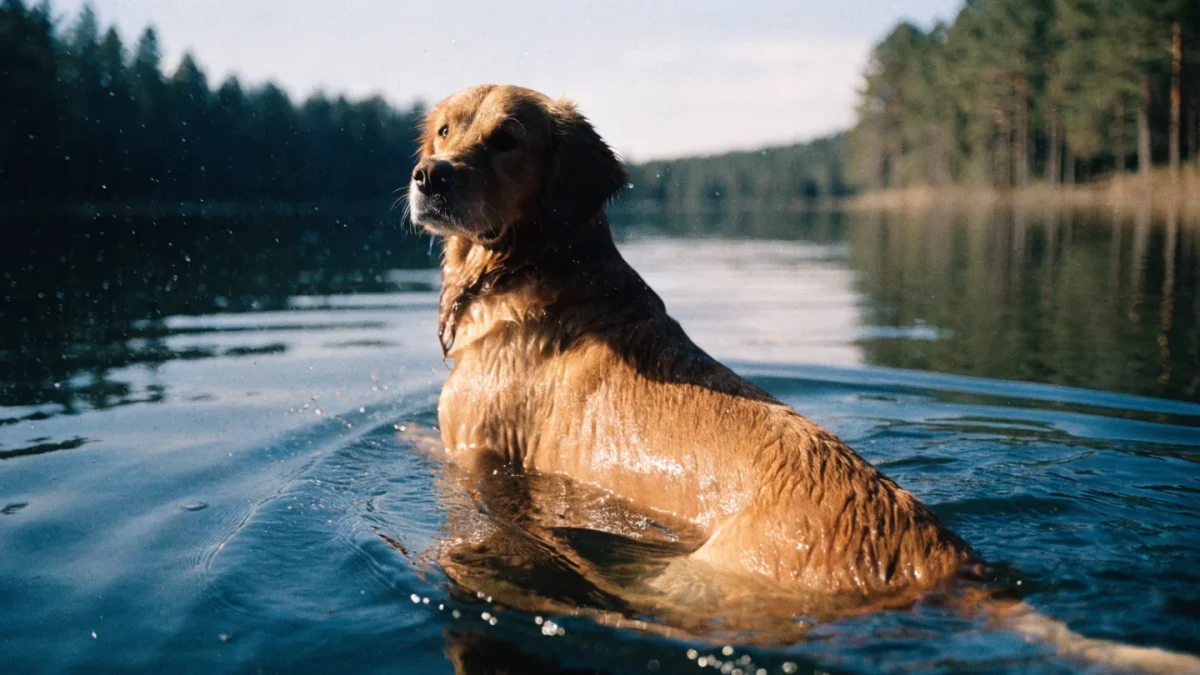
A Labrador named Duke came in on a Tuesday last August — his owner had taken him to a popular river spot about thirty minutes outside the city. By the time they arrived at my clinic, Duke was lethargic, vomiting, and his gums had gone a shade of pale that made my stomach drop. The culprit wasn't the swimming. It was a bloom of blue-green algae that coated the river bank where he'd been wading and lapping water for the better part of two hours.
Duke survived. Many dogs don't.
Natural water — lakes, rivers, the ocean — feels like freedom for dogs, and honestly, it often is. But open water is nothing like a backyard pool, and the hazards are genuinely different depending on which type of water you're dealing with.
Lakes: Still Water Isn't Necessarily Safe Water
The biggest threat in lakes isn't drowning. It's cyanobacteria — what most people call blue-green algae, though it's not actually algae at all. It's a photosynthetic bacterium that produces neurotoxins and hepatotoxins, and it blooms in warm, stagnant water. Lakes in summer. Standing ponds. Irrigation ditches. You'll often see it as a pea-soup green film, a blue-green scum, or sometimes clumps that look like spilled paint near the shore.
A dog doesn't need to swim through it. Wading, sniffing, or drinking from the water's edge is enough. Symptoms come on fast — vomiting and diarrhea within 30 minutes, progressing to seizures, liver failure, and in severe cases, death within hours. There is no antidote. If you see a bloom-looking film on any lake or pond and your dog has been near it, call your vet immediately. Don't wait to see if symptoms develop.
For general blue-green algae toxicity, I have a full breakdown of what to watch for and what constitutes an emergency.
Beyond algae, lakes carry parasites. Giardia is common in freshwater sources that appear pristine. Leptospirosis — a bacterial infection spread through wildlife urine — contaminates lake water too, particularly in warmer months. Both are treatable, both are preventable with vaccines (lepto) and awareness (giardia). A dog that drinks lake water regularly is at meaningful risk for both.
Water temperature matters more than people expect. Cold-water shock is real — a dog jumping into a mountain lake in May can experience rapid muscle fatigue, even if the animal is a strong swimmer. Short swims, supervision, and keeping dogs moving (so they don't cool down stationary in cold water) all reduce this risk.
Rivers: Current Is the Wildcard
Rivers add the variable of current, and current is what kills dogs more than anything else in freshwater. I've had multiple patients that were excellent swimmers who got into trouble in rivers — not because they were weak, but because dogs fundamentally underestimate current. They'll swim against it until they're exhausted.
A few things I tell every owner before river trips:
Scout the entry and exit points first. A gentle bank on one side of a river bend can conceal powerful undercurrents mid-stream. Know where your dog can actually get out before they go in. Dogs that can't find a safe exit point in a current will tire and go under.
Avoid water after heavy rain. River levels rise fast. So does debris — branches, trash, logs. What looked like a calm stretch yesterday can be a dangerous torrent after any significant rainfall.
Watch for river weeds. Aquatic vegetation can entangle a dog's legs. This is more of a risk in slower rivers, but it happens.
Waterfalls, spillways, and dam areas are absolute no-go zones. The aerated water below a dam has drastically reduced buoyancy — swimmers, human and canine alike, sink faster in it. I can't overstate this: keep dogs away from areas near dams.
Toxins in rivers are worth mentioning. Agricultural runoff (fertilizers, pesticides) concentrates in rivers during wet seasons. A dog that regularly swims in rivers downstream of farming areas should probably have annual wellness bloodwork done. Low-level chemical exposure over time isn't something we see immediately.
The Ocean: Beautiful, Complex, Worth Respecting
The ocean is where I get the widest range of questions from owners. And honestly, it's a genuinely complex environment for dogs.
Saltwater is the most common acute hazard at the beach. Dogs that run, play, and swim at the beach will drink saltwater — sometimes quite a lot of it. A small amount is fine. Larger quantities cause hypernatremia (sodium poisoning), which presents as excessive thirst, vomiting, wobbly gait, seizures, and in severe cases, brain swelling. The full picture of saltwater poisoning in dogs is worth reading before any beach trip.
The rule I give clients: bring fresh water and offer it every 15–20 minutes during beach play. Redirect drinking behavior if you see your dog lapping ocean water. Keep trips shorter in warm weather when the dog is panting and more likely to drink.
Rip currents. Dogs can be pulled by rip currents just as humans can. They're invisible from the surface but flow perpendicular to the shoreline, pulling outward. If your dog gets caught in a rip current, the instinct to swim straight back to shore will exhaust them. Swimming parallel to shore to escape the current is the correct response — but dogs don't know this. A life jacket and staying in shallow water are the practical safeguards.
Marine wildlife and debris. Jellyfish on the beach and in the surf are a real hazard; a dog will sniff or mouth a washed-up jellyfish without hesitation. Sharp shells, fishing hooks, fish carcasses (which can carry bacteria or be toxic if consumed in quantity), and stingrays in shallow water are all worth scanning for before you let your dog loose on a beach.
I've treated dogs for embedded fish hooks, jellyfish stings to the nose and mouth, and one memorable case of a dog who ate a significant quantity of raw fish washed ashore and ended up with thiamine deficiency symptoms a week later. The beach is genuinely fun — it just requires eyes-open awareness.
The Cross-Cutting Rules
Regardless of whether you're at a lake, river, or beach, a few things apply universally. A comprehensive overview of water safety for dogs covers much of this, but here's the practical core:
Know your dog's swimming ability honestly. Brachycephalic breeds — bulldogs, pugs, boxers, French bulldogs — are poor swimmers. Dogs with short legs relative to body mass (basset hounds, dachshunds) tire quickly. Senior dogs with joint disease may swim comfortably but struggle to exit the water unaided. A life jacket is appropriate for any dog whose swimming you're uncertain about.
Never let a dog swim unsupervised in open water. Not even a Labrador. Not even a 3-year-old at his peak. Strong currents, hidden objects, sudden illness — any of these can turn a strong swimmer into a dog in crisis within minutes.
Rinse after every swim. Freshwater rinsing after lake, river, or ocean swimming removes residual bacteria, parasites, algae spores, and salt from the skin and coat. It also prevents the "swimmer's ear" situation that Cocker Spaniels and other floppy-eared breeds are prone to — water trapped in the ear canal creates a warm, moist environment where yeast and bacteria thrive.
Watch for post-swim respiratory distress. This one surprises owners. Dogs can inhale water during swimming — not enough to drown, but enough to cause delayed lung inflammation or secondary drowning hours later. A dog that seemed fine at the beach but is coughing, breathing fast, or lethargic that evening should be evaluated. This is genuinely uncommon, but it happens.
Preparing Properly
A few practical things before any open water outing:
Make sure your dog's leptospirosis vaccination is current. Lepto is shed in the urine of wildlife and spreads through contaminated water. It's a core part of my recommendation for dogs with outdoor and water exposure.
Check local water quality advisories. Many parks and recreation departments post blue-green algae warnings; many don't. A quick search for "[lake name] water quality" or "[county name] algae advisory" before a lake trip takes thirty seconds and has saved at least a handful of my clients a devastating emergency.
Bring a first aid kit. Not elaborate — a clean cloth, sterile saline, tweezers for hooks or splinters, an antihistamine your vet has pre-approved for your dog's weight, and your vet's emergency number. The beach or riverbank is not where you want to be problem-solving from scratch.
FAQ
Can dogs swim in any lake or river?
Most are fine, but not all. The key risks — blue-green algae, strong currents, polluted runoff, and parasites — vary by location and season. Check local water advisories, assess the entry/exit situation, and watch your dog closely the first time you visit a new spot.
How do I know if a lake has blue-green algae?
Look for pea-green or blue-green scum, foam, or mats near the shoreline. The water may smell musty or like rotting plants. When in doubt, don't let your dog in. Many county health departments post online advisories during bloom season.
Is the ocean safe for dogs to swim in?
Yes, with precautions. The main concerns are saltwater ingestion (bring fresh water and offer it frequently), rip currents (life jacket, shallow water), and beach hazards like jellyfish and fish hooks. Short, supervised sessions are safest.
My dog drank river water. Should I be worried?
A small amount is usually fine. If they drank a large quantity, watch for vomiting, lethargy, or signs of illness over the next 24–48 hours. Giardia can cause loose stool 1–3 weeks after exposure. If anything concerns you, call your vet.
Do all dogs need life jackets for open water?
Not all, but many. Brachycephalic breeds, dogs with mobility issues, small dogs, and any dog whose swimming you're uncertain about benefit from a properly fitted canine life jacket. Even good swimmers benefit on boats or in unfamiliar current.