

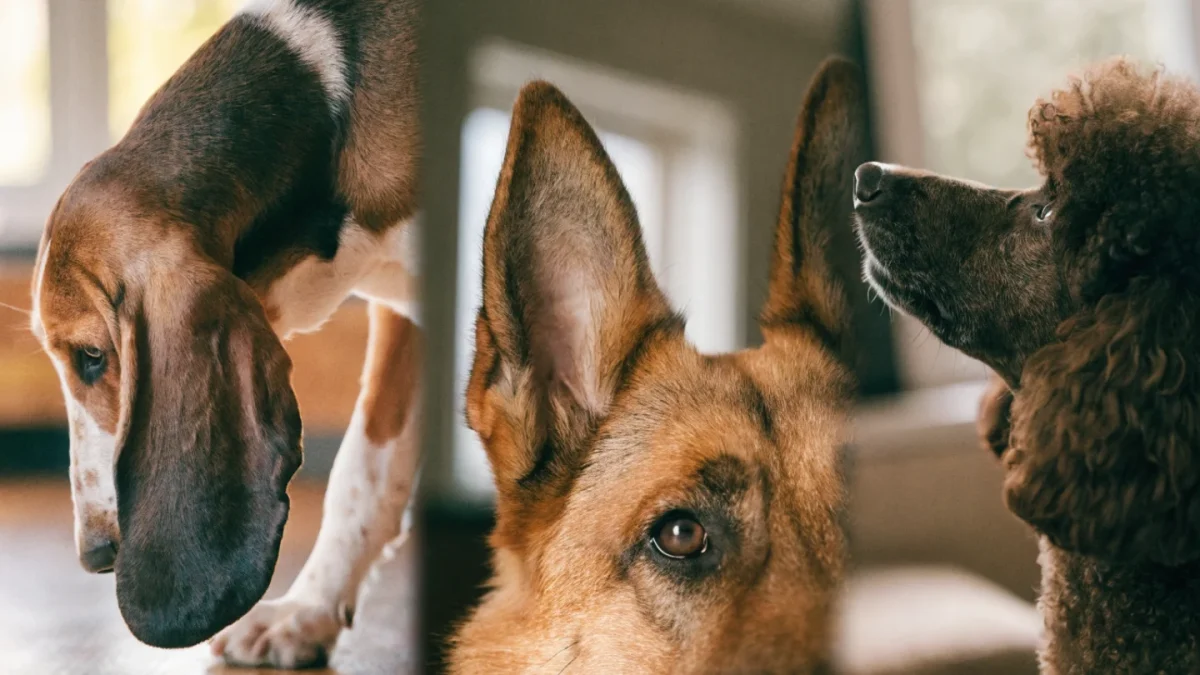
Ear type is probably the single biggest anatomical factor in a dog's lifelong ear health. The complete guide to pet ear cleaning covers technique and general principles; this article focuses on how those principles differ by ear anatomy. Spend time with enough dogs across enough breeds and the pattern becomes very clear: Basset Hounds at the vet for ear infections; German Shepherds almost never. The difference isn't luck or genetics in some abstract sense — it's physics. Air circulation. Ventilation. The simple fact of whether a flap covers the canal opening or leaves it open to the air.
Understanding your dog's ear type is the first step in understanding what level of care it actually needs.
Three Categories of Dog Ear
Pendulous (floppy) ears: the ear flap hangs down and covers the canal opening. Cocker Spaniels, Basset Hounds, Bloodhounds, Golden Retrievers, Labrador Retrievers, most Spaniels and Setters. The flap creates a warm, humid microenvironment over the canal. Reduced air circulation means moisture from baths, swimming, and the dog's own body heat builds up in the canal. Combined with wax accumulation, this creates exactly the conditions bacteria and yeast prefer.
Erect ears: the pinna stands up, pointing outward and upward. The canal entrance is open to air. German Shepherds, Siberian Huskies, Alaskan Malamutes, Belgian Malinois, Beagles, many terriers. Far better ventilation than floppy-eared breeds. Wax can still accumulate, and dogs with narrow canals can still develop problems — but the baseline infection risk is measurably lower.
Hairy canals: this is an overlay category that applies to both floppy and erect-eared dogs. Some breeds grow significant hair inside the ear canal — Poodles, Bichon Frises, Schnauzers, Shih Tzus, Lhasa Apsos, Old English Sheepdogs. The hair traps wax and debris, blocks airflow even in erect-eared dogs, and creates another mechanism for moisture retention. These breeds need ear hair management in addition to regular cleaning.
Cats have their own version of this spectrum — erect-eared breeds like Domestic Shorthairs and Siamese are far less prone to ear problems than Scottish Folds, whose permanently folded pinna creates an environment comparable to the worst floppy-eared dog breeds.
Floppy-Eared Breeds: Intensive Management
The golden rule for floppy-eared dogs: clean after every water exposure and every one to two weeks routinely.
That sounds like a lot. It is a lot compared to erect-eared dogs. But it reflects the actual risk level. Cocker Spaniels that aren't cleaned regularly almost inevitably develop chronic ear infections. Cocker Spaniels in households where owners understand this and manage accordingly often go years between vet visits for ear issues.
The technique is the same as any ear cleaning, but a few things are worth emphasizing for this group:
After bathing: immediately after the bath is done, clean the ears. Bath water enters the canal freely during rinsing — even careful owners can't entirely prevent it. Cleaning within a few hours of bathing removes that moisture before it sets up conditions for bacterial growth.
Ventilation between cleanings: in between formal cleaning sessions, lift the ear flap and allow air to reach the canal entrance for a few minutes daily if the dog tolerates it. Some owners gently tuck the ear flap back and hold it with a soft headband or tie the ears back loosely while the dog is at rest. It sounds fussy; for Cocker Spaniels in humid climates, it makes a real difference.
Drying agents: ear cleaning solutions that contain a drying agent (isopropyl alcohol in small amounts, boric acid, or purpose-made drying additives) are particularly useful for floppy-eared dogs because moisture management is the core challenge. Straight cleaning solutions without drying properties work, but a formula specifically designed for moisture-prone ears is better.
Golden Retrievers and Labs as swimmers: these breeds would have relatively manageable ears if they stayed dry. Add weekly swimming, and the floppy-ear risk multiplies. Clean after every swim session, every time. Every time.
Key Floppy-Eared Breeds and Their Specific Profiles
Cocker Spaniels (English and American): among the most infection-prone breeds of any size. Dense ear hair adds to the floppy-ear challenge. Weekly cleaning is the minimum; twice weekly is not unusual for dogs that have had previous infection issues. Ear hair management is important — see below on hairy ears.
Basset Hounds: ears so long they drag on the floor and collect debris at the tips. Weekly cleaning standard. The tips of the ears sometimes need wiping separately from canal cleaning — they accumulate environmental dirt that then migrates upward. Specific Basset Hound ear management is covered in depth in the breed-specific guides.
Golden Retrievers and Labrador Retrievers: moderate maintenance needs for strictly indoor dogs; high maintenance for dogs that swim. Clean after bathing or swimming at minimum, plus bi-weekly routine cleaning.
Spaniel breeds generally: Springer Spaniels, Sussex Spaniels, Field Spaniels all share the floppy-ear high-risk profile. Frequency similar to Cocker Spaniels, though exact needs vary by individual dog and lifestyle.
Erect-Eared Breeds: Low Maintenance, Not No Maintenance
German Shepherds, Huskies, and most erect-eared breeds accumulate some wax but rarely develop the cascading infection problems of floppy-eared dogs. Monthly cleaning and visual monitoring is appropriate for most.
But "lower risk" doesn't mean "no risk."
German Shepherds: prone to certain skin conditions that can affect the ear canal as well. Monthly cleaning standard; check for redness or unusual odor at each session.
Beagles: erect ears but heavy-bodied and prone to moisture retention because the ear canal is somewhat narrow relative to ear size. Every two to three weeks is more appropriate than monthly for this breed.
Siberian Huskies and Alaskan Malamutes: generally low-maintenance ears, reflecting the functional design of working breed anatomy. Monthly or as-needed cleaning.
Small terrier breeds with erect ears (Yorkies, West Highland Whites, Cairns): terriers often have somewhat narrow canals and grow hair in the canal entrance. Move these to the hairy-ear management category even if the ear position is erect.
Hairy-Eared Breeds: The Additional Variable
Dog breeds with significant ear canal hair have a separate management challenge layered on top of their ear position risk.
Poodles: all sizes, all varieties. The Poodle's dense, curly coat grows into the ear canal reliably. Without management, this hair traps wax and debris, creates a physical barrier to air and cleaning solutions, and essentially gives bacteria and yeast a fiber scaffold to colonize. This is why Poodles, despite generally having erect or semi-erect ears, have above-average rates of ear infection — the hair overrides the ventilation advantage.
Standard Poodles, Miniature Poodles, and Toy Poodles all need regular ear hair management in addition to cleaning. The choice between plucking and trimming is discussed at ear hair removal in dogs — but something needs to happen with that hair.
Bichon Frise: similar to Poodles in ear hair growth. Regular management required.
Schnauzers: Miniature Schnauzers in particular grow dense ear canal hair. Standard and Giant Schnauzers similar but the canal is larger, providing somewhat more airflow.
Shih Tzus and Lhasa Apsos: heavy coat everywhere means heavy coat in the ears. These are already prone to narrow canals in many individuals — the hair compounds the challenge. Bi-weekly cleaning plus hair management.
Cats: Ear Type Variation
Most domestic cats have erect, open-pinna ears that provide excellent ventilation. Ear problems in cats are less common than in dogs but not absent.
Scottish Folds are the exception. The cartilage mutation that folds the ear down creates a permanently floppy, closed environment — similar in effect to the worst canine ear shapes. Scottish Folds have dramatically higher rates of ear infection and wax accumulation than other cat breeds. Monthly cleaning is the baseline; many owners do bi-weekly. A Scottish Fold whose ears were fine at two may start developing problems at six as the folded cartilage becomes denser. This requires ongoing monitoring throughout the cat's life.
Persian and Himalayan cats: their flat-faced anatomy affects ear canal geometry in some individuals, reducing natural drainage. More prone to wax accumulation than typical cats.
Maine Coons and Norwegian Forest Cats: large, tufted ears with excellent internal air circulation. Generally low-maintenance ear health.
Frequently Asked Questions
My Labrador swims every day in summer. How often should I clean his ears?
After each swimming session during swim season, without exception. Labs are right at the intersection of floppy ears and water love — this combination requires consistent management to prevent the near-inevitable chronic infection that develops without it.
My Poodle's vet says pluck the ear hair; my groomer says don't. Who's right?
Both are reflecting a genuine split in professional opinion. Current veterinary dermatology research somewhat favors trimming over plucking to avoid creating micro-wounds from follicle pulling. But a Poodle with recurrent infections may benefit from more aggressive removal. Discuss with your vet given your specific dog's history.
My Beagle has erect ears but keeps getting infections. Why?
Beagles' narrow ear canals affect ventilation more than their erect ear position helps. They often need more frequent cleaning than their erect ears would suggest. Check whether the cleaning frequency has been adequate, and look at moisture exposure — if the Beagle swims or bathes often, clean immediately after.
Does ear cleaning prevent all infections?
No — it significantly reduces risk for breeds and individuals prone to problems. But some dogs have structural issues, persistent allergies that affect the ear canal, or individual immune responses that cause infections despite excellent cleaning protocols. These dogs need veterinary management beyond grooming.