

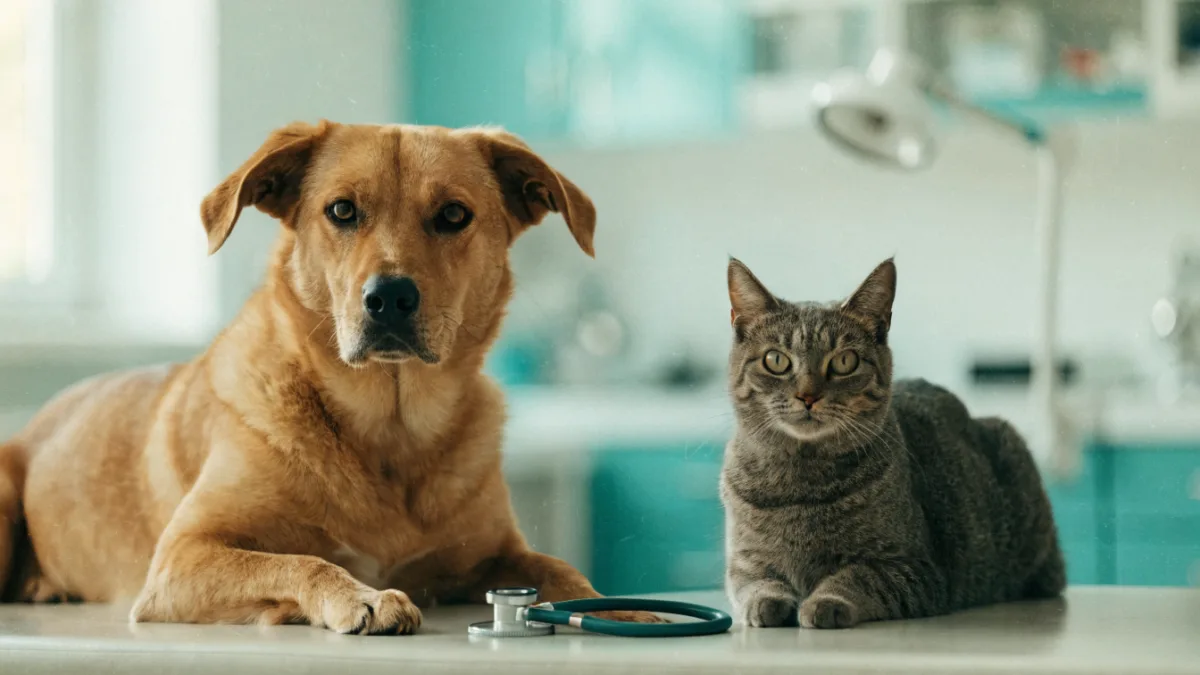
Picture a spring emergency: a woman named Karen brings her six-year-old Golden Retriever, Cooper, into the clinic. Cooper had been vomiting on and off for two days — nothing dramatic, just enough to make Karen nervous. X-rays showed he’d swallowed a corn cob during a backyard barbecue three days earlier. The cob had lodged in his small intestine, and Cooper needed emergency surgery. The final bill came to $4,800. Karen sat there, pale, and said the words vets hear more than almost any other: “I had no idea it would cost this much.”
Two weeks later, a cat owner named Marcus brought in his eight-year-old domestic shorthair, Olive, for the same complaint — intermittent vomiting. Olive had developed inflammatory bowel disease, a chronic condition requiring ultrasound, specialized bloodwork, and ongoing medication. Her diagnostic workup alone ran about $1,200, with another $60-90 per month for long-term management. Marcus had pet insurance. He paid his $250 deductible, and the insurance reimbursed 90% of the rest. He walked out owing roughly $370 total.
Two pets. Two similar presentations. Two wildly different financial realities. And the difference wasn’t just about diagnosis — it was about species, expectations, and whether either owner had planned for the day their animal needed more than a routine checkup.
Why Dogs Cost Nearly Double What Cats Cost
Let’s start with the numbers, because they tell a story every pet owner should hear before they bring an animal home. Based on industry data heading into 2025 and 2026, the average accident and illness policy for a dog runs about $836 per year, or roughly $62.44 per month. For a cat, that same comprehensive coverage averages about $435 per year, or $32.21 per month. That’s not a small gap — dog insurance costs nearly twice as much as cat insurance.
When you look at the ASPCA’s annual cost of ownership estimates, the pattern holds. Dogs average about $1,391 per year in total care costs, while cats come in closer to $1,149. And that difference compounds over a lifetime. A dog who lives twelve years may cost you $16,000 or more in basic care alone — before any emergencies. A cat reaching fifteen years might run $17,000, but spread across a longer lifespan and with lower annual spikes.
So why the gap? A big part of it comes down to size. Most dogs are simply larger than most cats, and in veterinary medicine, size drives cost in ways people don’t always anticipate. Medications are dosed by weight, so a 75-pound Labrador needs significantly more anesthetic, more antibiotics, and more pain medication than a 10-pound tabby. A single dose of a common anti-inflammatory might cost a dog owner three or four times what it costs a cat owner. Surgical supplies, IV fluids, even food — everything scales up.
There’s also a behavioral component. Dogs tend to live more accident-prone lives. They eat things they shouldn’t — socks, toys, corn cobs, sticks, fishing line, you name it. I’ve pulled objects out of dogs’ stomachs that I still can’t explain. They run, they jump, they tear ACLs (cruciate ligaments, in veterinary terms — one of the most common and expensive orthopedic injuries we see). Cats are generally more cautious, more sedentary, and less likely to require emergency surgery for dietary indiscretion.
That said, cats have their own cost profile. They’re masters at hiding illness, which means by the time an owner notices something is wrong, the disease is often advanced and more expensive to treat. Kidney disease, hyperthyroidism, diabetes — these are common feline conditions that require ongoing diagnostics and management.
What “Accident and Illness” Coverage Actually Means
The premiums I mentioned above are for what the industry calls accident and illness policies — the most comprehensive tier most companies offer, and the one I generally recommend owners consider. Here’s what that typically includes:
- Accidents: Broken bones, ligament tears, bite wounds, toxic ingestions, foreign body removal (like Cooper’s corn cob), and emergency hospitalizations.
- Illnesses: Infections, cancer treatment, chronic conditions like diabetes or inflammatory bowel disease, diagnostic imaging (X-rays, ultrasound, MRI), hereditary and congenital conditions, and prescription medications.
- Surgery: Both emergency and soft-tissue procedures, including post-operative care and rehabilitation.
What it typically doesn’t cover, without a wellness add-on, is routine preventive care: annual exams, vaccines, dental cleanings, spay/neuter, and flea and heartworm prevention. Those fall into the “wellness” category, which you can often add to a policy for an extra fee, or simply budget for separately.
That distinction matters because of something I call the ROI question — return on investment. Let’s break it down. Routine annual care for a dog typically runs:
- Food: $200 – $700
- Vaccines and routine exams: $200 – $500
- Heartworm and flea prevention: $175 – $200
- Supplements or vitamins: around $58
- Licensing (where required): about $15
Add that up and you’re looking at maybe $450 to $1,500 in predictable, routine costs. Meanwhile, your insurance premium — which doesn’t pay for most of those things — is running $836 a year. So if your dog never has an emergency, never develops a chronic disease, never needs an MRI or a surgery, then yes, financially, you’d have been better off putting that money into a savings account.
The Real Reason Insurance Exists
But here’s where I want to be honest about how this plays out in clinical practice. Pet insurance isn’t designed to save you money on routine care. It’s designed to protect you from the financial decisions nobody wants to make at 11 PM in an emergency hospital, when your dog is in pain and the technician is asking for a $3,000 deposit before they can take him to surgery.
I remember a couple — David and Maria — who brought in their three-year-old French Bulldog, Jacques, after he’d been playing at the dog park and suddenly couldn’t breathe. French Bulldogs are brachycephalic, meaning they have shortened skulls that compress their airways — a condition called brachycephalic obstructive airway syndrome. Jacques was in respiratory distress, and we needed to stabilize him immediately, then perform surgery to widen his nostrils and shorten his soft palate. The total cost approached $5,500. David and Maria didn’t have insurance, and they didn’t have $5,500. They made the decision to go ahead — they maxed out two credit cards — but the stress of that moment, on top of fearing for their dog’s life, was immense.
That’s what insurance is for. Not for the $200 vaccine visit. For the $5,500 moment when the answer to “can we afford to save him?” needs to be yes.
The Insurance Paradox: An Honest Look at the Data
Now, I want to address something that gave me pause when I first read it. A 2020 study by researcher A. Williams, published in a peer-reviewed veterinary journal, found something counterintuitive: pet insurance was positively associated with higher spending at the veterinarian, but not with an increased number of veterinary visits.
Owners with insurance weren’t taking their pets to the vet more often. But when they did go, they were spending more — sometimes significantly more — than uninsured owners with the same complaint.
When I first read this study, I’ll admit it troubled me. Was the implication that insurance simply enables veterinarians to recommend more expensive diagnostics and treatments? Or that insured owners are more willing to say yes to comprehensive workups because someone else is footing most of the bill? The truth, I think, is more nuanced than either of those explanations.
In my experience, what actually happens is this: when an owner has insurance, they’re more likely to say yes to the diagnostic plan I believe is medically indicated — the full blood panel rather than just the basics, the ultrasound rather than a “wait and see” approach, the specialist referral rather than a guess. They’re not spending more because they’re being upsold. They’re spending more because the financial barrier to good medicine has been lowered, and they can finally choose the option they would have chosen anyway if money were no object.
Is there a risk of overutilization? Sure. I’ve seen it. An insured owner who wants “every test possible” when careful clinical reasoning would suggest starting with two or three targeted diagnostics. That’s where a good veterinarian — one you trust — should be guiding you toward what’s medically appropriate, not just what’s available. Insurance should expand your options, not override clinical judgment.
Special Considerations for Purebreds
If you’re the owner of a purebred dog or cat, breed-specific health risks deserve special attention. Certain breeds carry genetic predispositions that virtually guarantee significant veterinary expenses at some point in their lives.
High-Risk Dog Breeds
- English Bulldogs and French Bulldogs: Airway surgery, spinal issues, skin infections, and joint problems are almost expected.
- German Shepherds: Hip dysplasia and degenerative myelopathy are common.
- Dachshunds: Intervertebral disc disease — spinal disc rupture — affects up to 25% of the breed, and surgical repair can cost $3,000 to $7,000.
- Golden Retrievers: Cancer rates in this breed are notably high, with some studies suggesting over 60% will develop some form of cancer in their lifetime.
High-Risk Cat Breeds
- Persians: Polycystic kidney disease affects roughly one-third of Persians, leading to chronic kidney failure.
- Maine Coons: Hypertrophic cardiomyopathy, a serious heart condition, has a strong genetic component in this breed.
- Sphynx: Hereditary heart disease and skin conditions requiring specialized care.
For these owners, I lean toward recommending insurance even more strongly. The math isn’t about whether you’ll need significant veterinary care — it’s about when.
Veterinary Inflation: Why Costs Keep Climbing
One factor driving the entire insurance conversation is something I see every day in practice: veterinary costs are rising faster than general inflation. Advanced diagnostics that didn’t exist a decade ago — MRI imaging, CT scans, laparoscopic surgery, targeted cancer therapies, immunotherapy — are now standard options in many practices. These technologies save lives, but they come with significant price tags.
A single MRI for a dog with neurological symptoms can cost $2,000 to $3,500. Cancer treatment protocols — chemotherapy, radiation, surgery — can run $5,000 to $15,000 or more. Even routine procedures like dental extractions under anesthesia have climbed, with complex cases regularly exceeding $1,500.
Industry analysts tracking pet insurance trends into 2026 note that these rising costs are the primary reason accident and illness policies have become essential financial planning tools rather than optional extras for many households. The safety net is getting more expensive to maintain, but the gap it covers is also widening.
How to Decide What’s Right for Your Pet
I’ve changed my thinking on pet insurance over the years. Early in my career, I was ambivalent — I’d seen policies with fine print that left owners frustrated, and I wasn’t convinced the math worked out for most people. But as veterinary medicine has advanced and costs have climbed, my position has shifted. Here’s how I now advise clients to think through the decision:
Insurance probably makes sense for you if:
- You would struggle to absorb an unexpected $2,000–$5,000 veterinary expense without going into debt.
- You have a breed with known genetic health risks.
- You want the freedom to choose advanced treatments — specialist referrals, surgery, cancer care — without financial devastation.
- You’re the type of owner who would do “whatever it takes” for your pet, and you want that instinct protected by a financial backstop.
Self-insuring might work for you if:
- You have the discipline to set aside $50–$100 monthly into a dedicated pet savings account.
- You have an emergency fund that could cover a $5,000 surprise without strain.
- Your pet is a mixed breed with lower genetic risk factors and you’re comfortable managing routine care costs directly.
There’s no morally superior choice here. I’ve seen devoted, loving owners on both paths. What I’ve never seen is an owner who regretted being financially prepared when their pet needed them most.
If you’re considering a policy, look for plans with straightforward reimbursement structures — typically 70% to 90% of eligible costs after your deductible. Check waiting periods, which can range from a few days for accidents to several weeks or months for certain illnesses and orthopedic conditions. Read the fine print on annual coverage limits and lifetime caps. And please, always discuss your pet’s specific health profile with your veterinarian before choosing a plan — we can help you anticipate what conditions are most likely based on breed, age, and lifestyle, so you can match coverage to real risk.
At the end of the day, whether you share your life with a daredevil Labrador who eats socks for sport or a dignified senior cat who’s never caused a moment of trouble, the animals in our care depend entirely on us to make thoughtful decisions about their health. They can’t plan for emergencies, comparison-shop for coverage, or set aside money for a rainy day. That’s our job — and honestly, it’s one of the most meaningful acts of stewardship we perform for the creatures who give us so much and ask for so little in return. Whatever approach you choose, choose deliberately. Your future self — and your pet — will thank you for it.