

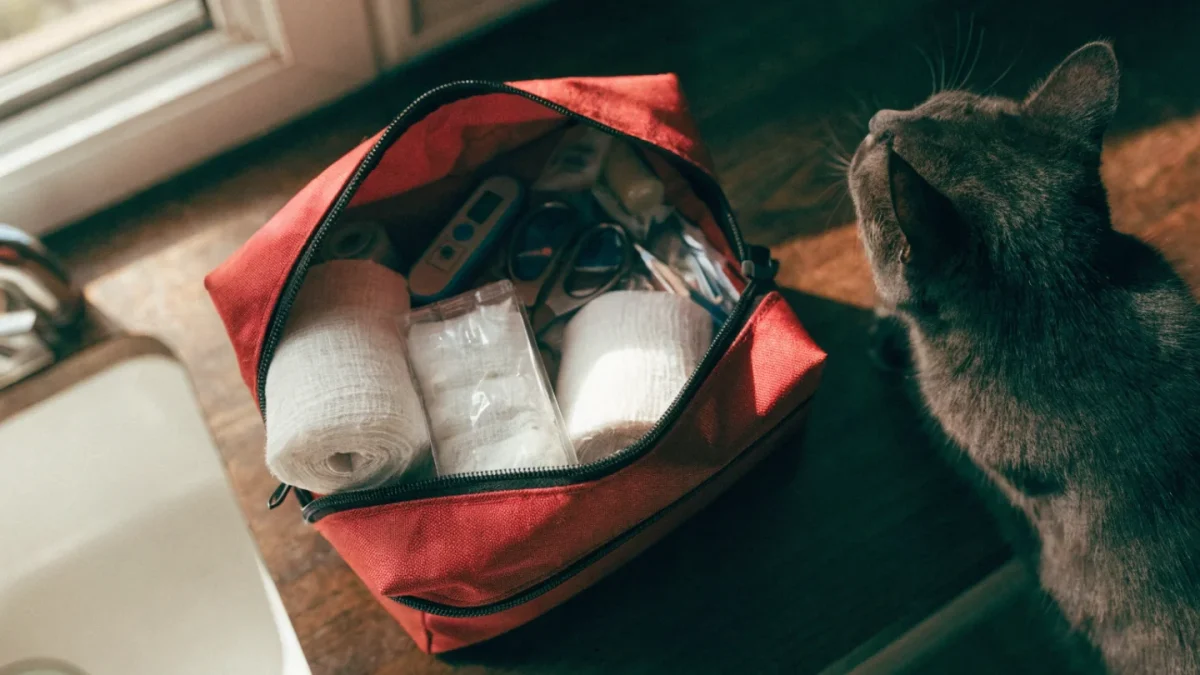
My cat Biscuit — four years old, orange tabby, and constitutionally incapable of minding his own business — cut his paw on a broken piece of ceramic he'd knocked off the counter at 10:45 on a Friday night. Not a deep laceration, but bleeding steadily onto the kitchen floor while he yowled and I tried to hold him still.
I was grateful, in that moment, for the first aid kit sitting in the cabinet under the sink. Gauze, rolled bandage, medical tape. I could apply light pressure and wrap the paw well enough to stop the bleeding and keep it clean until morning, when I could take a proper look at it in daylight. No emergency clinic drive needed.
That kit took thirty minutes to put together and cost about forty dollars. Here's what to put in yours.
The Core Supplies
Gauze pads and rolls
The workhorse of pet first aid. You'll use these for wound coverage, pressure dressings, and improvised bandaging. Get both sterile gauze pads (3×3 or 4×4 inch) and a roll or two of gauze bandage. A 10-pack of each is plenty.
Self-adhesive bandage wrap (like Vet Wrap)
This is the stretchy, self-sticking wrap that holds bandages in place without needing clips or tape. It doesn't stick to fur, which your pet will appreciate. Keep two rolls — one to use and one backup, because rolls disappear.
Medical-grade adhesive tape
For securing gauze when self-adhesive wrap alone isn't enough. Standard first aid tape from the drugstore works fine.
Saline solution or sterile eyewash
Used for flushing wounds, rinsing eyes, and irrigation. A small bottle of sterile saline (the type sold for contact lenses works) is fine. Don't use tap water on eye injuries if you can avoid it.
Chlorhexidine solution (0.05% diluted)
Better than hydrogen peroxide for cleaning wounds. Hydrogen peroxide is still sold as a wound cleaner for humans, but it actually damages healthy tissue and delays healing. Diluted chlorhexidine cleans without that problem. You can buy chlorhexidine scrub at a farm supply store and dilute it yourself, or find pet-specific formulations online.
Digital rectal thermometer
You need to know your pet's temperature in an emergency, and you can't know it accurately any other way. The ear thermometers sold for pets are convenient but notoriously imprecise. Get a standard digital thermometer — the kind that takes about 30 seconds — and label it clearly as the pet thermometer. (Trust me on the labeling.)
Tweezers
For splinters, thorns, debris in wounds, and the occasional bee stinger. Pointed-tip tweezers are more useful than blunt ones here.
Blunt-tipped scissors
For cutting bandages, tape, and clothing away from a wound. The blunt tip prevents accidental punctures when you're working quickly or when your pet is moving. Bandage scissors are ideal; trauma shears are even better if you can find them.
Disposable exam gloves
Two reasons: keeps the wound clean from your hand bacteria, and protects you if your pet has something contagious or if there's a bite risk. Pack at least four pairs — injuries are messy and you'll go through them.
Styptic powder or pencil
Specifically for nail bleeds. When you cut the quick (the blood vessel inside the nail), it bleeds impressively and doesn't respond well to gauze pressure alone. Styptic powder stops it within seconds. Cornstarch or flour will also work in a pinch — this is actually a well-supported home remedy, not a myth.
Sterile saline flush (in a squeeze bottle, if possible)
Different from saline pads — you want something you can direct into a wound cavity or eye from a few inches away. A saline eyewash bottle doubles nicely for wound irrigation.
Medications to Include — With Important Caveats
This is where I need to be careful, including this topic. People sometimes ask me if they should keep Benadryl in their kit for allergic reactions. Honestly — yes, but only if your vet has told you the appropriate dose for your specific pet, and only as a bridge while you get to a clinic. Allergic reactions can progress to anaphylaxis faster than most people realize.
Diphenhydramine (Benadryl): Some vets will advise keeping this for insect sting reactions. Get dosing guidance from your vet in advance.
Activated charcoal: Occasionally useful in poisoning cases, but only under veterinary direction. In some poisoning scenarios, it makes things worse. Don't use it without calling poison control first.
What not to include: human pain medications. Ibuprofen, acetaminophen (Tylenol), and aspirin are all toxic to pets at various doses. Even low-dose aspirin can cause gastric hemorrhage in dogs with repeated use. If your pet is in pain, the answer is getting to a vet — not raiding your medicine cabinet.
Documentation and Contacts
A first aid kit without your vet's phone number is like a fire extinguisher with no instructions.
On a laminated card inside the kit, write:
- Your regular vet's number and address
- The nearest emergency animal hospital and their hours
- ASPCA Animal Poison Control: 888-426-4435 (note: there's a fee, but they're excellent)
- Pet Poison Helpline: 855-764-7661
- Your pet's name, weight, and any chronic medications they take
That weight information matters. When I ask an owner on the phone "how much does she weigh?" and they say "um, maybe 40 pounds? Or 50?", I can still help, but precision helps with dosing guidance.
What Else to Add
A soft muzzle or muzzle-making supplies
Even the most even-tempered dogs can bite when in severe pain. A soft muzzle in your kit is cheap insurance. If your dog is tiny, a rolled-up stretchy bandage can be fashioned into one.
An Elizabethan collar (e-collar)
The "cone of shame" has real value in first aid — it prevents your pet from licking or pawing at wounds or their eyes while you're figuring out next steps. Cheap inflatable versions can be kept flat in the kit.
A foil emergency blanket
Useful for shock — helps maintain body heat without adding warmth. Can also be used as a makeshift stretcher liner.
A spare leash and collar
If your pet needs to be moved quickly, having a spare means you're not hunting for theirs.
Copy of vaccination records
If you're going to an unfamiliar emergency clinic, having records saves time and occasionally saves unnecessary procedures.
How to Store It
One clearly labeled bag, in a consistent location. Every time. The worst emergency is hunting for your kit in the dark while your dog is bleeding.
I use a brightly colored zip-top bag (red or orange works well) and keep it on the top shelf of my linen closet — not in the bathroom cabinet, because bathrooms are humid and humidity degrades medications and adhesives. Check the kit annually to swap out expired items.
If you hike or travel with your pets, keep a second smaller version in your car or backpack.
Frequently Asked Questions
Should I buy a pre-made pet first aid kit or build my own?
Pre-made kits are convenient but often underpowered — they'll have basic bandaging supplies but usually lack a thermometer, chlorhexidine, and emergency contact information. If you buy one, use it as a starting point and add what's missing. If you're building from scratch, the list above covers everything you genuinely need.
How often should I replace supplies in my kit?
Check it once a year. Replace anything expired, dried out, or depleted. Saline and medication expiration dates genuinely matter here. A saturated saline pad is useless. Check seals on anything sterile.
My cat is indoor-only — do I still need a first aid kit?
Yes. Indoor cats still get injured — from falls, getting caught in things, fights if you have multiple cats, or household accidents. They can also swallow things they shouldn't or have sudden medical events. The kit covers all of this.
Is there a difference between a dog first aid kit and a cat first aid kit?
The supplies are the same. The technique differences (bandaging a cat vs. a large dog, for instance) are the variable, not the equipment. If you have both, one shared kit works fine, but include appropriate-sized items — a muzzle that fits a Labrador won't fit a tabby.