

About six years ago, a keeper contacted me through an online forum panicking because her crested gecko hadn't eaten in two weeks. She was offering fresh mashed fruit every night — papaya, mango, banana — rotating diligently. Beautiful presentation. The gecko wouldn't touch any of it and was losing weight.
Turns out she'd been told by a pet store employee that crested geckos were frugivores and didn't need commercial food. The gecko had been on a fruit-only diet for five months. It was developing metabolic bone disease. The fix was simple — switch to a powdered complete diet — and the gecko made a full recovery. But five months of nutritional damage took time to undo.
A crested gecko diet centers on powdered complete food mixed with water, supplemented with occasional insects and small amounts of fruit. The powdered diets are formulated to provide the calcium, protein, vitamins, and minerals these geckos need. Fruit alone doesn't come close. If you want the broader picture of keeping these animals, the crested gecko care guide covers habitat and handling alongside nutrition.
Powdered Complete Diets
The development of complete powdered gecko diets genuinely changed crested gecko keeping. Before they existed, keepers were guessing at nutritional ratios — mixing baby food with calcium powder, blending fruit with vitamin supplements, hoping the balance was roughly correct. Now, mixing powder with water gives you a nutritionally complete meal.
Several formulations exist on the market. I've used multiple over the years and they all work well as long as they're formulated specifically for frugivorous geckos, with adequate calcium-to-phosphorus ratios (at least 2:1) and sufficient protein.
How to Prepare and Serve
Mix the powder with water to a consistency slightly thinner than yogurt. Too thick and many geckos ignore it. Too watery and it drips off the dish.
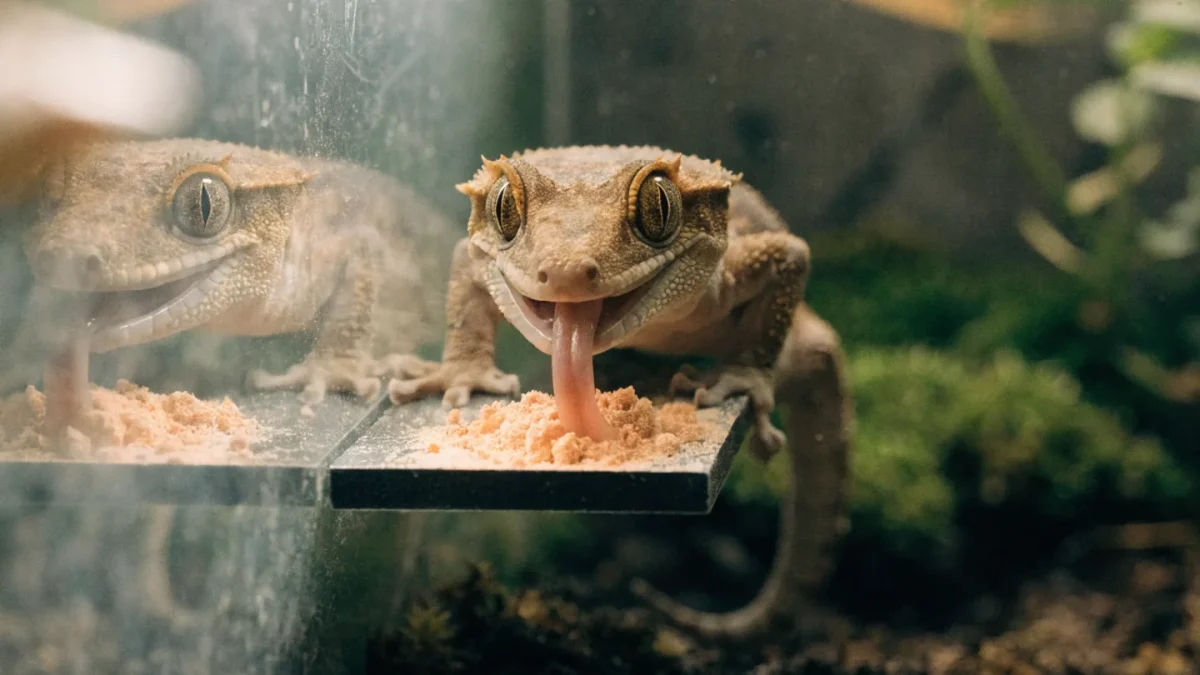
Serve in a small elevated dish — crested geckos prefer eating above floor level. Magnetic feeding ledges that attach to the glass at mid-height work well. I've watched geckos walk past the same food on the floor for three days straight, then devour it the moment I moved the dish twelve inches up the wall.
Replace uneaten food every 24 hours. In warm weather, every 12 hours if possible — the stuff ferments. Nobody wants to eat fermented protein paste, and geckos have a good enough sense of smell to know when it's turned.
Getting a Picky Gecko to Eat
Some geckos refuse one formula but accept another. Flavor and texture preferences exist. I've had geckos refuse a particular product for months, switch to a different brand, and eat immediately. If your gecko ignores its food, try a different formula before assuming something is wrong.
New geckos in a new habitat setup often refuse food for the first week or two. Stress suppresses appetite. As long as the gecko isn't visibly losing weight and humidity is adequate for hydration, give it time.
One trick that works surprisingly often: add a tiny smear of mashed banana to the top of the food dish. The sweet smell draws them in, and once they start licking, they eat the actual food underneath.
Insects as Supplemental Feeding
Insects aren't required if you're using a quality complete diet, but they provide enrichment and variety. Watching a crested gecko hunt is genuinely entertaining — they're ambush predators, and the intensity with which an 8-gram gecko stalks a cricket is absurd and wonderful.
Which Insects
Crickets and dubia roaches are the two best feeders. Both are readily available, nutritious, and sized appropriately. Choose insects no wider than the space between the gecko's eyes.
Mealworms are poorly digested by crested geckos due to their hard chitin shell. I've seen undigested mealworm exoskeletons in droppings too many times to recommend them. Black soldier fly larvae work but are fatty — use sparingly. Waxworms are gecko junk food. They love them. Limit to one or two per week as a treat.
Gut-Loading and Dusting
Gut-load insects for 24-48 hours before feeding. This means feeding the insects nutritious food — dark leafy greens, carrot, squash — so their gut contents pass those nutrients on to your gecko.
Dust insects with a calcium supplement (no phosphorus) every feeding, and with a calcium-plus-D3 supplement once a week. The powdered complete diet handles most vitamin needs, so supplementing only the insects keeps things in balance without risking oversupplementation.
Frequency
Once or twice a week for adults. Offer 3-5 appropriately sized insects per session. Juveniles can get insects more frequently — three times a week — since they're growing fast and benefit from the extra protein.
Remove uneaten insects after about 15 minutes. Crickets left overnight in an enclosure can nibble on a sleeping gecko. I learned this the hard way when I found cricket bites on a juvenile's toes. Not a fun discovery.
Fruit: The Treat, Not the Meal
Crested geckos are classified as frugivorous omnivores in the wild, meaning fruit is part of their natural diet. But wild fruit in New Caledonian forests and the fruit you buy at a grocery store are different things. Commercial fruit is bred for sugar content. Wild fruit tends to be lower in sugar and higher in fiber.
Safe Fruits
Banana, mango, papaya, fig, and peach are all safe in small amounts. Mash them or offer thin slices. I find mashed works better — geckos can lick it up more easily.
Avoid citrus fruits. The acidity doesn't agree with most geckos, and I've seen refusal and loose stools from orange and grapefruit offerings.
How Much and How Often
A pea-sized amount of mashed fruit once a week is plenty. Fruit is a treat. It adds enrichment and variety but doesn't provide the calcium, protein, or complete vitamin profile these geckos need. I think of it like offering a piece of cake to a person who's already eaten dinner — fine occasionally, problematic as a habit.
The fruit-only diet myth persists because crested geckos will enthusiastically eat fruit. They prefer it over their powdered food in many cases. But preference and nutritional need are different things.
Water and Hydration
Crested geckos drink primarily from water droplets that form on leaves and glass after misting. A thorough evening misting provides most of their water intake.
Keep a small water dish in the enclosure as a backup. I've caught a few of my geckos drinking from the dish during particularly warm nights, so it gets used even if you don't see it happen.
Dehydration signs include sunken eyes, wrinkled skin, and lethargy. If you suspect dehydration, increase misting frequency and consider placing the gecko in a shallow container of lukewarm water for 10-15 minutes. A well-hydrated crested gecko's skin bounces back immediately when gently pinched.
Feeding Juveniles vs. Adults
Juveniles under six months eat more frequently and need higher protein for growth. Offer powdered food nightly and insects three times a week. Their dishes will be nearly empty by morning — juvenile metabolism runs hot compared to adults.
Adults eat less frequently and less volume. I offer fresh food every other night for most of my adults and find they maintain perfect body weight. Some keepers offer food nightly and that's fine too — the geckos just eat less per serving.
The transition from heavy insect feeding to predominantly powdered diet happens naturally as the gecko matures. Around twelve months, most geckos shift their preference toward the powdered food and become less enthusiastic about chasing crickets. Not always — I have a four-year-old male who still hunts with the intensity of a juvenile — but the overall pattern holds.
Signs of Nutritional Problems
A gecko on a proper diet with calcium supplementation should have a straight spine, firm jaw, and strong grip. Any deviation from these warrants attention.
Rubbery jaw or kinked spine means calcium deficiency. Prolonged lethargy and refusal to eat can signal vitamin A deficiency, though other causes (stress, illness, improper temperatures) are more common. Obesity — a belly that sags and impedes movement — means you're overfeeding insects or the gecko is eating more complete diet than it needs.
I've had one gecko develop a visible calcium deficiency despite being on a complete diet. The problem turned out to be that the food was mixed too thin and the gecko wasn't consuming enough volume to meet its needs. Thickening the mix solved it within a few sheds. The exotic pet nutrition guide covers supplementation ratios and deficiency warning signs across reptile species if you want the deeper context.
Frequently Asked Questions
Can I feed my crested gecko baby food?
Certain fruit-based baby foods (banana, pear, mango) have been used as occasional treats, but they're not nutritionally complete for geckos. They're too high in sugar, lack calcium, and don't contain adequate protein. Use them sparingly if at all — a powdered complete diet is a better option in every measurable way.
How do I know if my crested gecko is eating enough?
Weigh monthly on a gram scale. A healthy adult maintains stable weight between 35-55 grams depending on size and build. Juveniles should gain steadily — a few grams per month is normal. If weight drops or plateaus in a growing juvenile, something needs investigation. Also check the food dish — lick marks in the food or a visibly reduced portion overnight confirms feeding.
Do crested geckos need vitamin supplements beyond the complete diet?
If you're using a quality powdered complete diet, additional vitamin supplementation is unnecessary and risks toxicity — particularly with fat-soluble vitamins like A and D3. The only supplement I add is plain calcium powder on feeder insects. If you're not using a complete diet (not recommended), then a reptile multivitamin becomes necessary, but getting the dosing right without a veterinarian's guidance is tricky.
My crested gecko only wants to eat insects and ignores the powdered food — what do I do?
Cut insects to once a week and make sure the powdered food is freshly mixed and served in an elevated dish. Some geckos need a brief period of adjusted feeding before they accept the powdered diet. Mixing a small amount of mashed fruit into the powdered food can help. Don't give in and offer only insects — the calcium-to-phosphorus ratio of insects alone leads to metabolic bone disease even with dusting.